Curator: Anastasia Mityushina
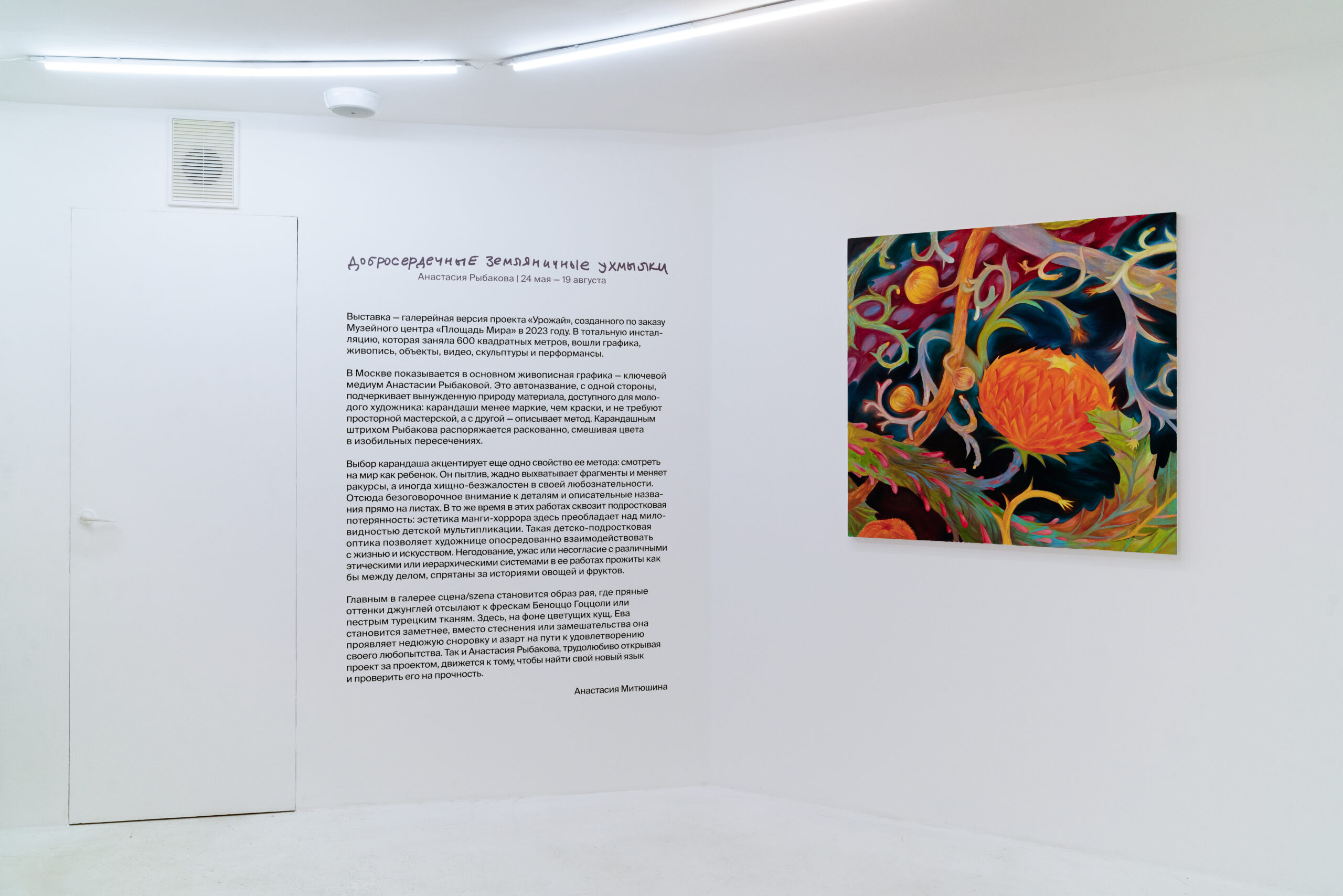
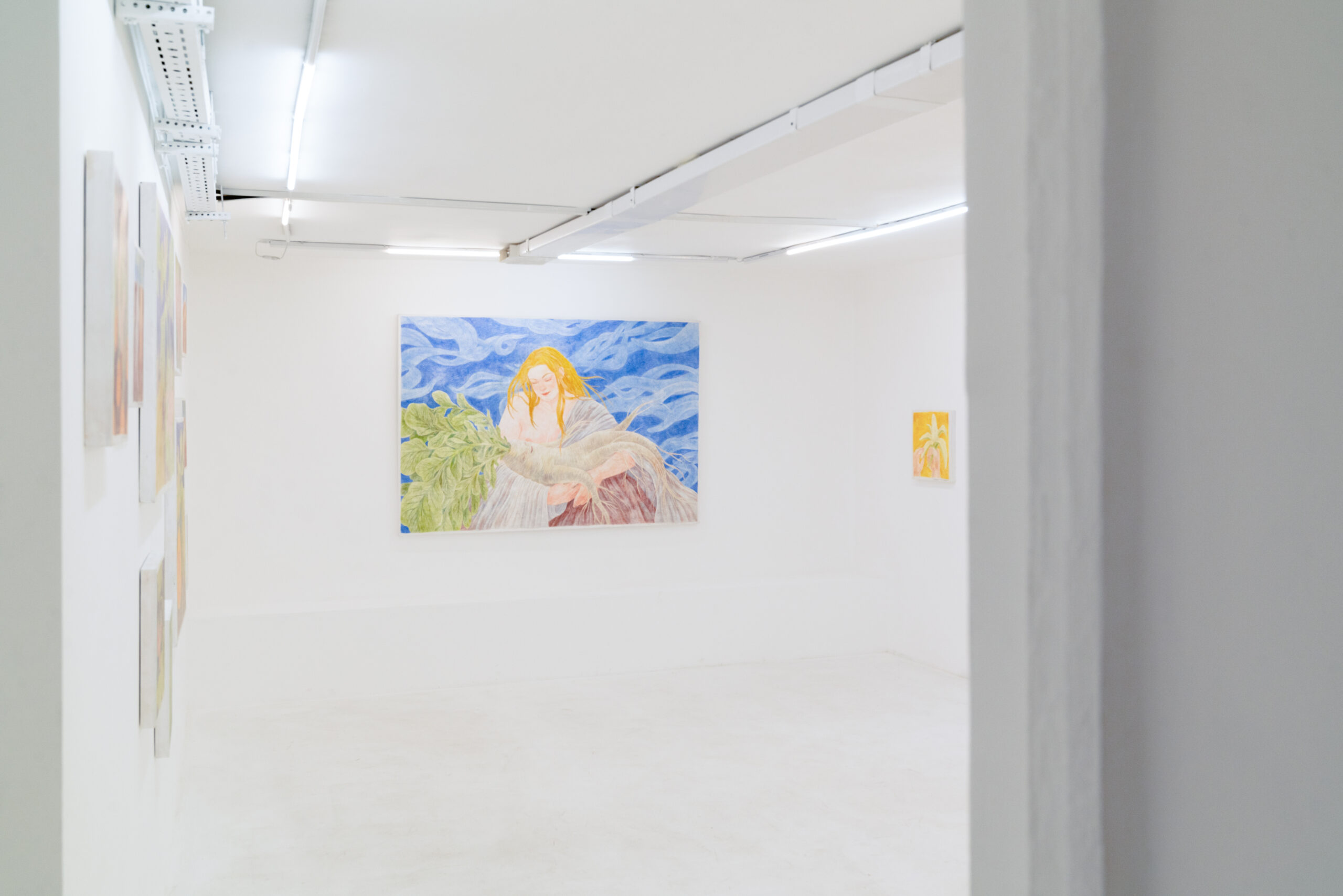
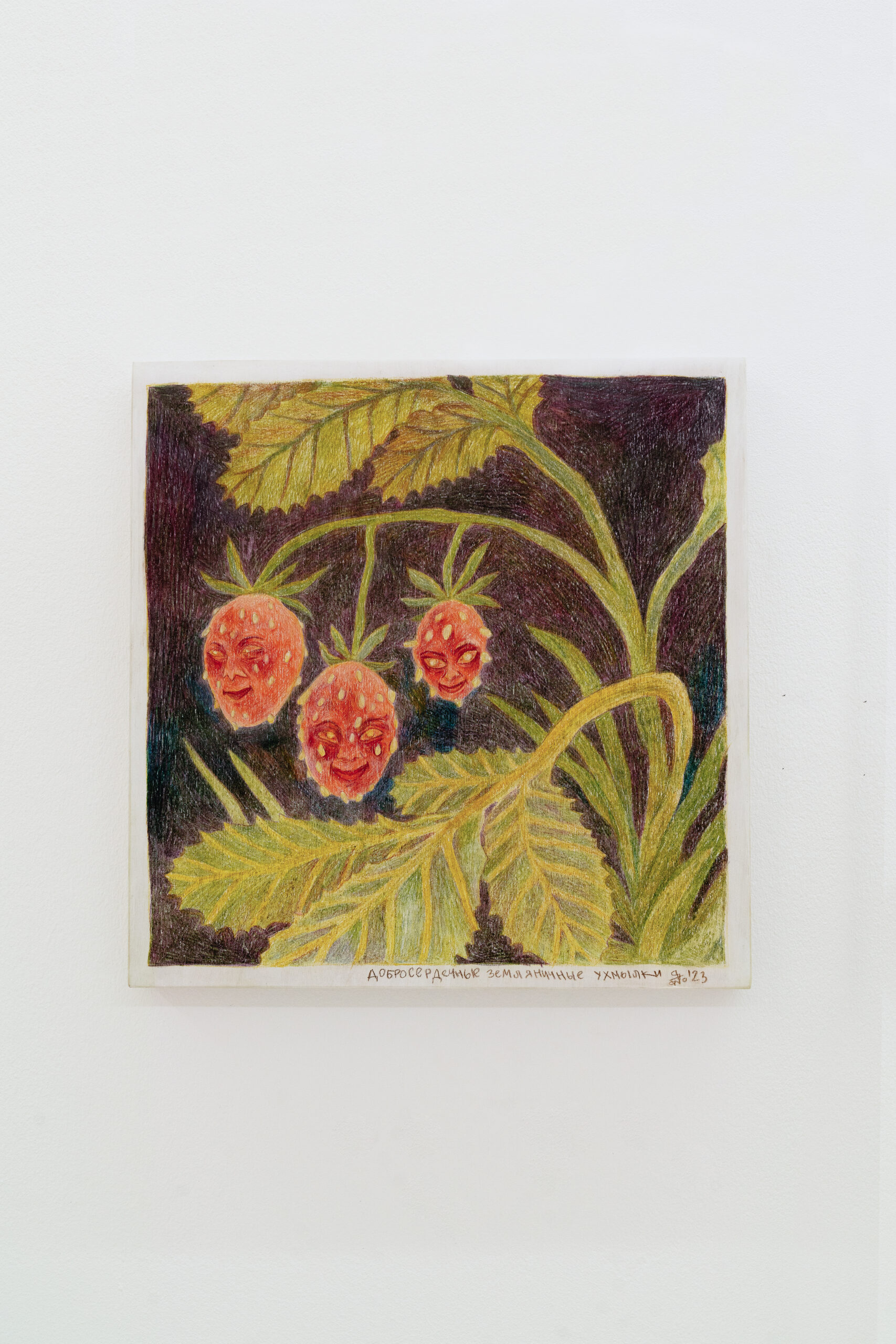
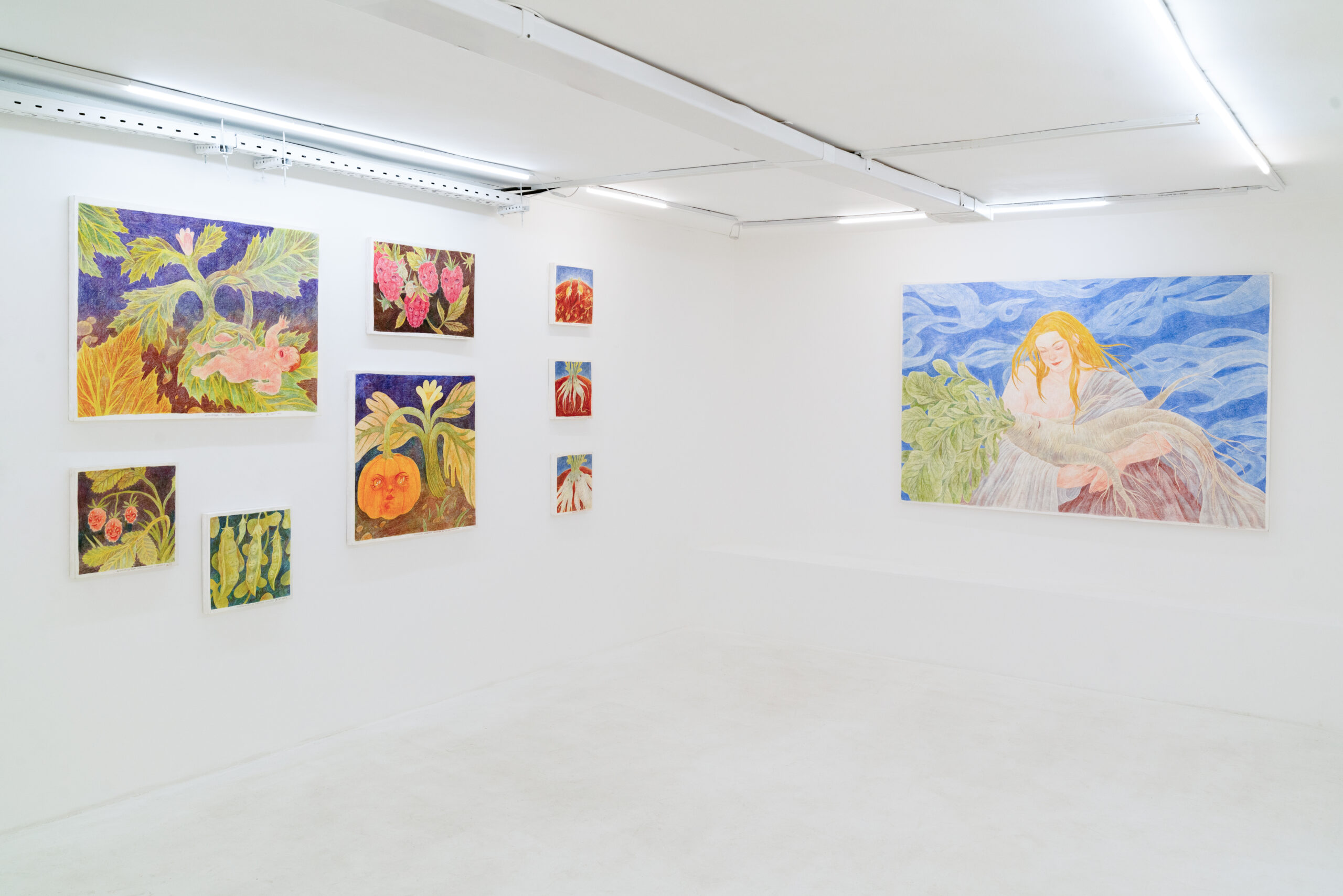
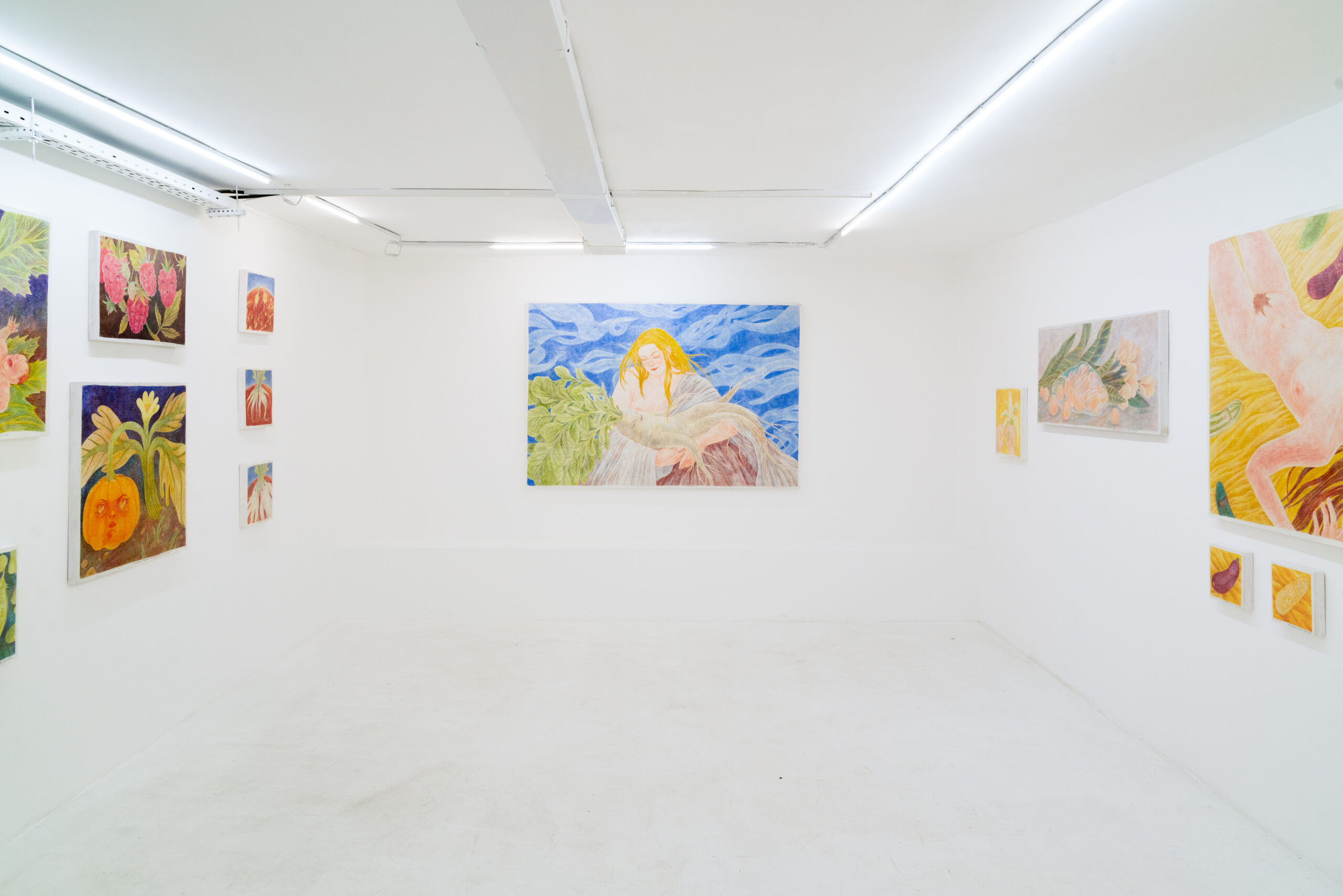
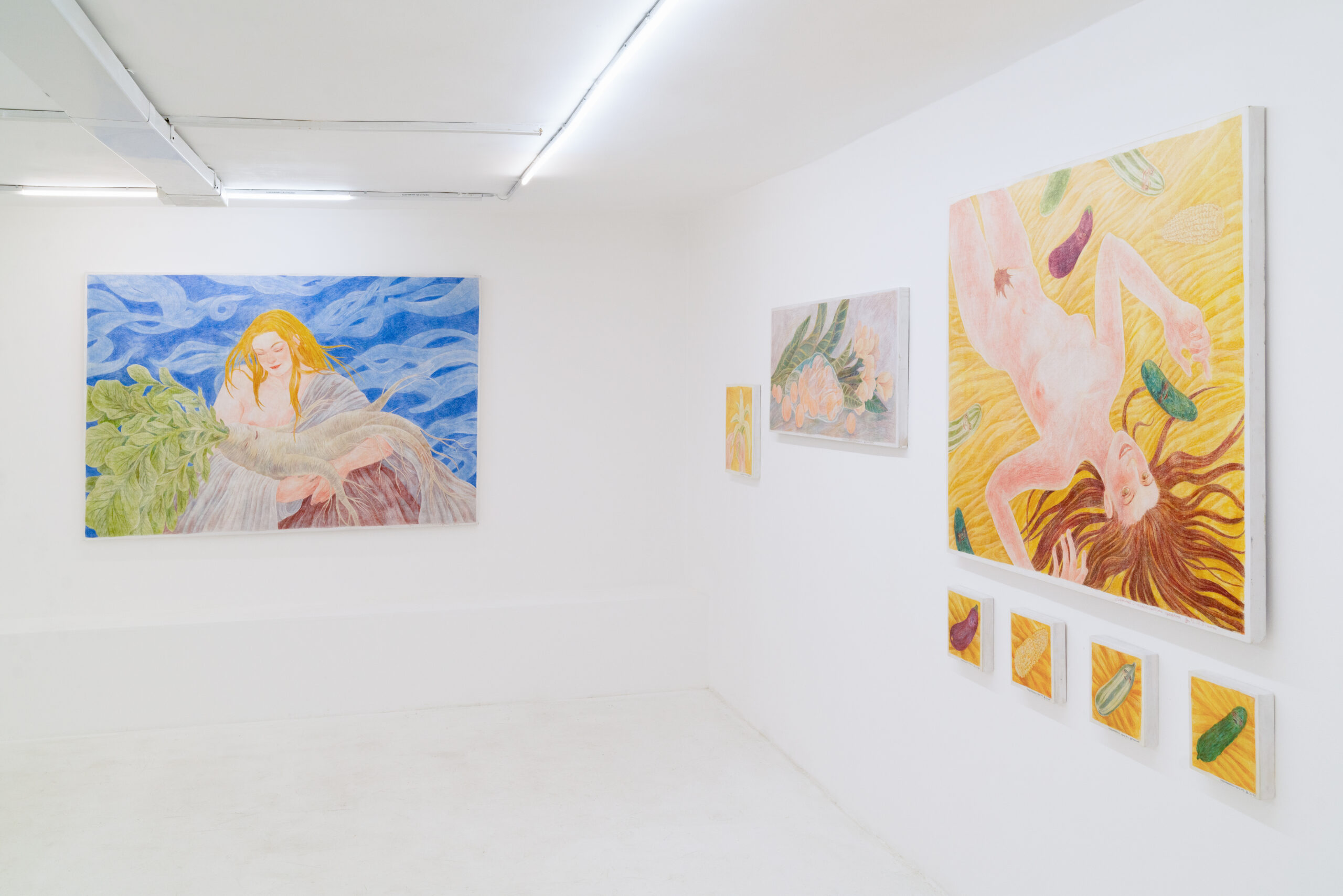
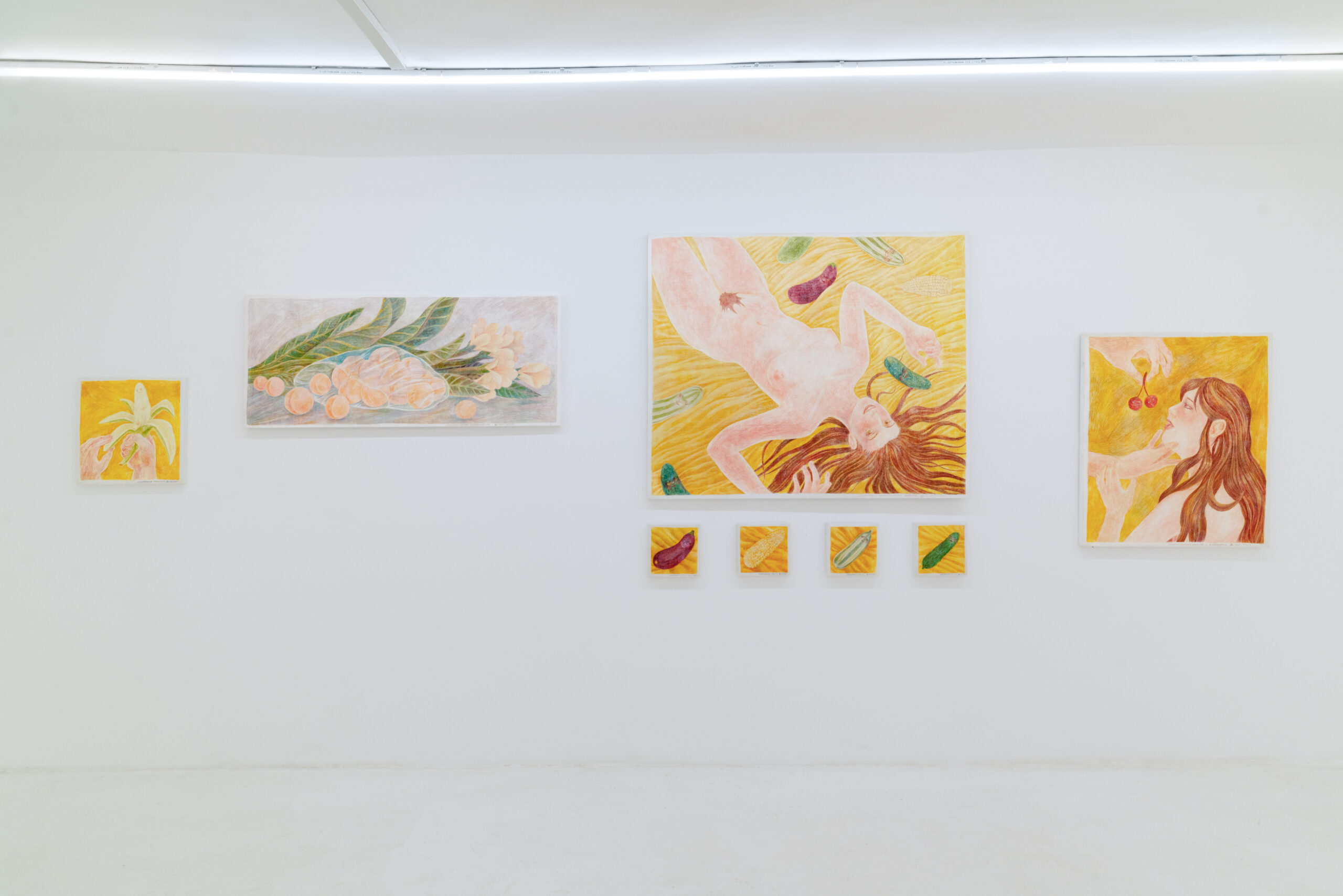
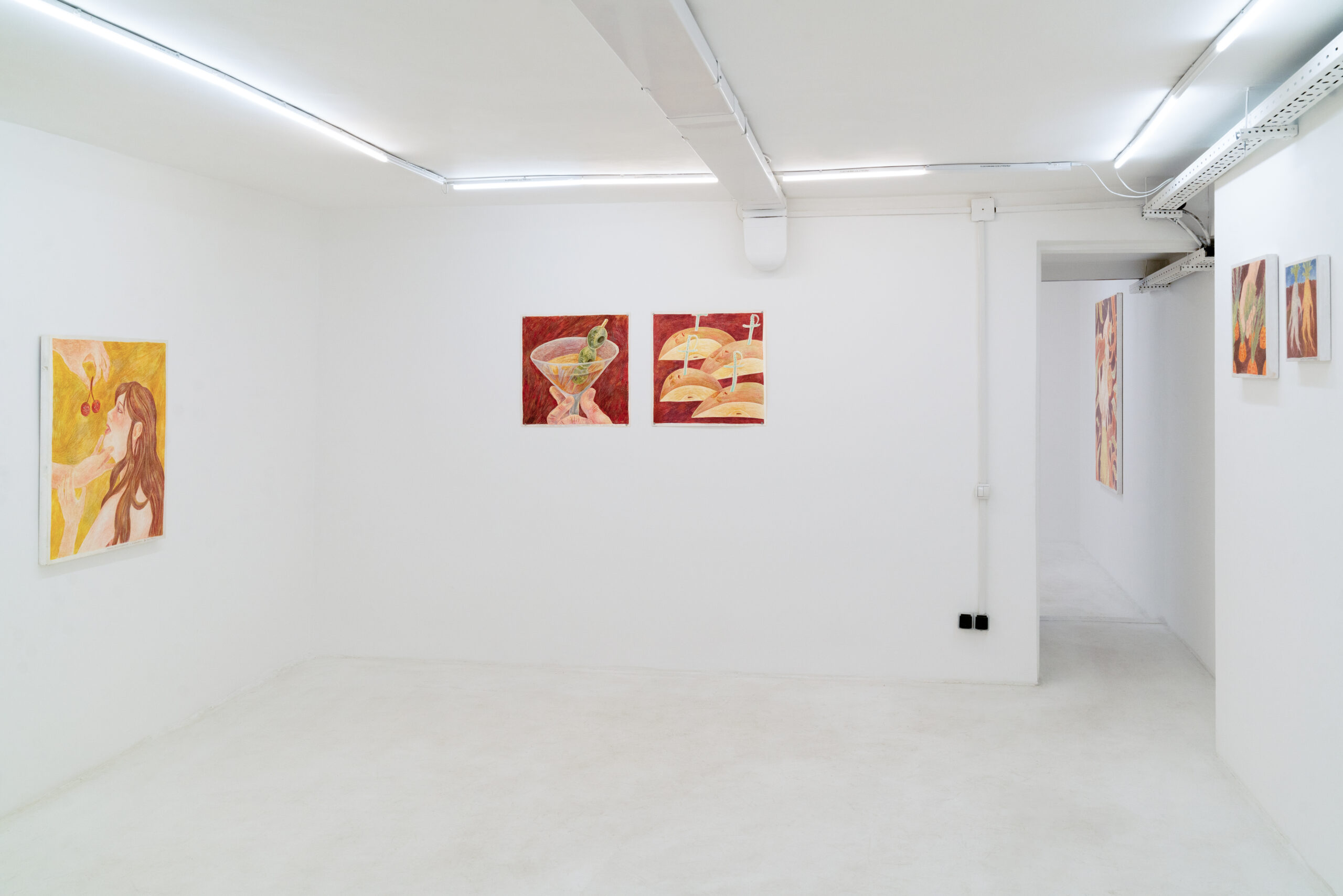
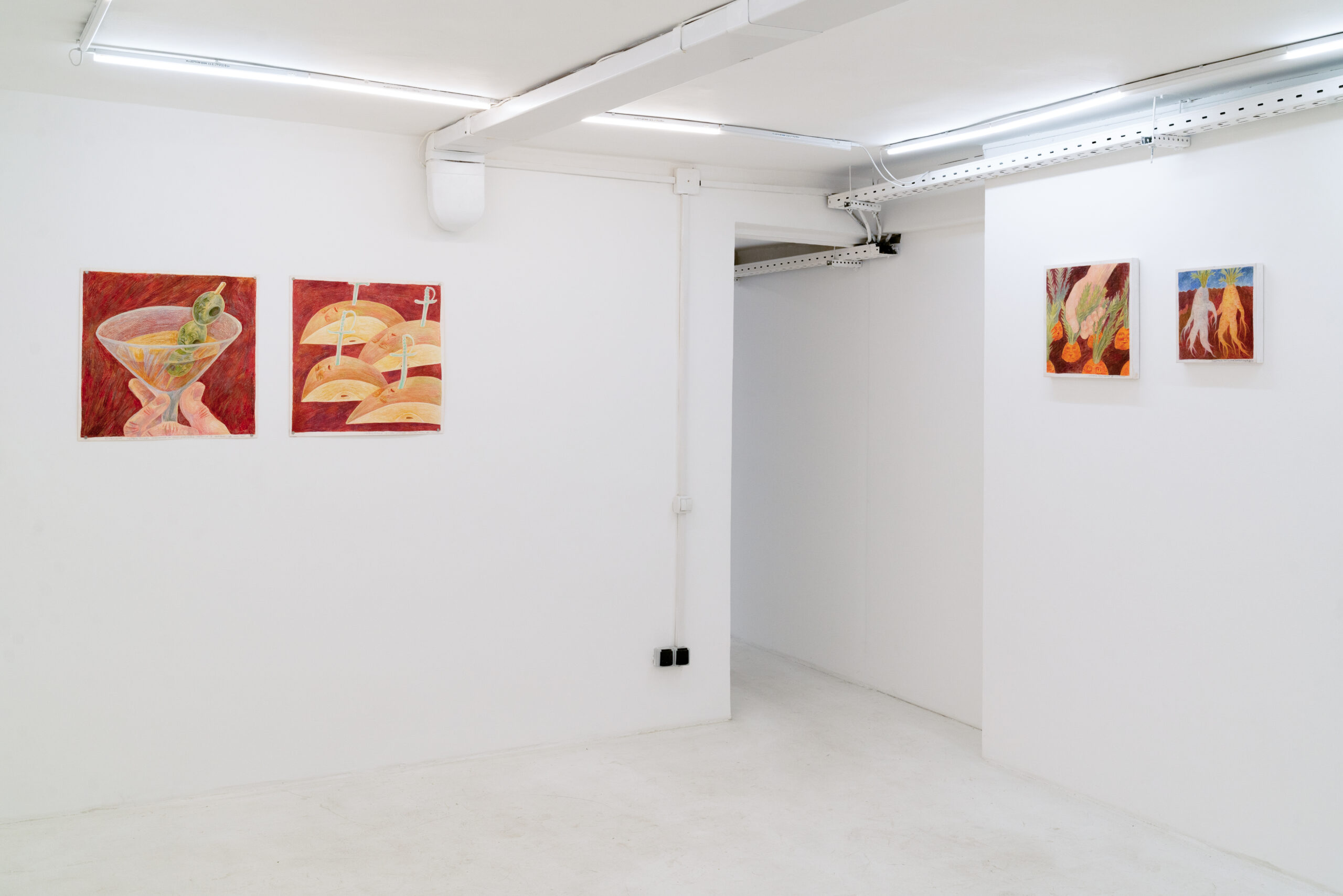
The exhibition “Kind-Hearted Strawberry Grins” is a gallery version of the project “Harvest,” commissioned by the Museum Center “Ploschad Mira” in 2023. Together with curator Oksana Budulak, the artist explored the monstrous edifice of the last Lenin Museum in Krasnoyarsk (1987), which has housed “Ploschad Mira” — the largest outpost of contemporary art in the region — since 1995. The total installation, which occupied 600 square meters, included graphics, painting, objects, video, sculptures, and performances.
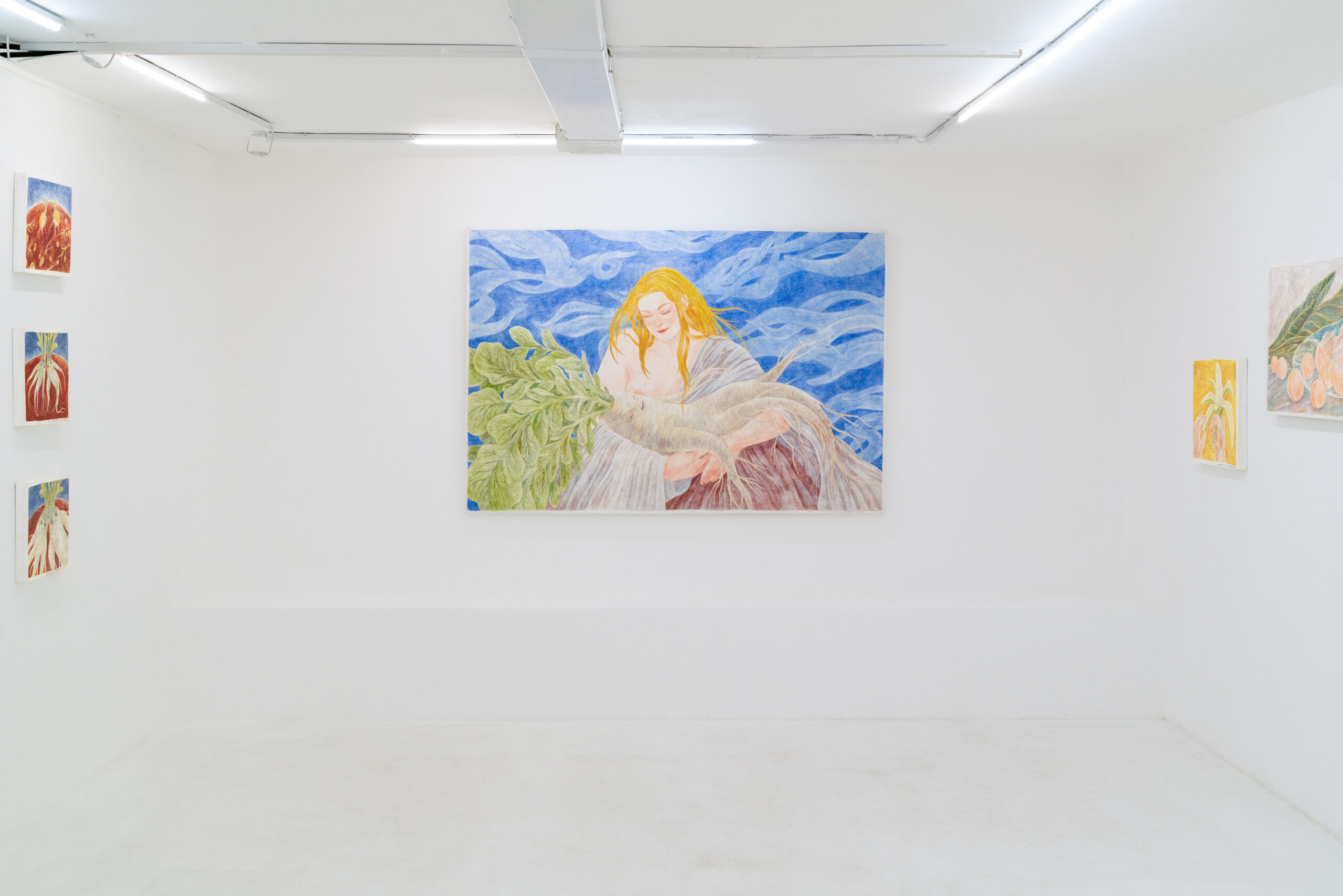
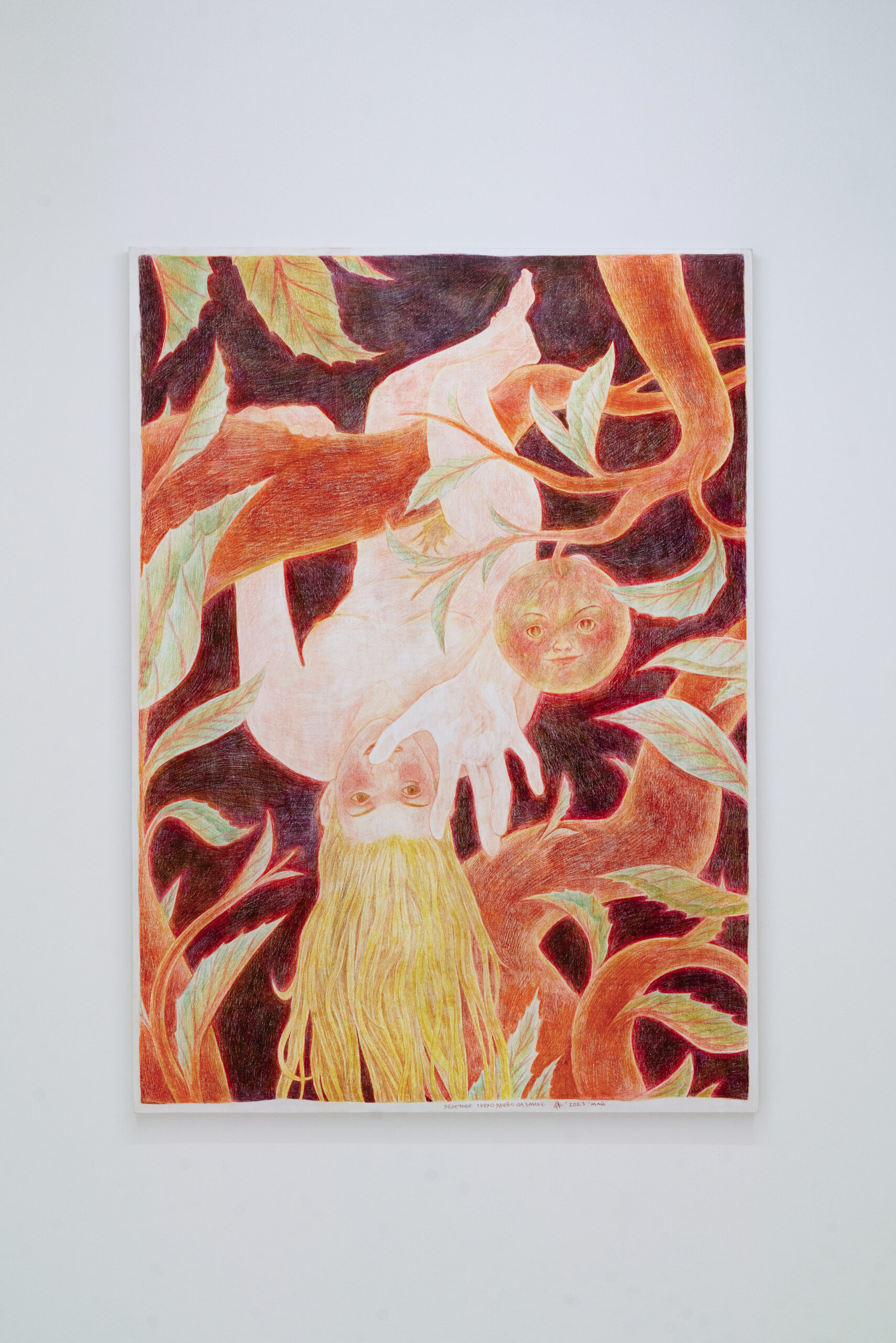
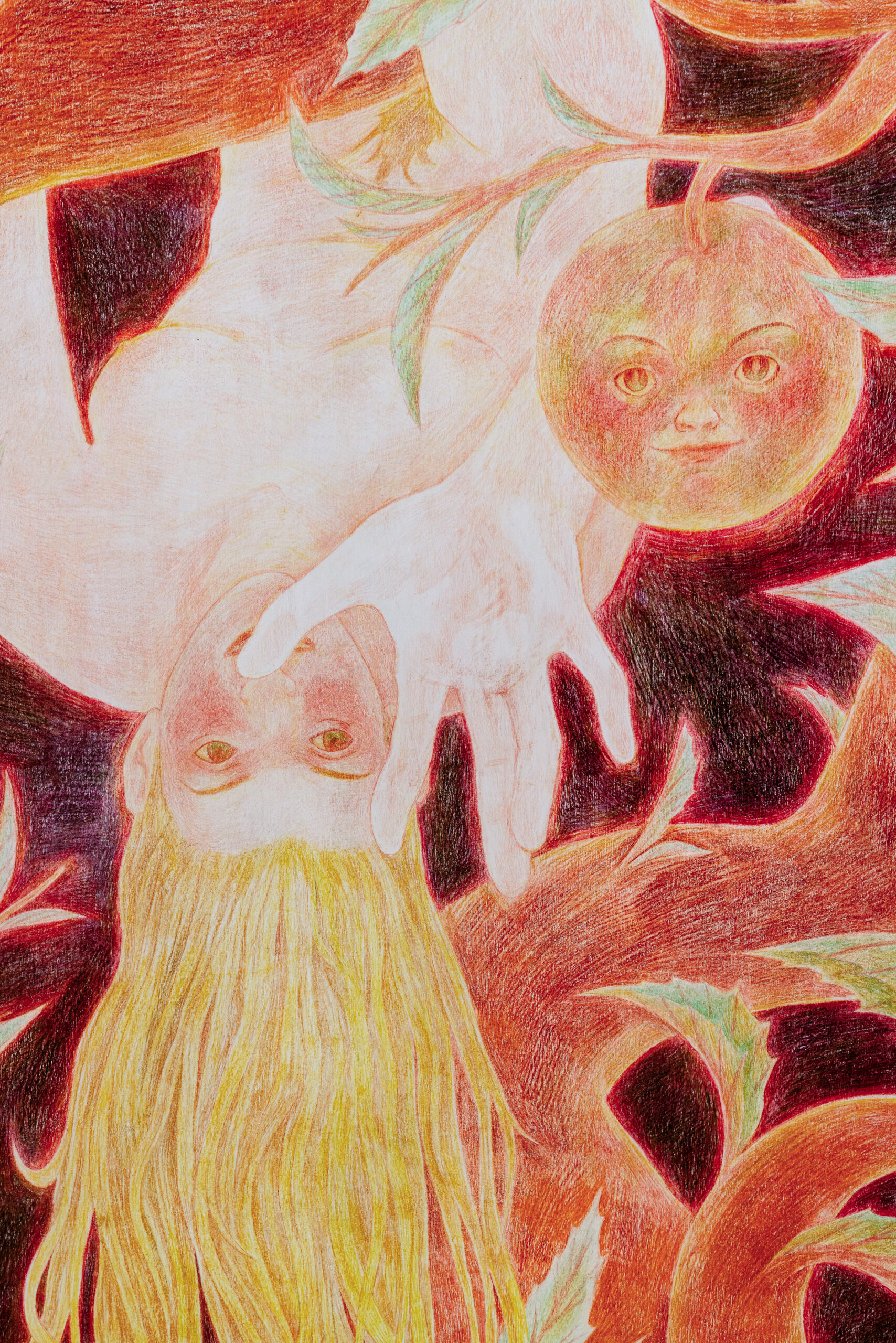
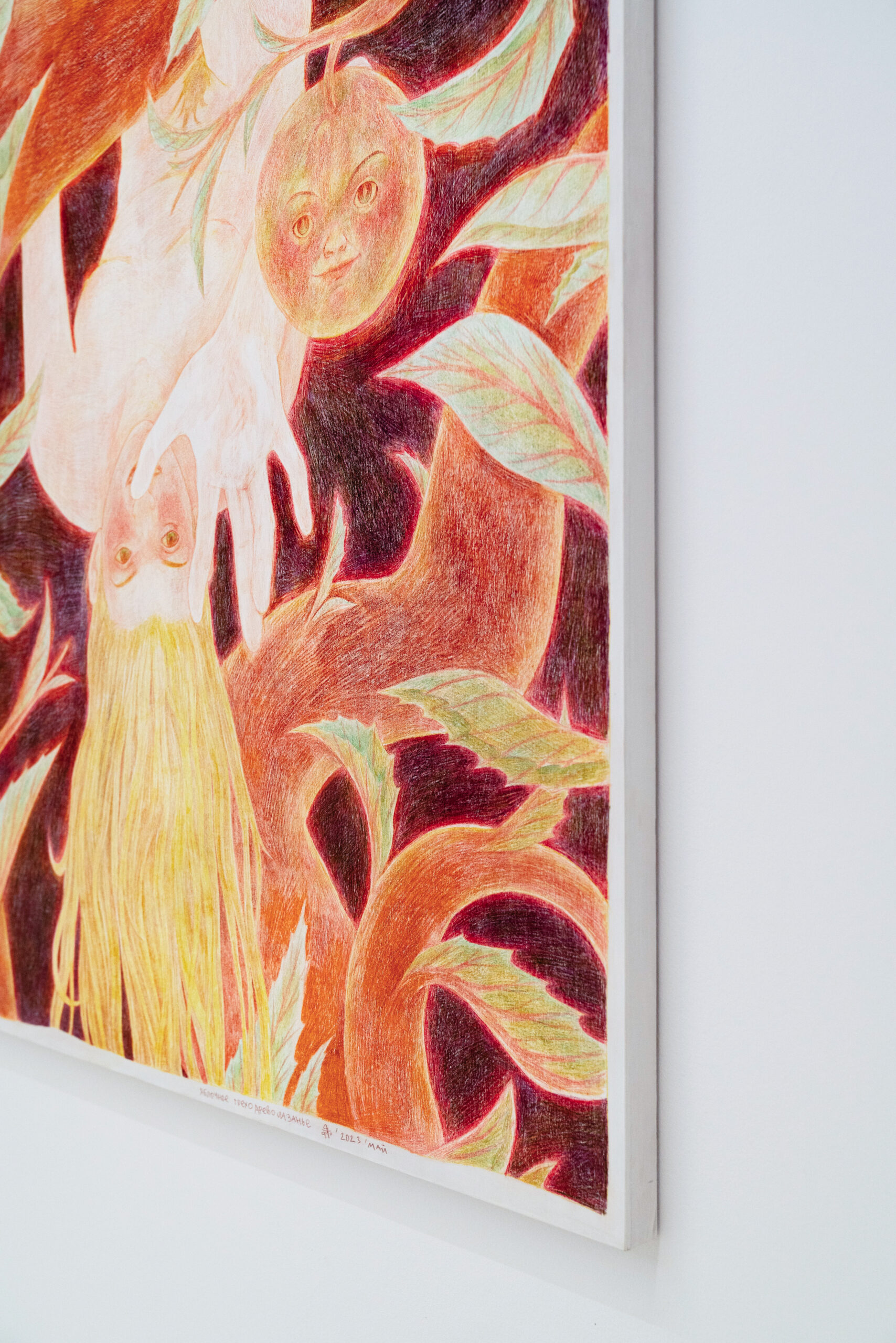
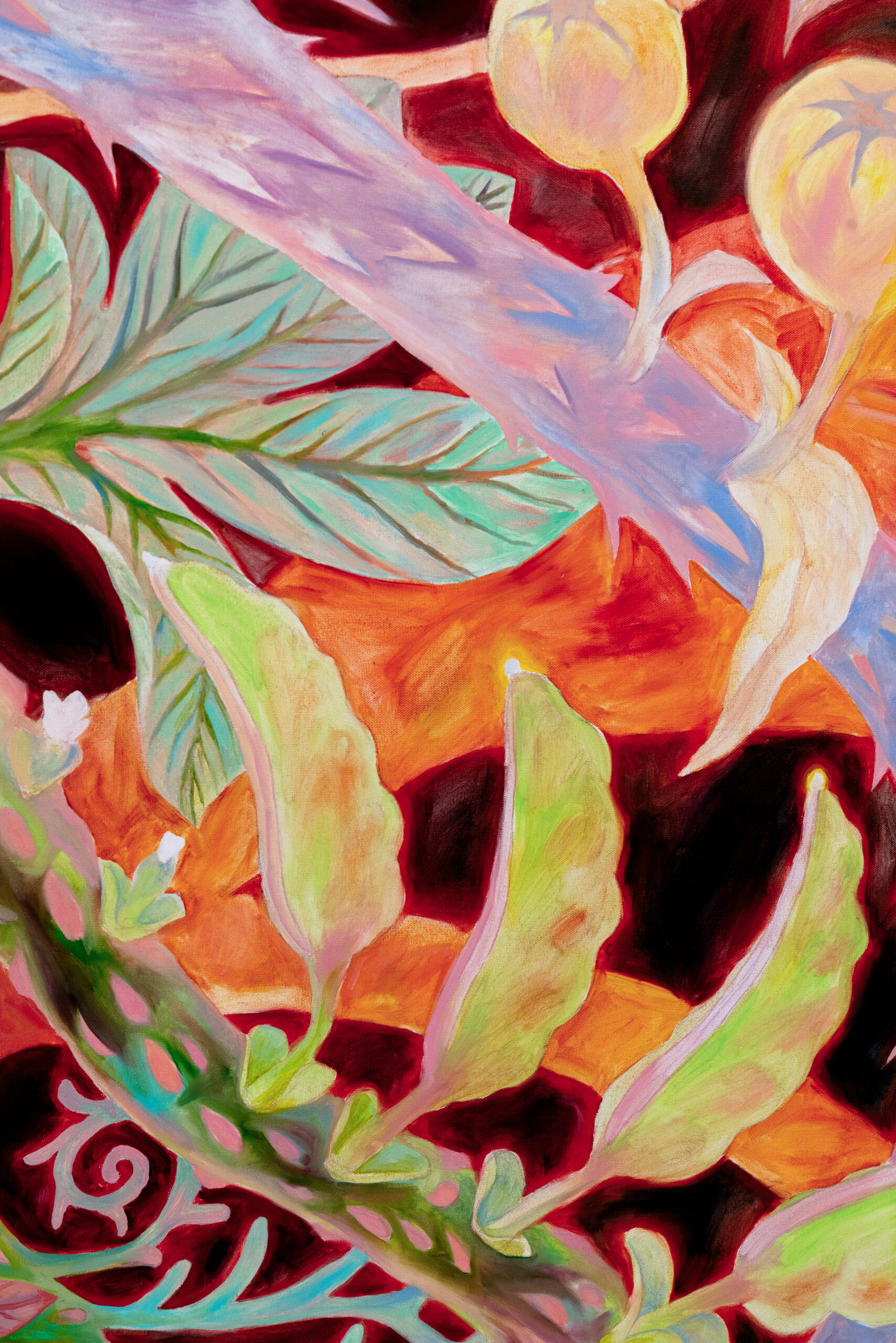
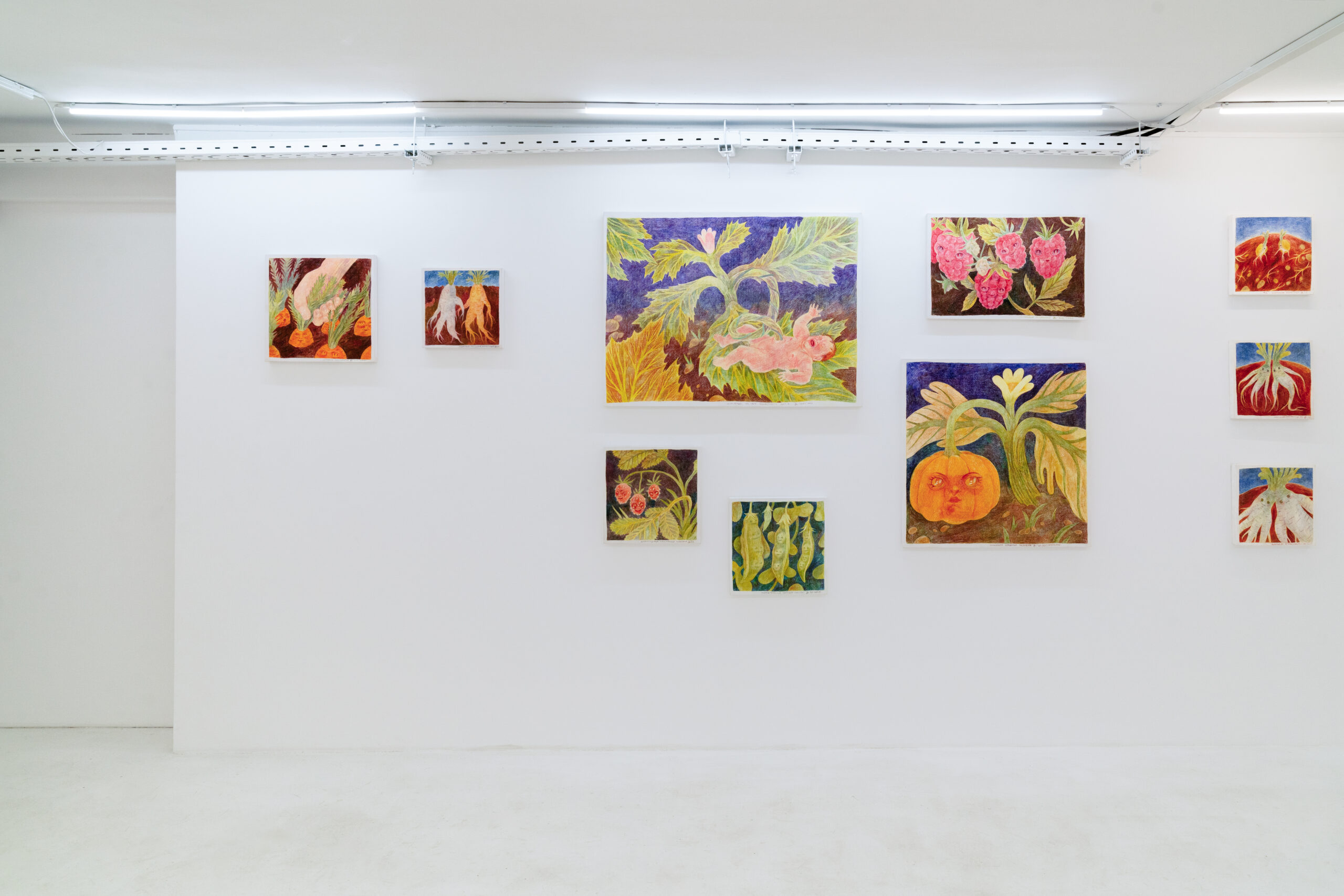
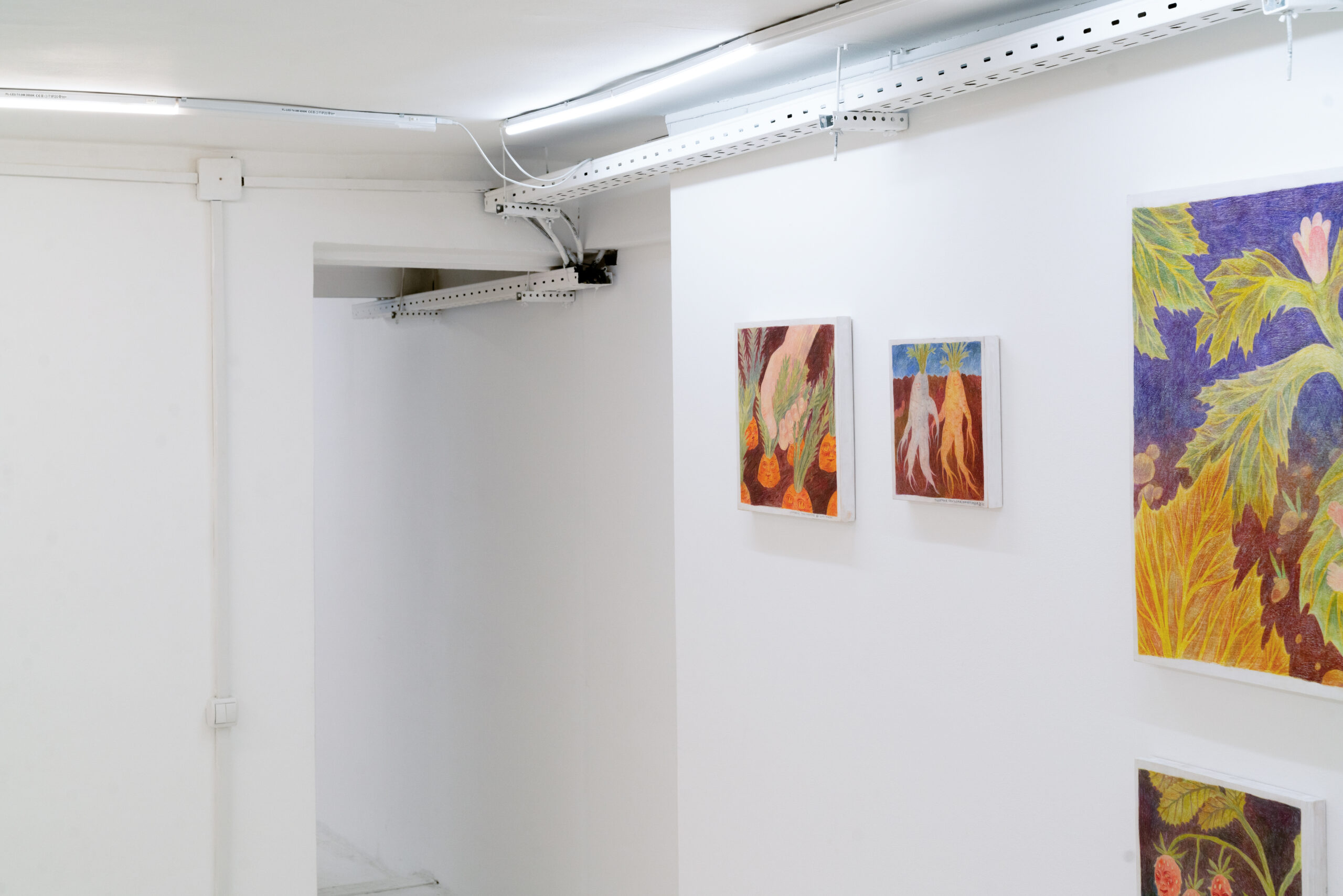
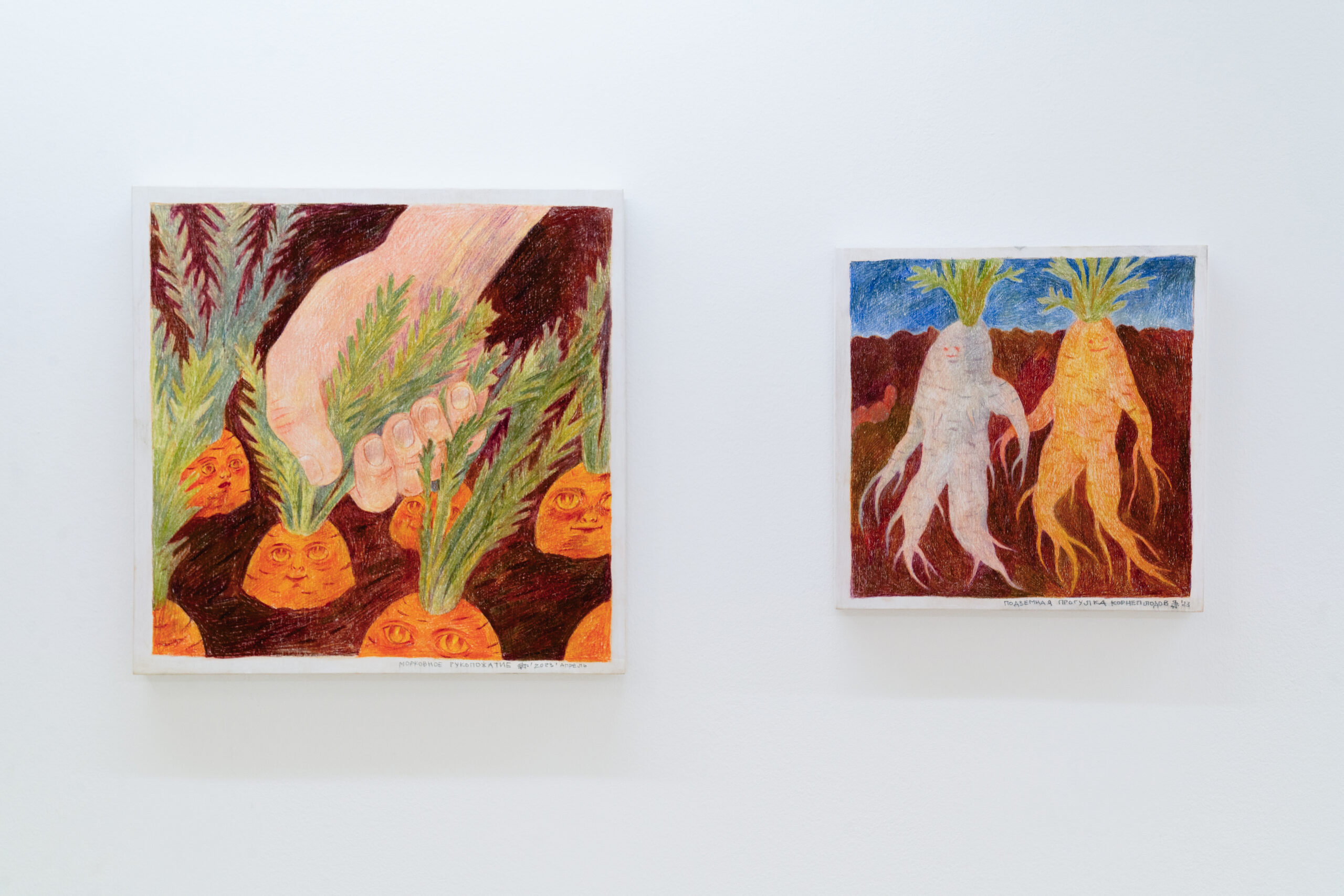
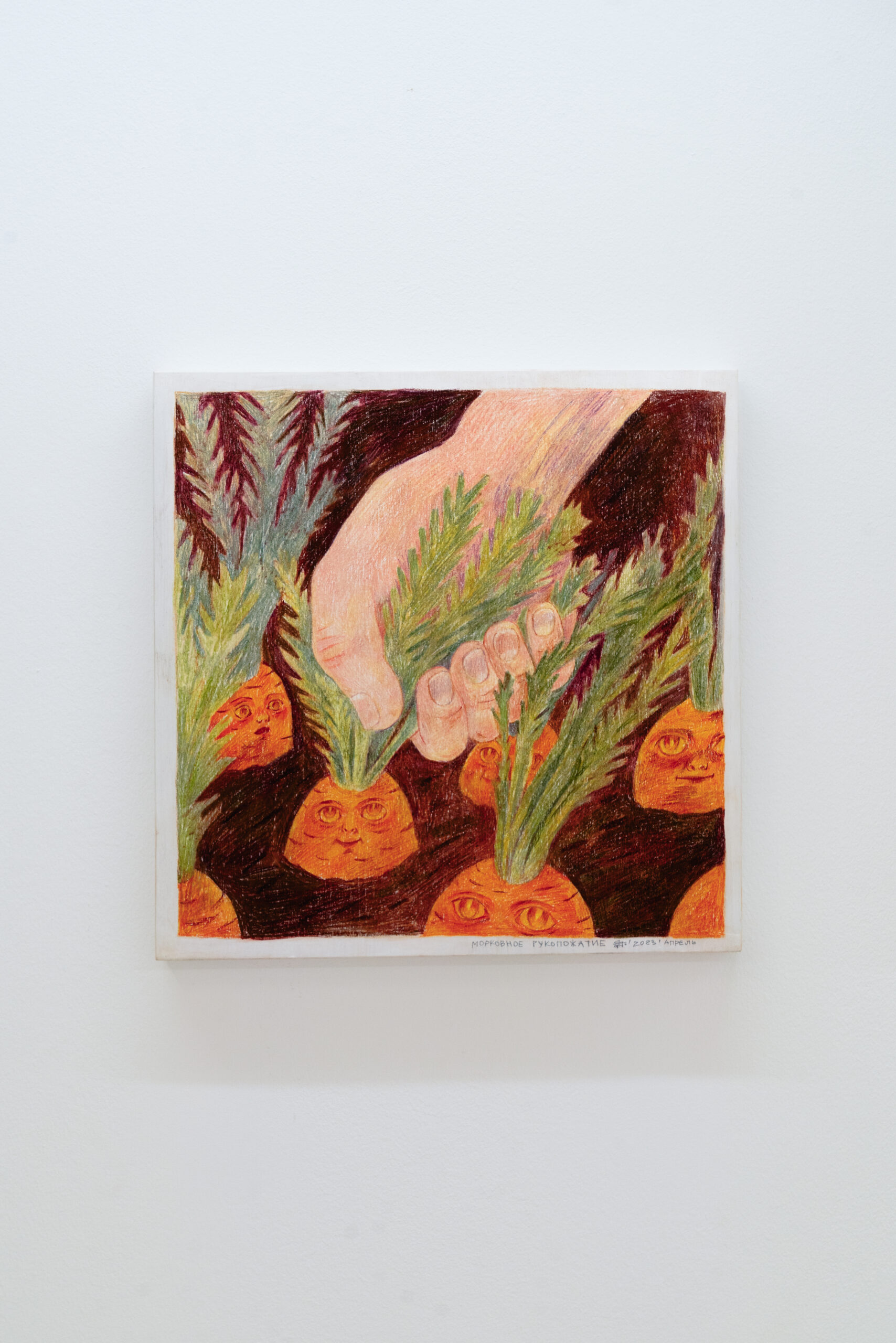
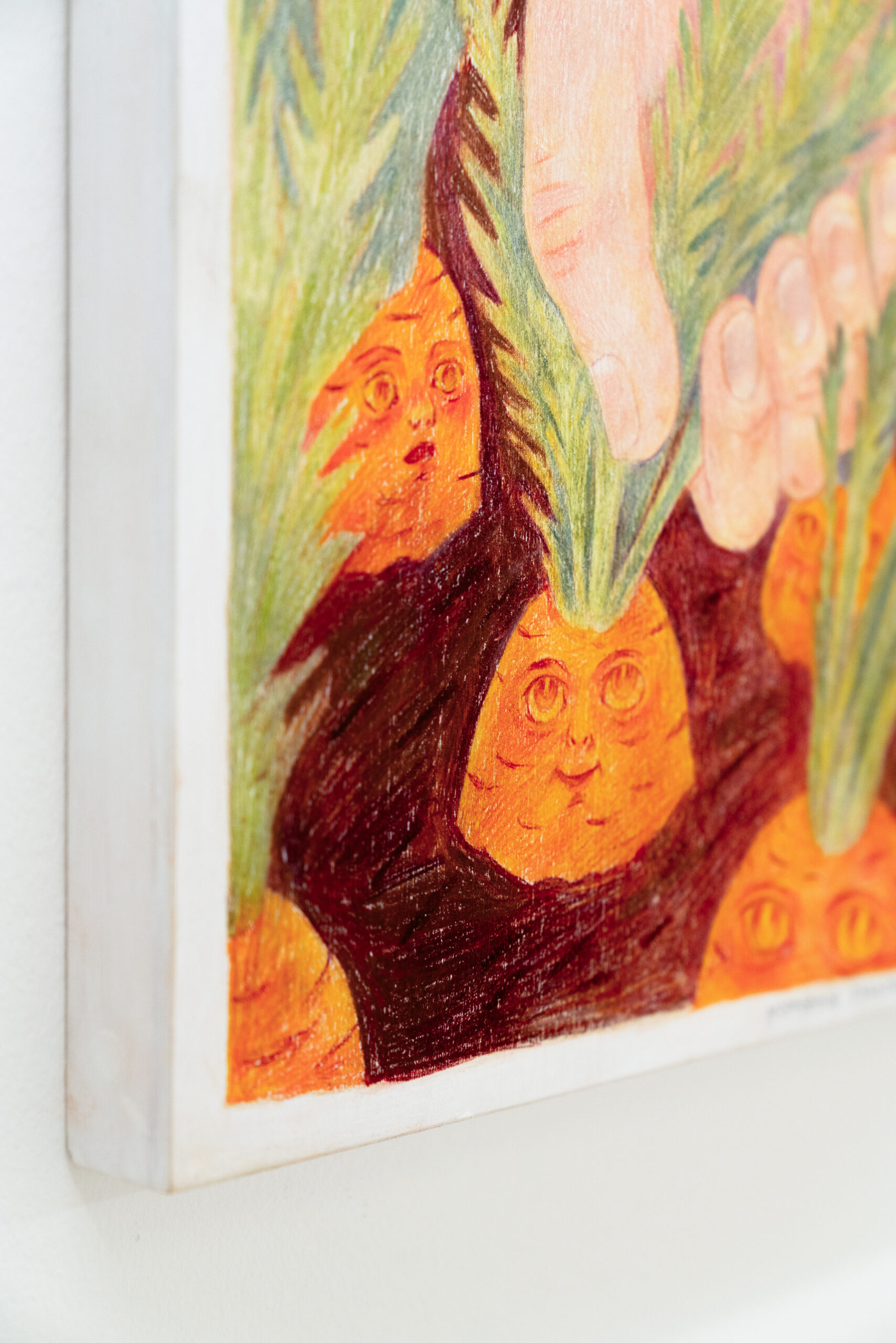
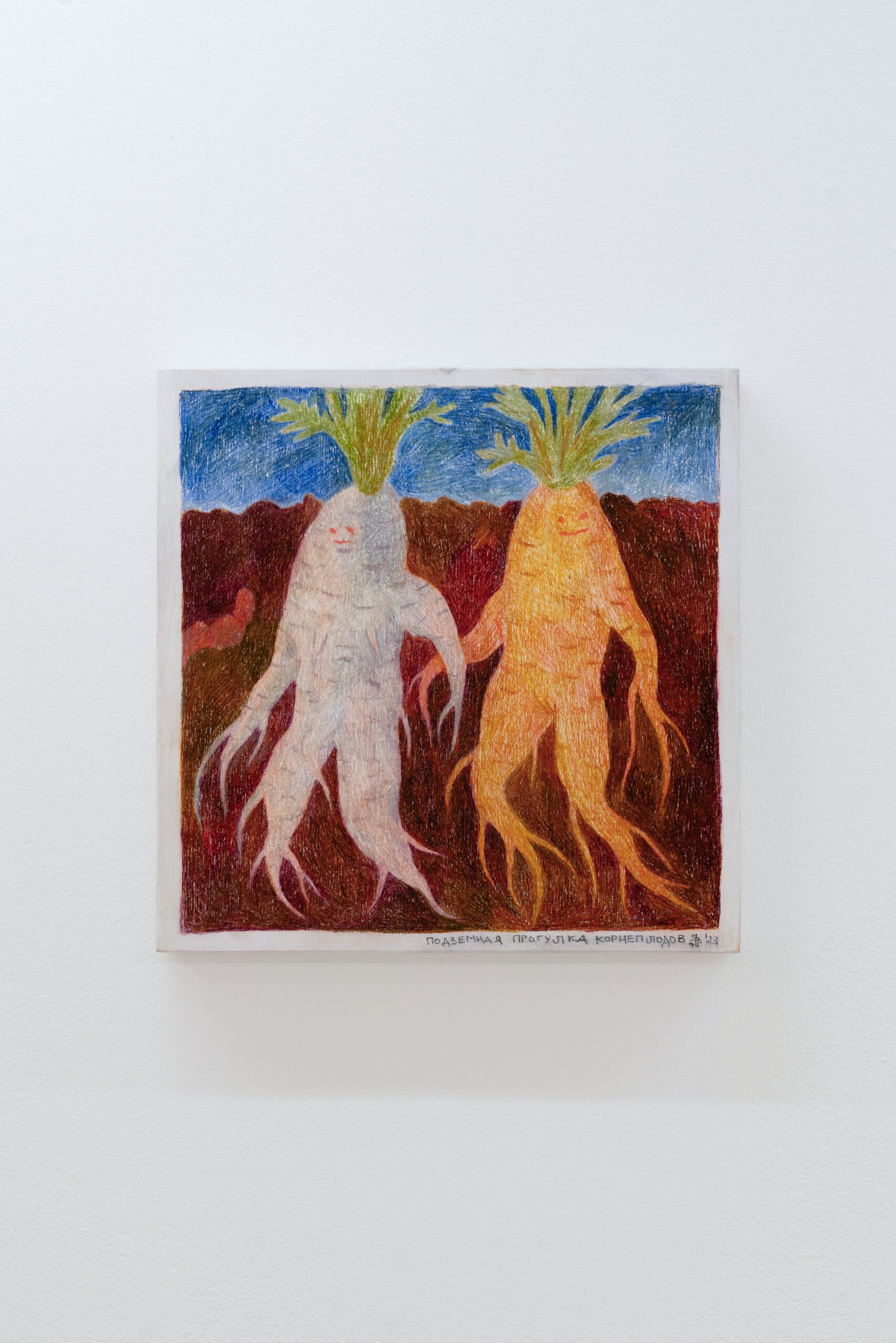
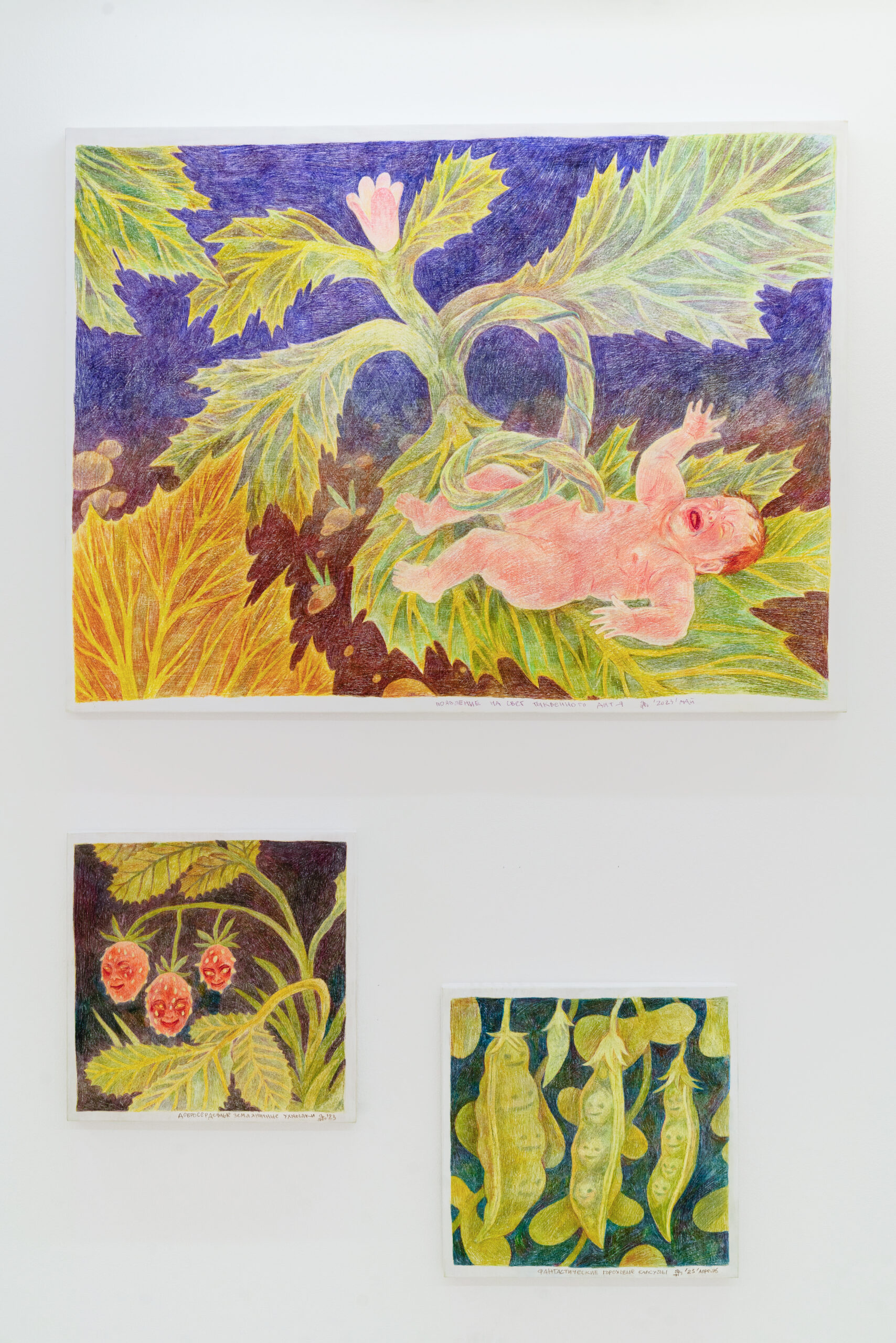
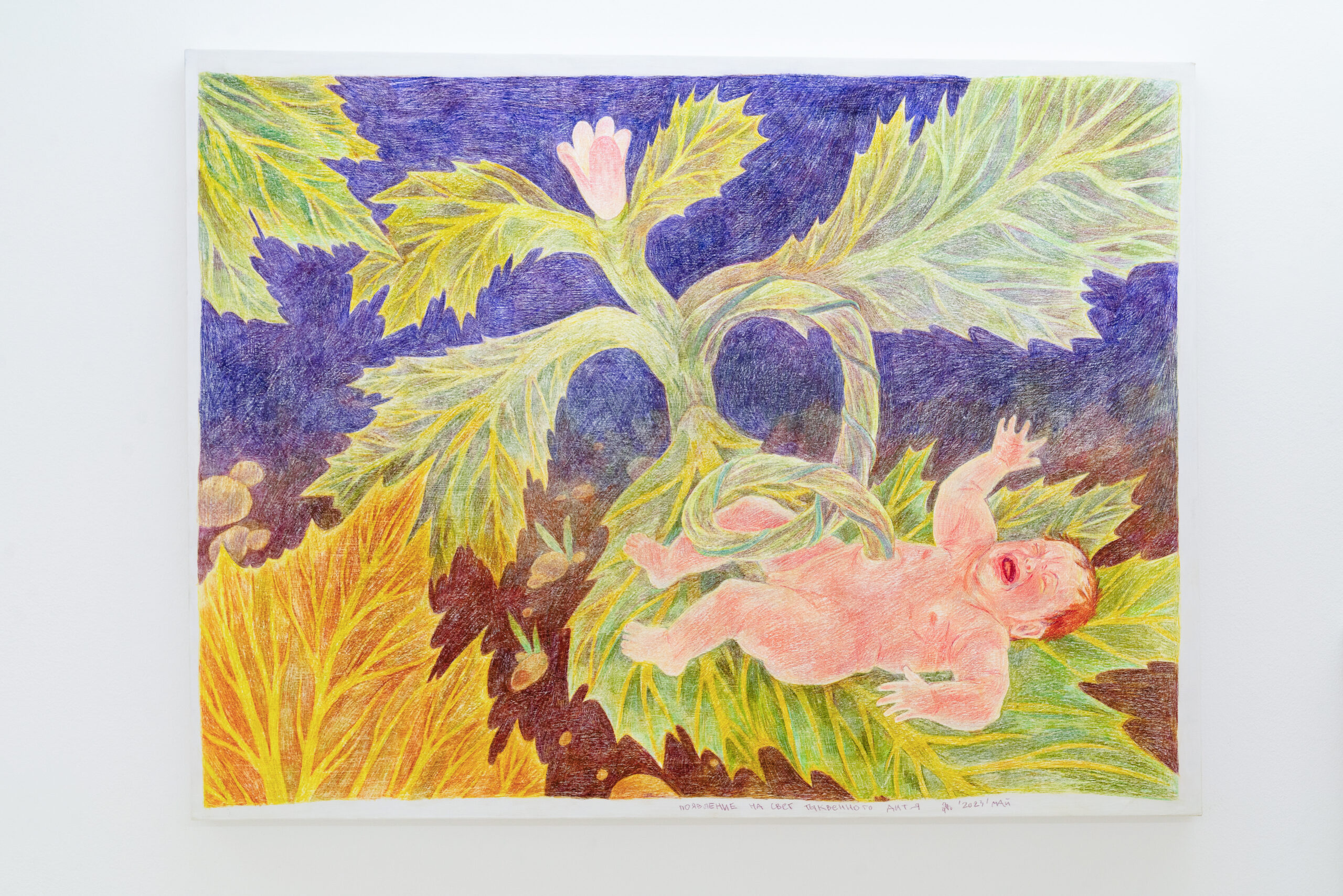
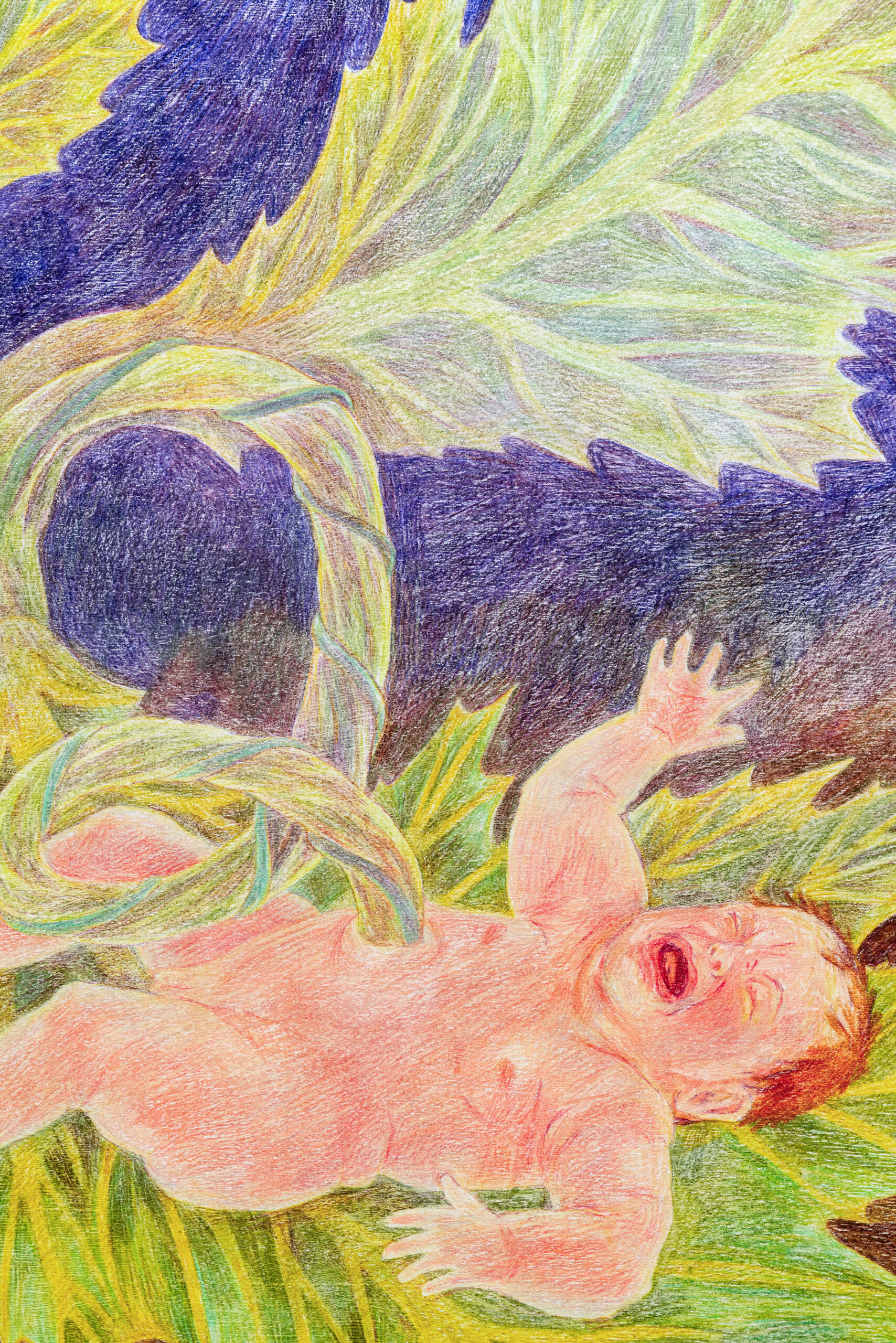
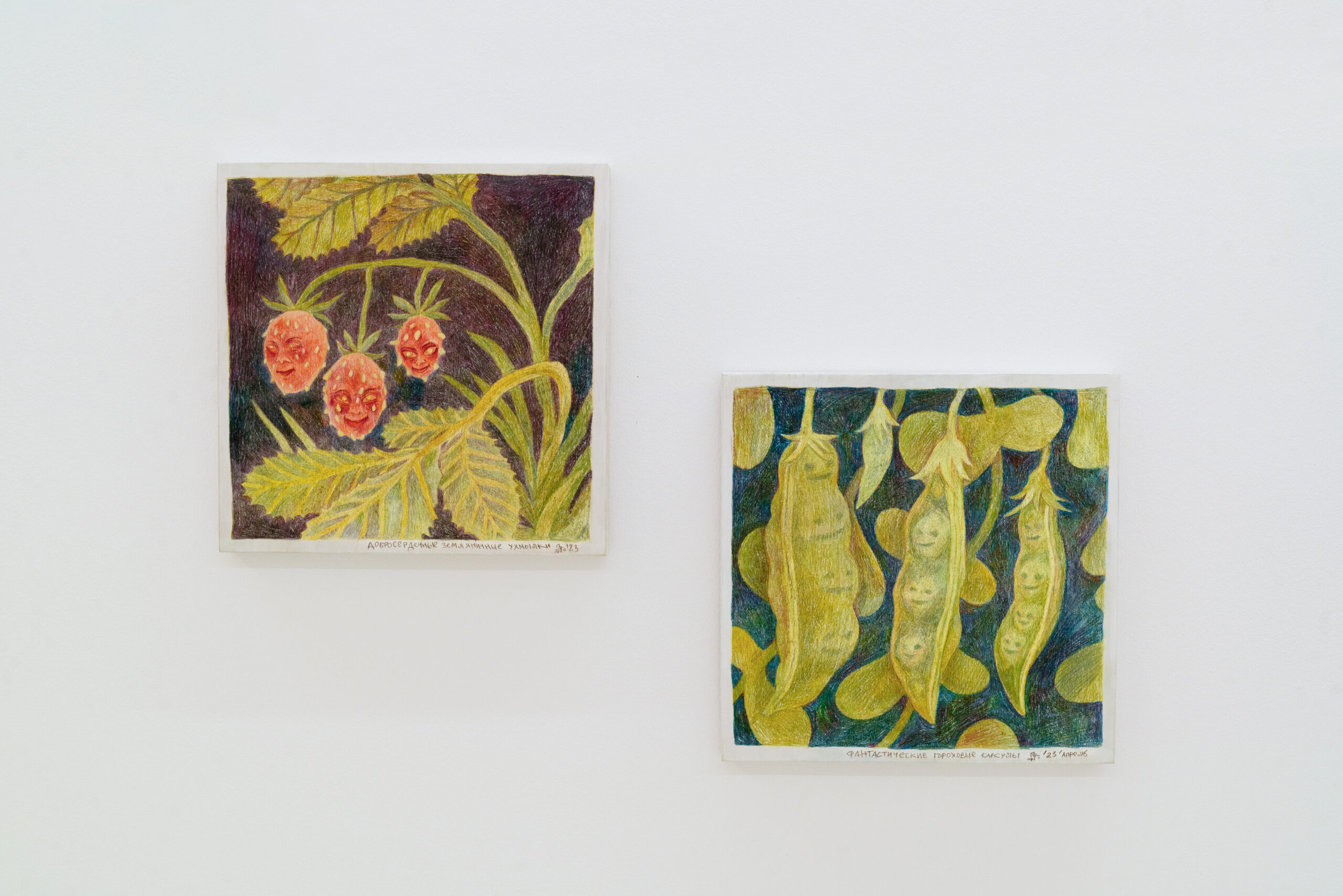
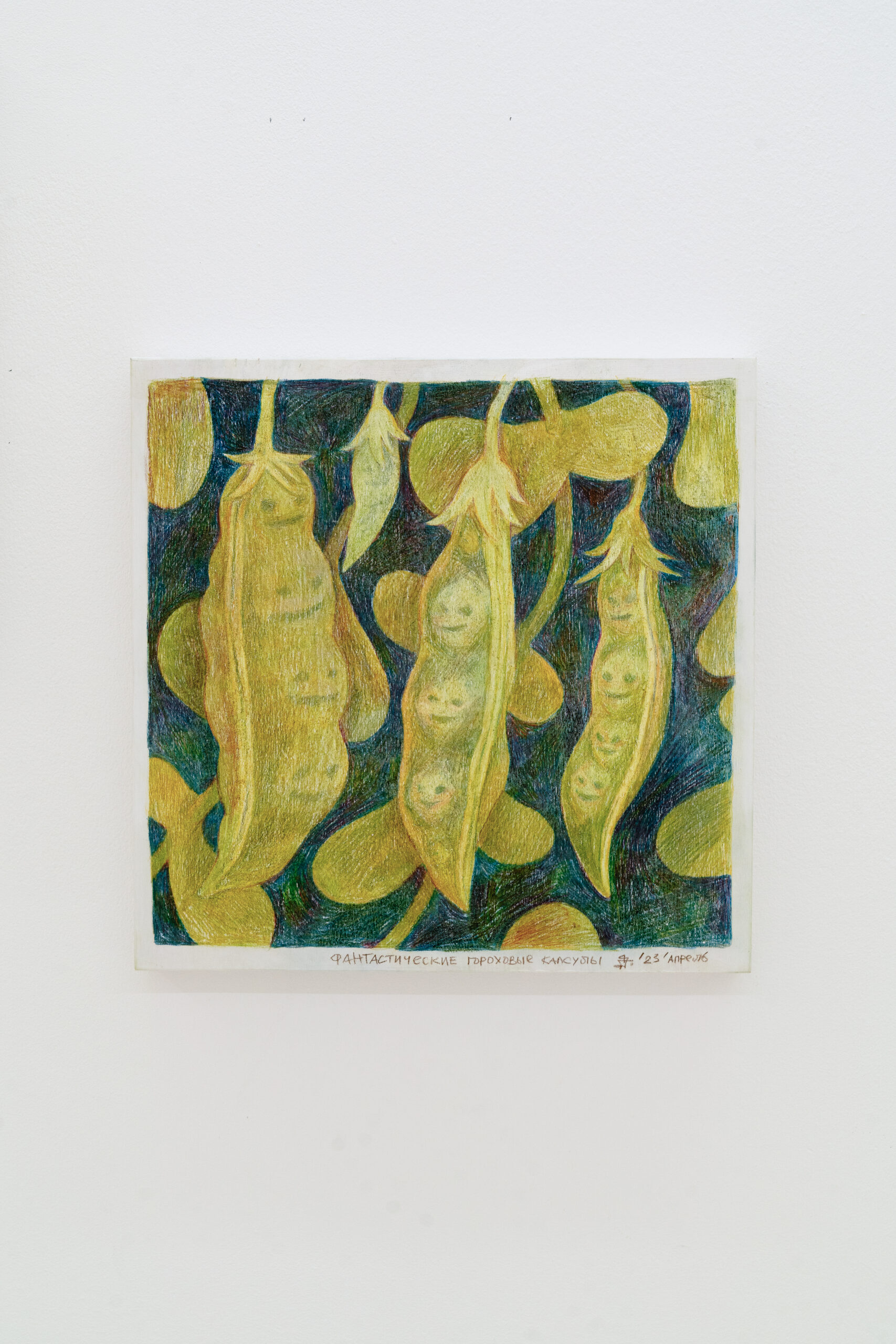
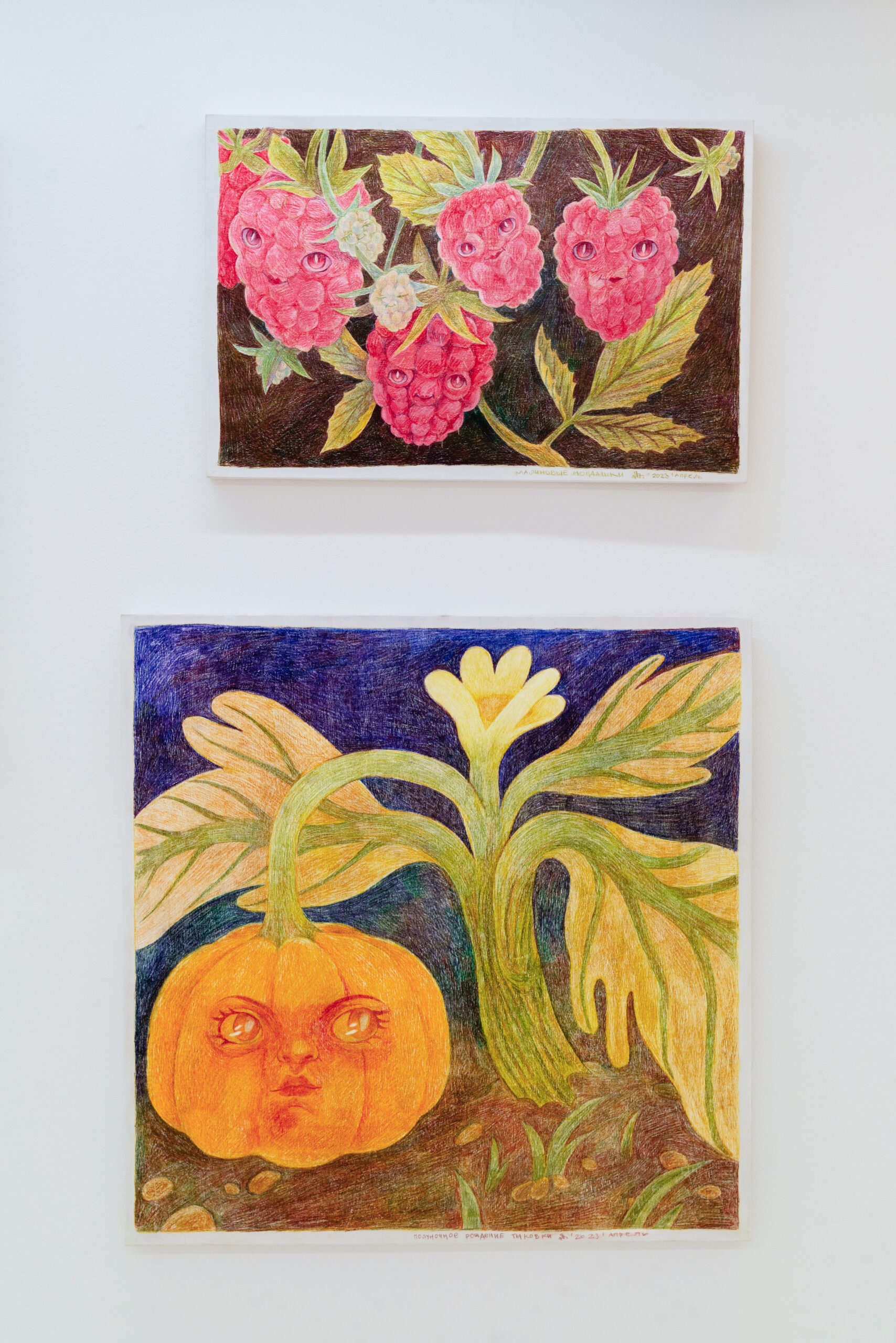
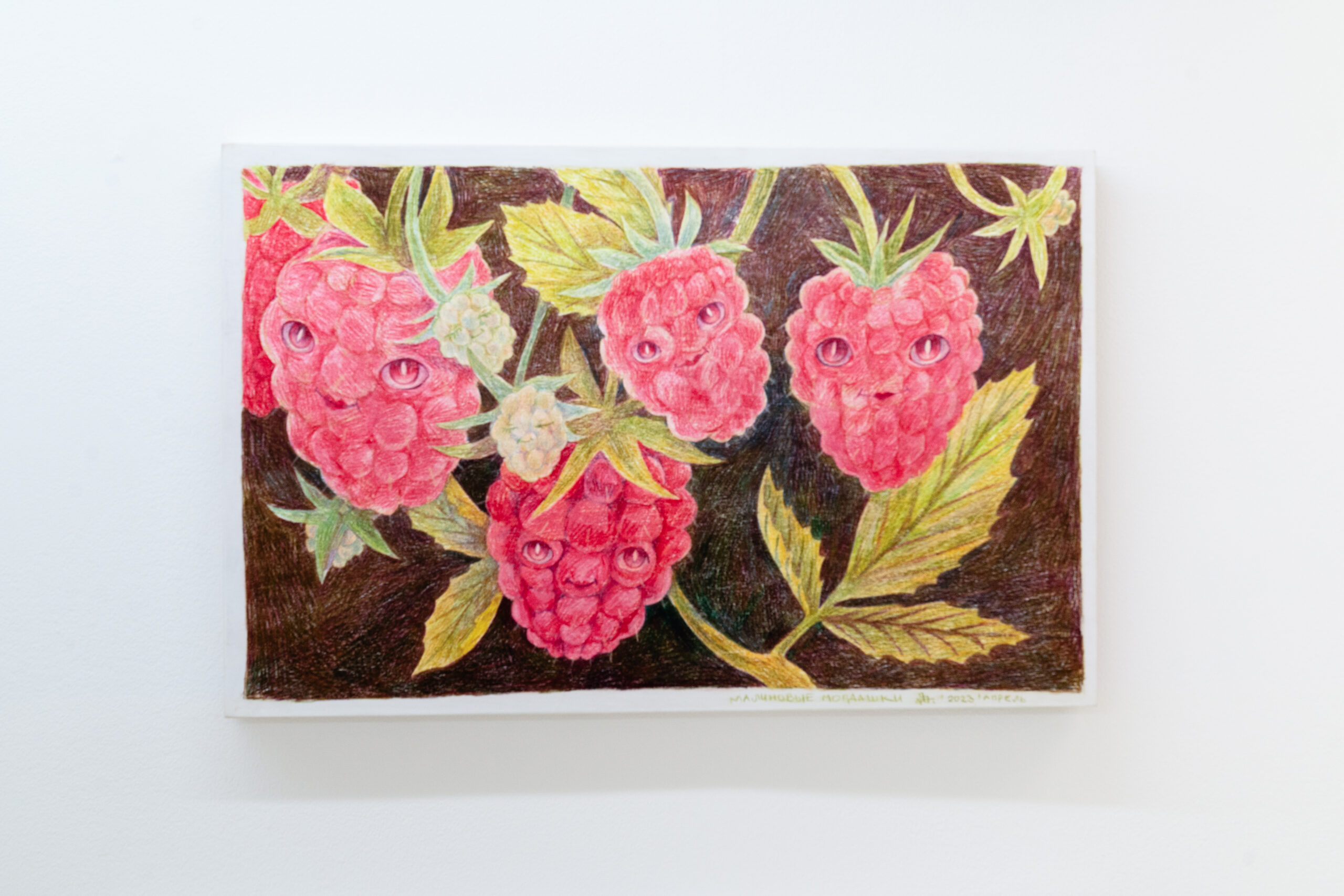
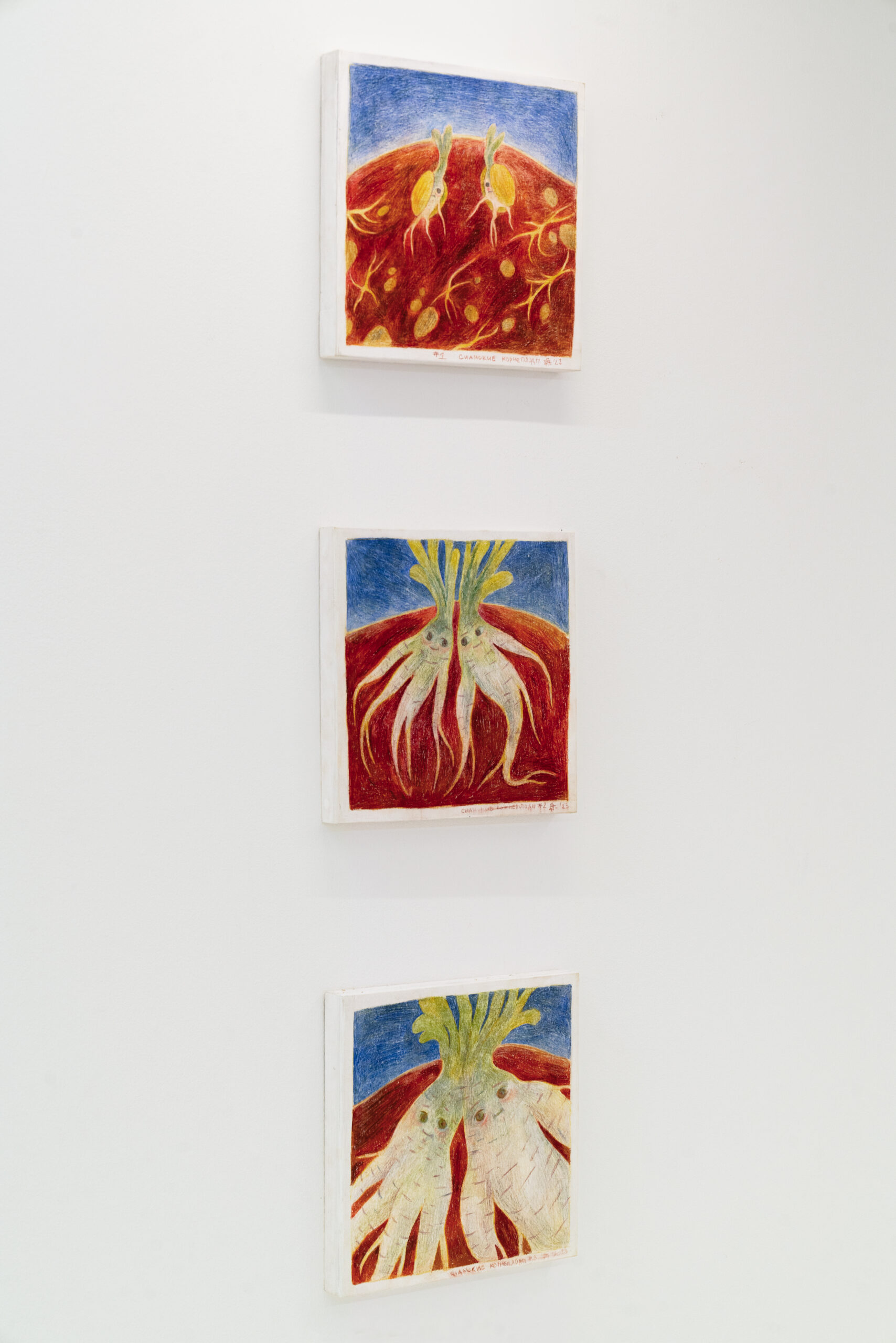
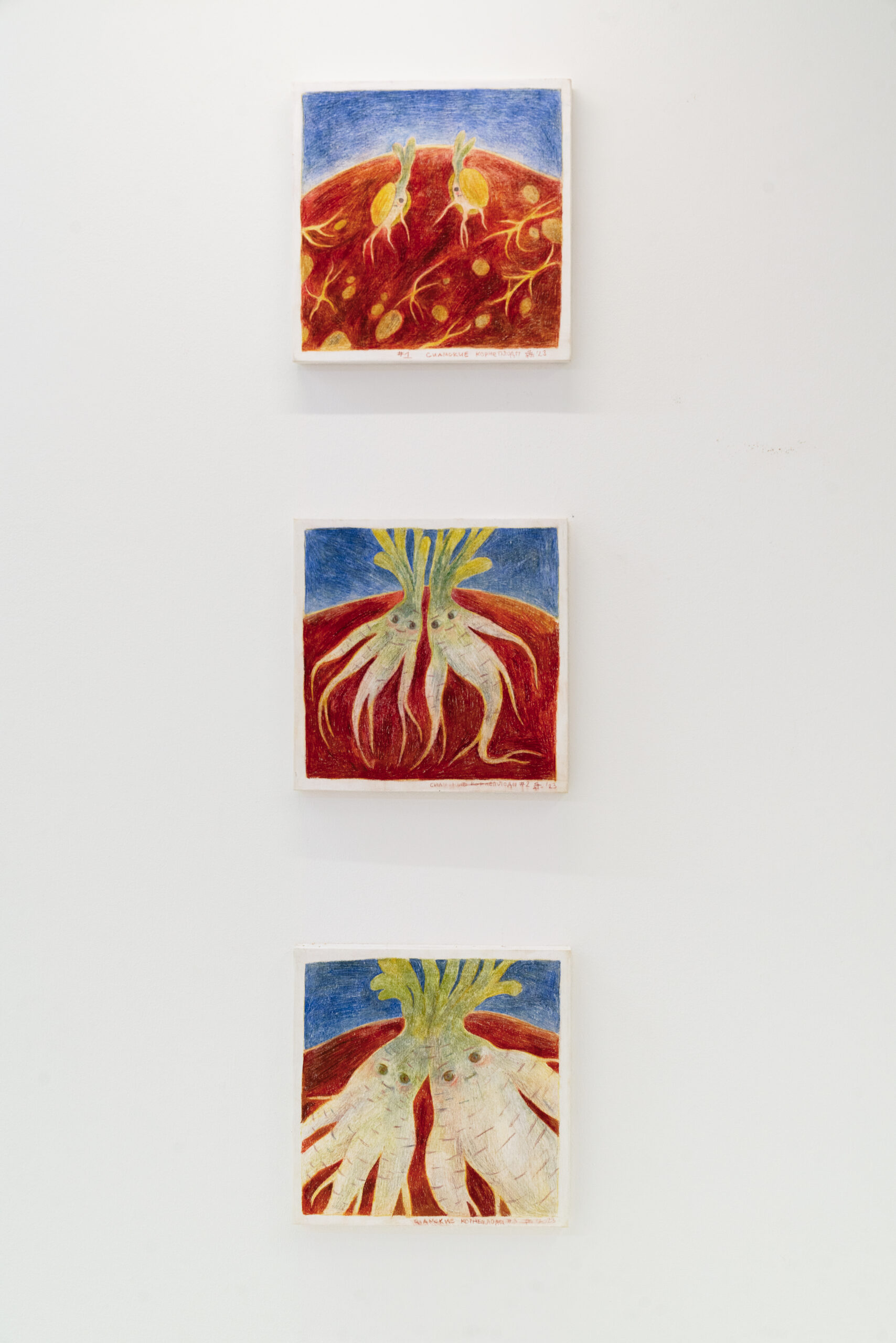
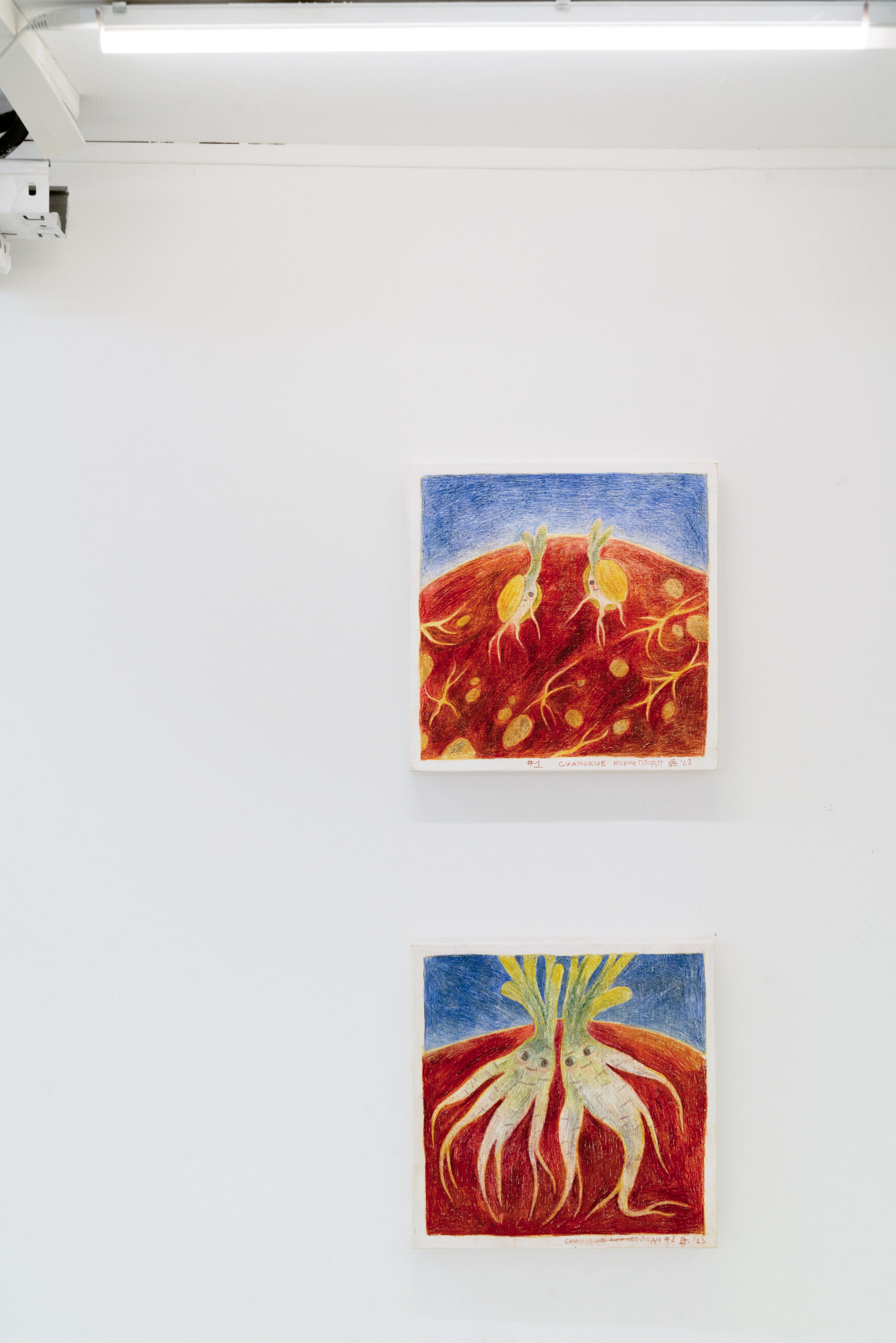
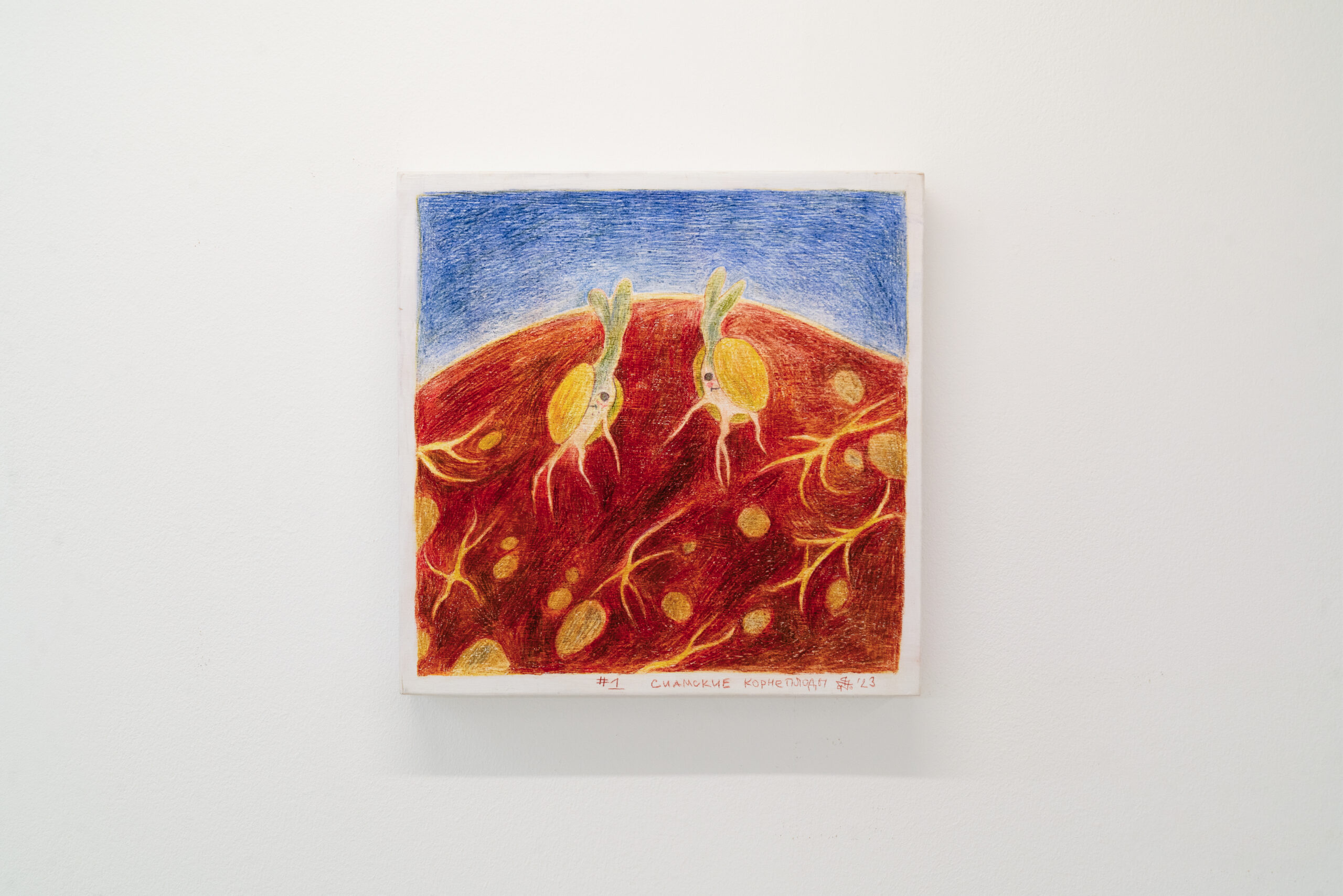
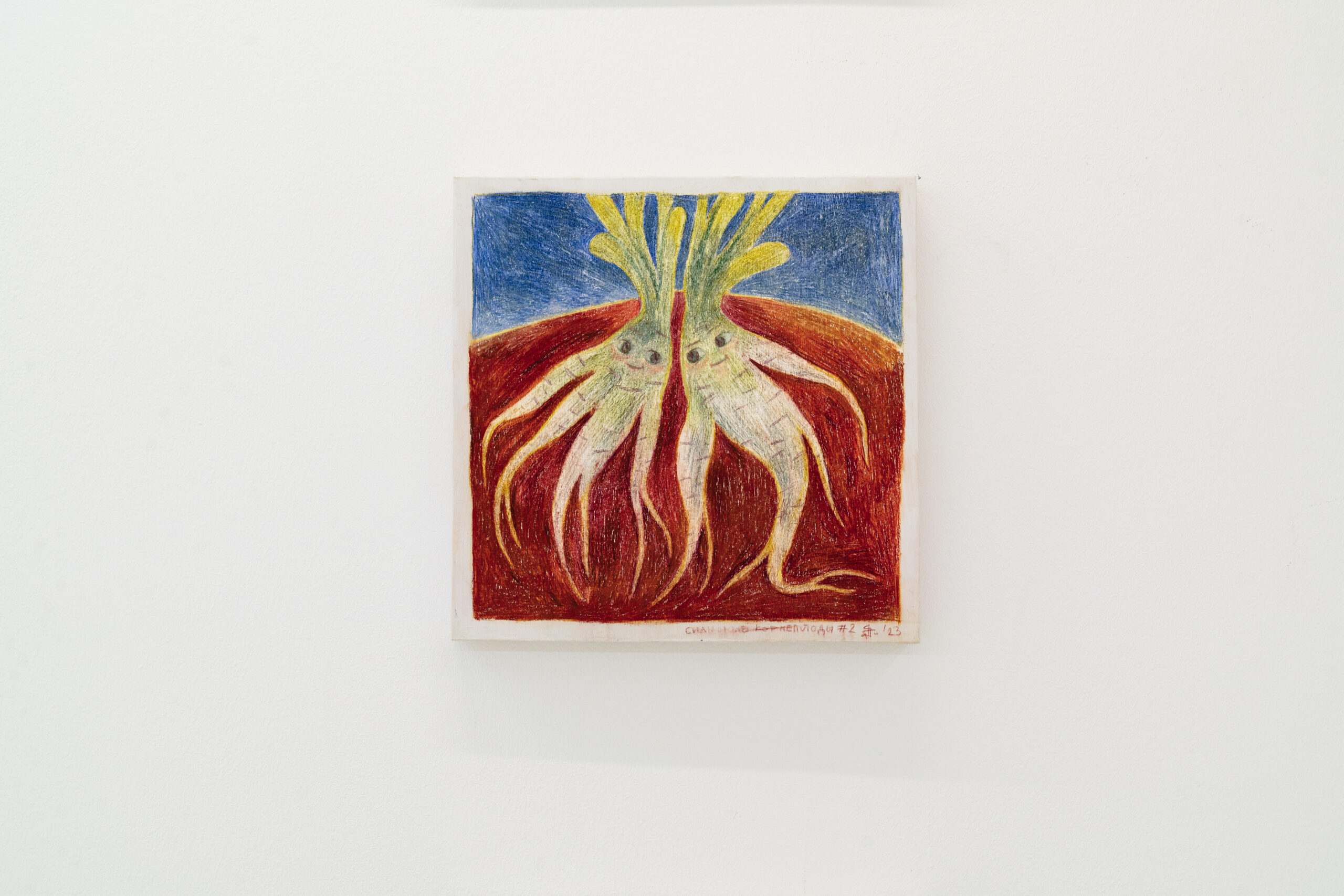
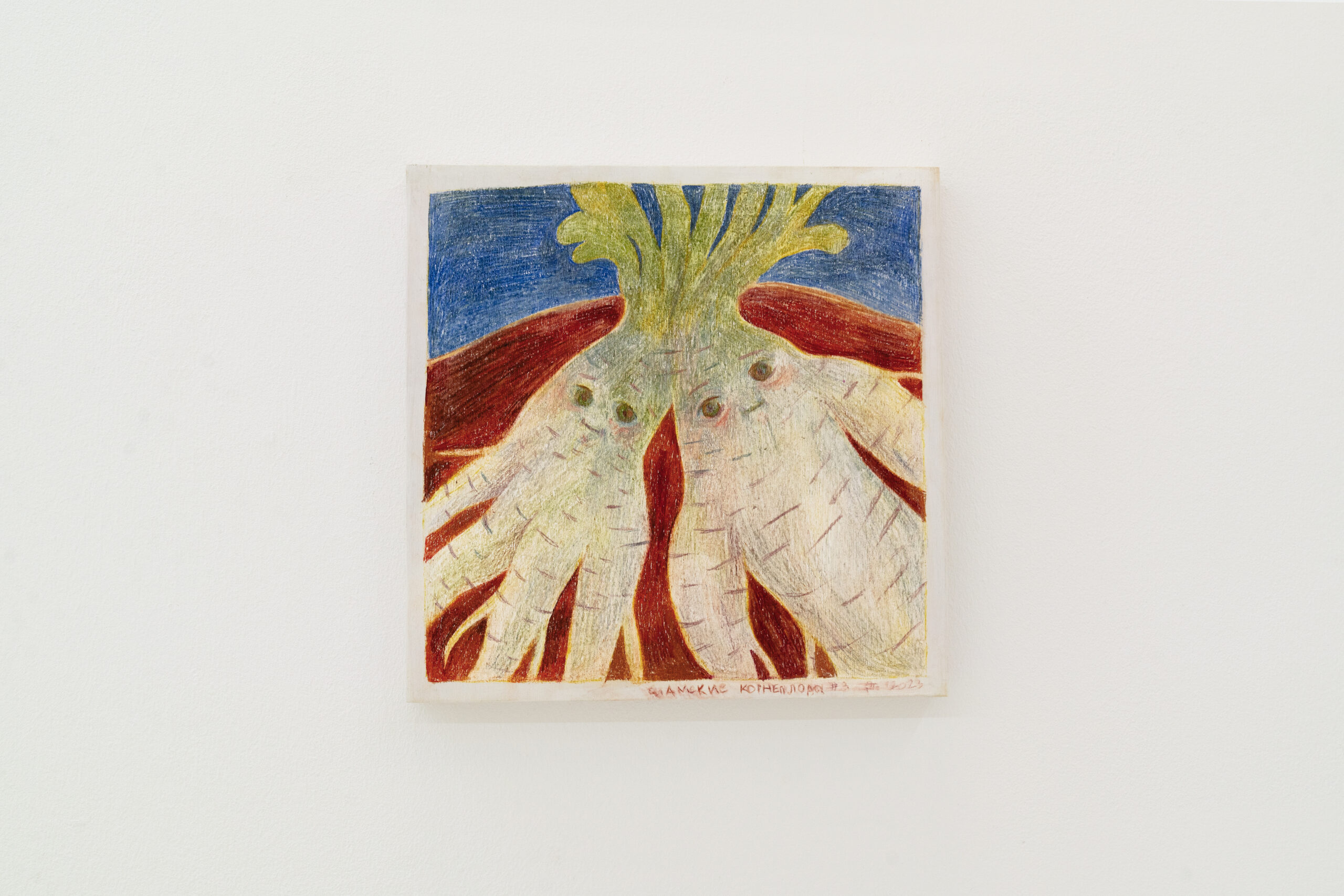
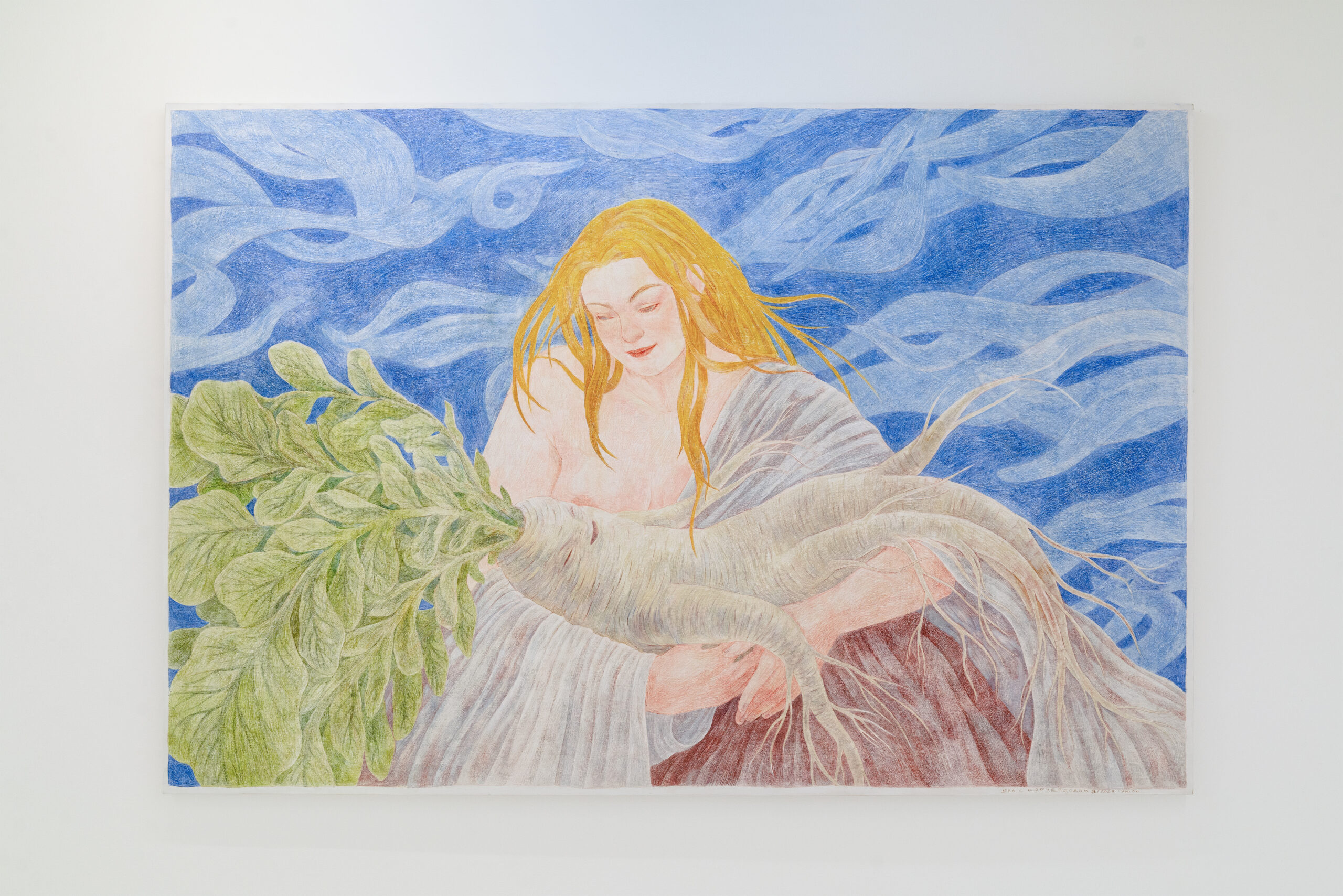
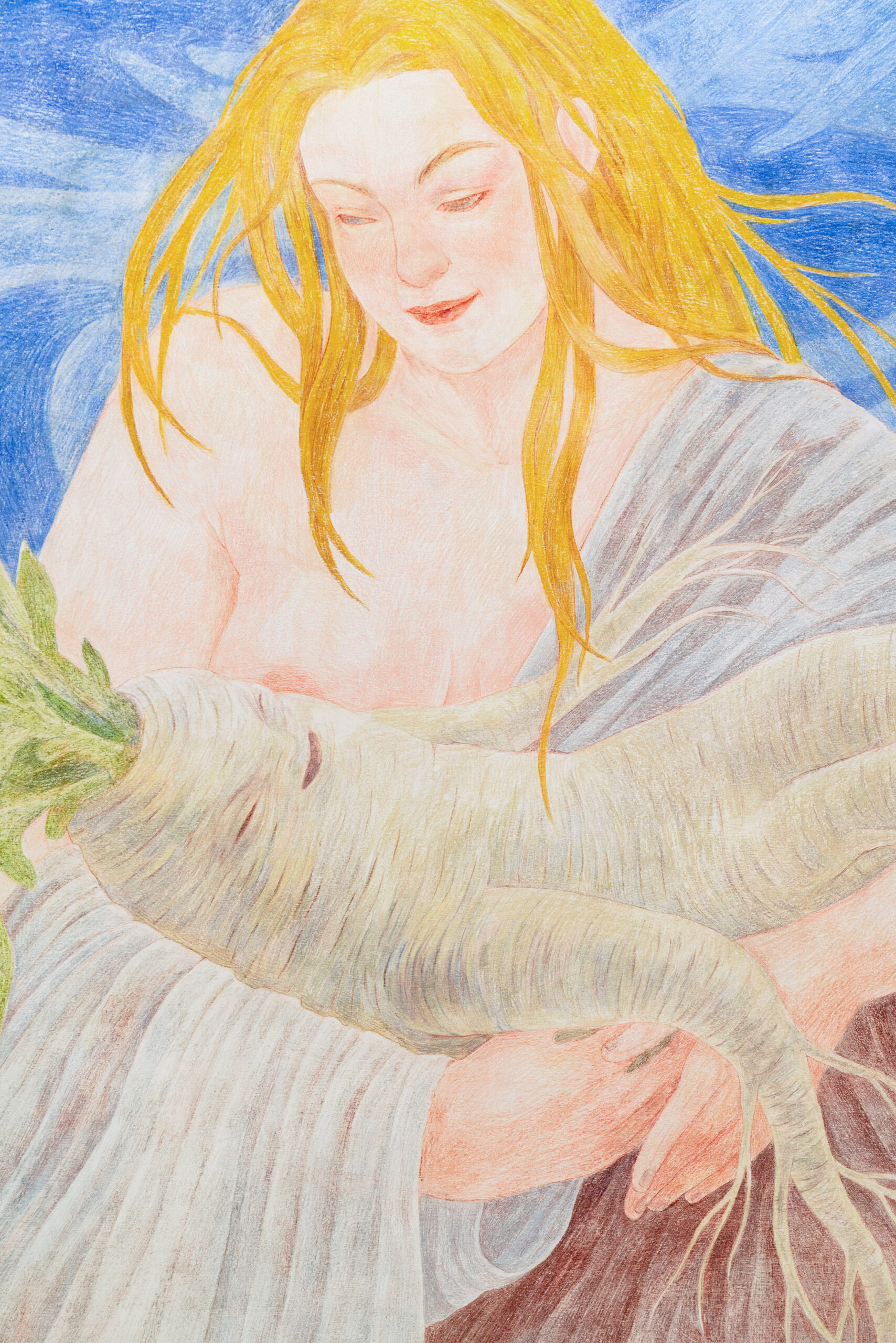
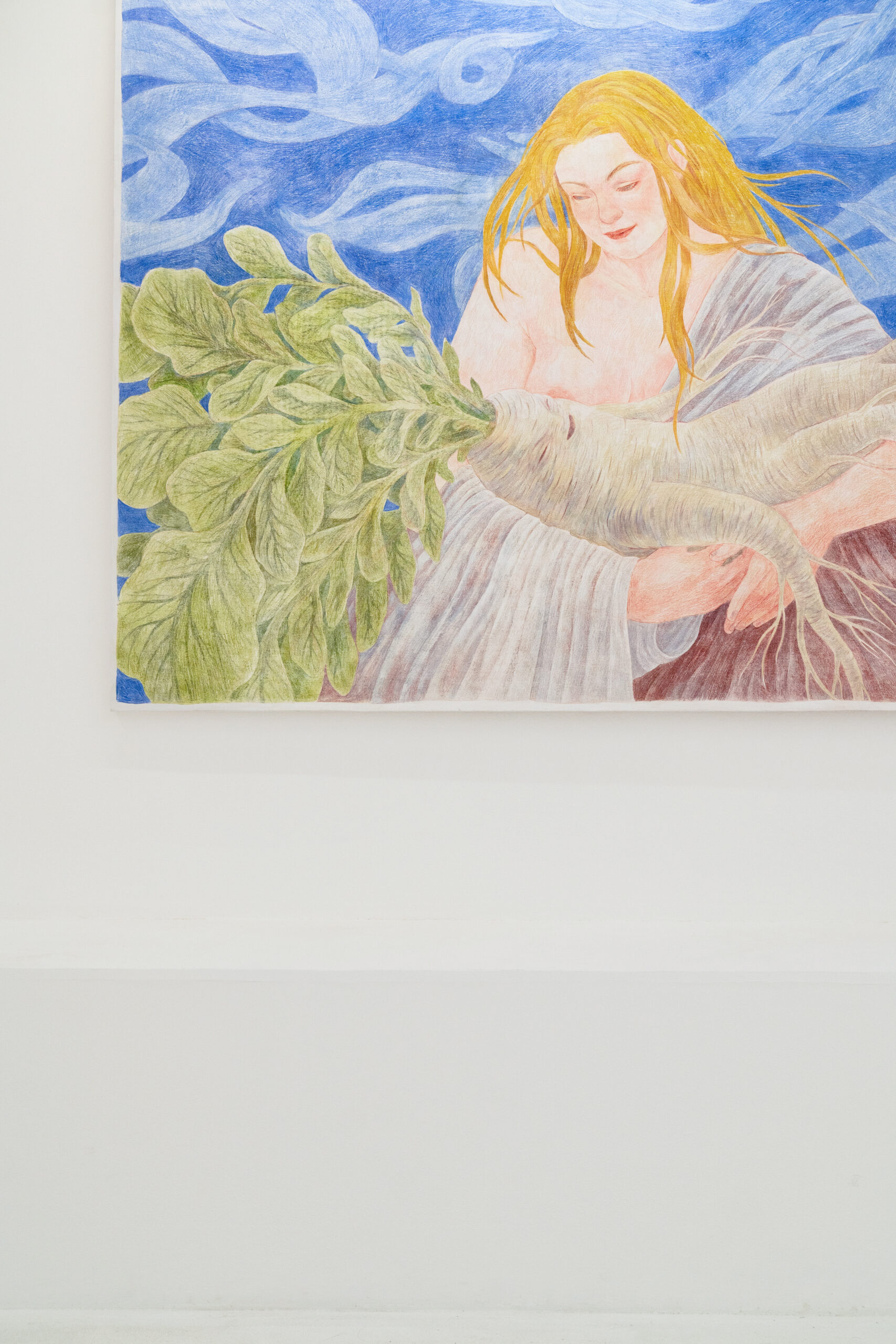
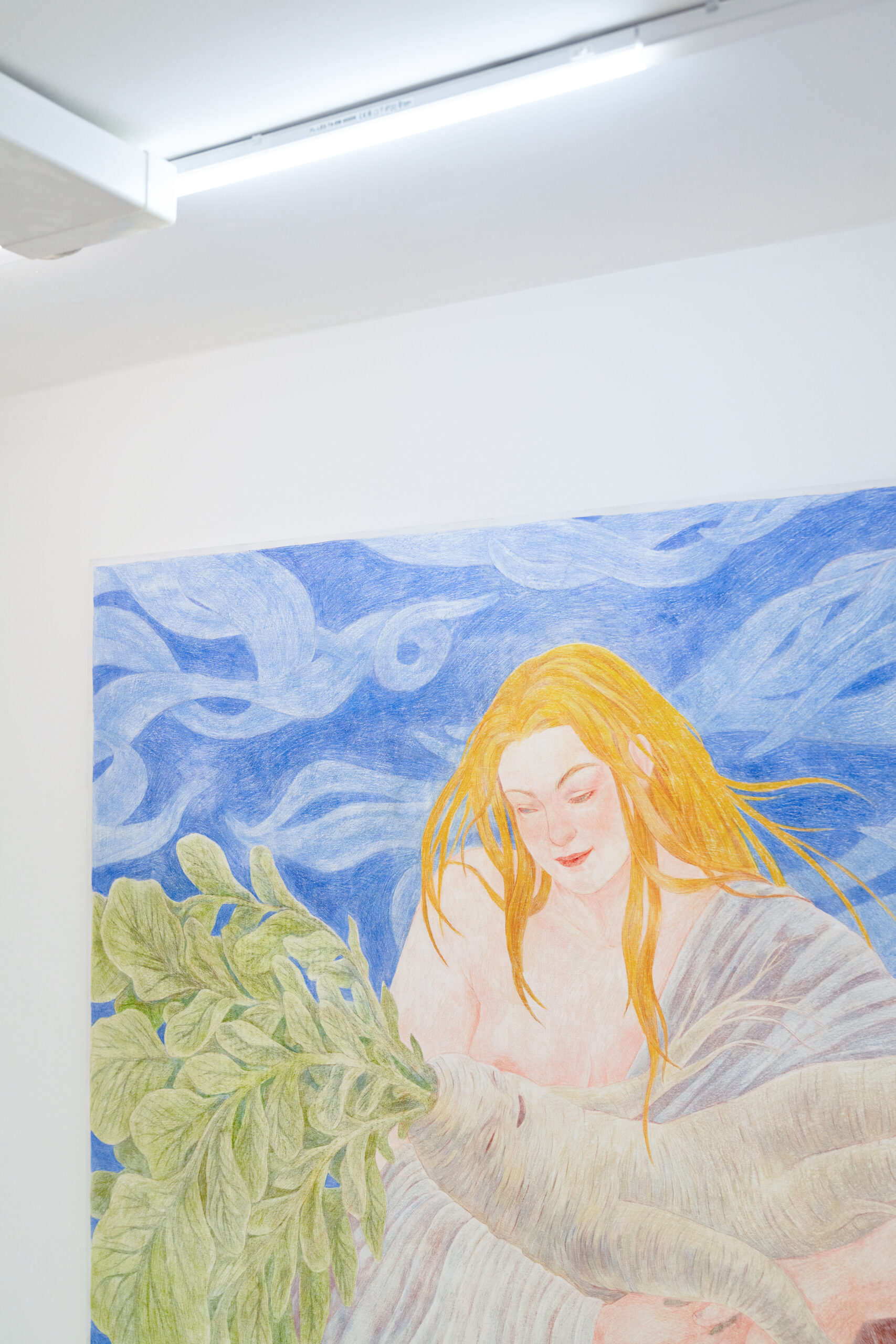
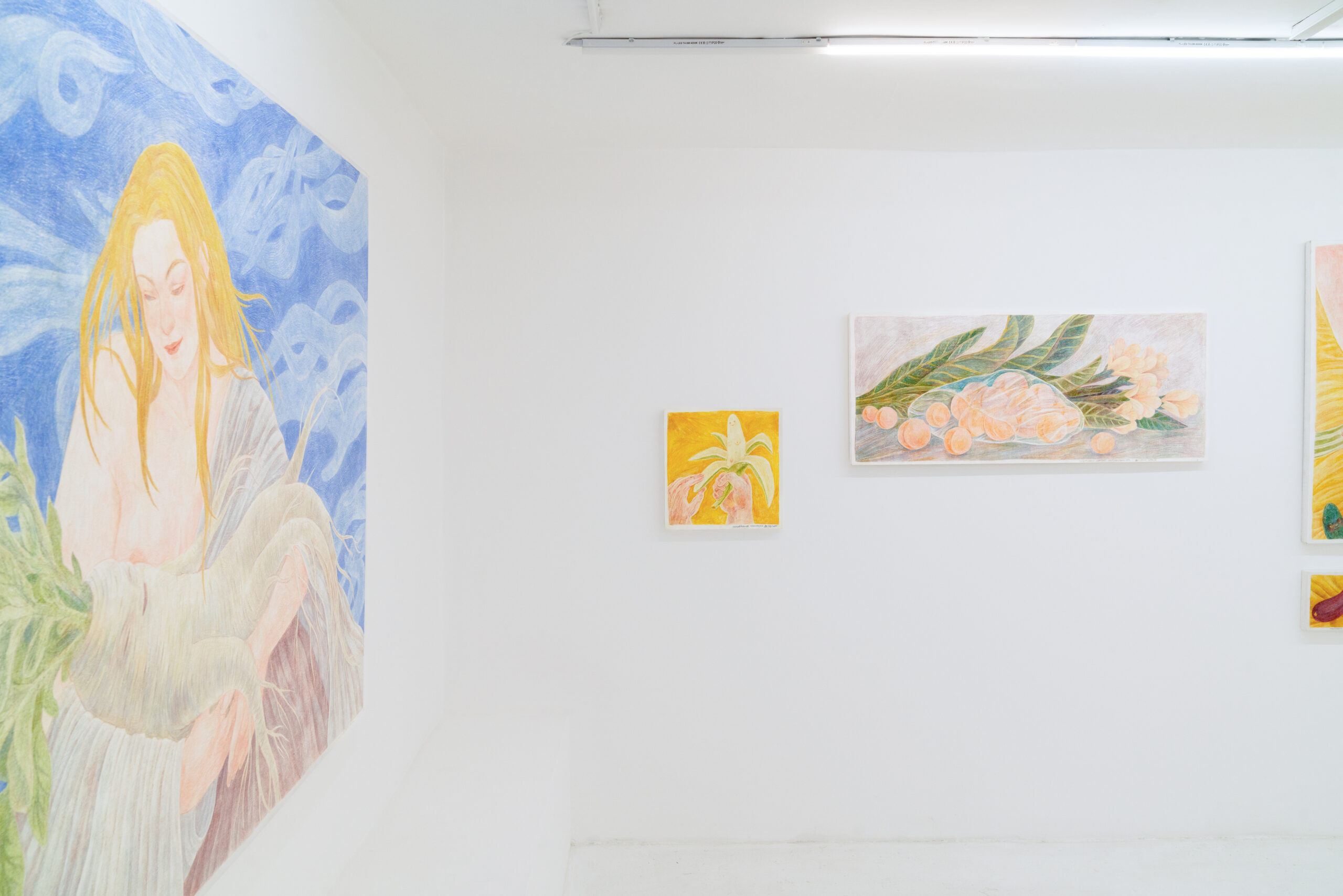
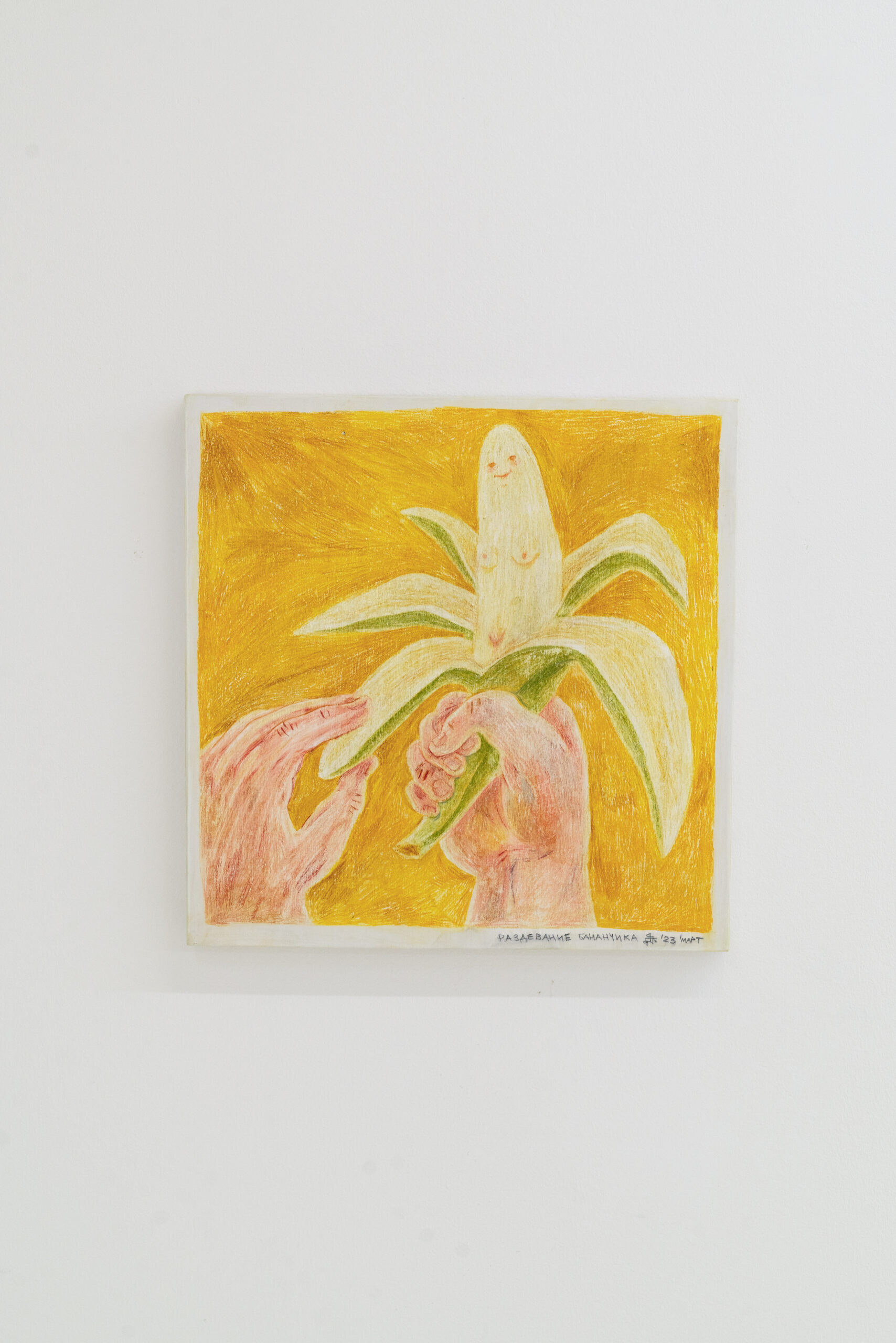
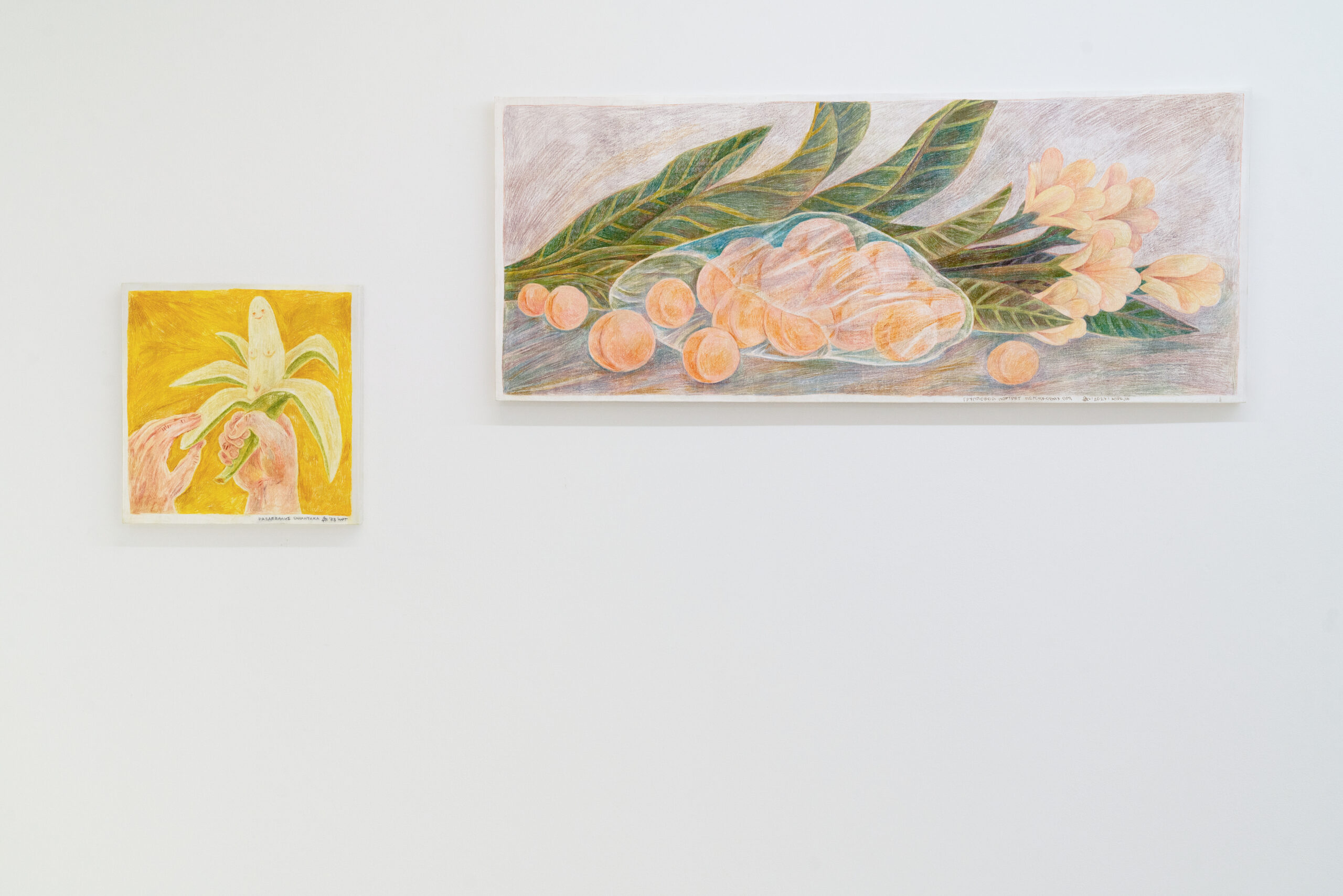
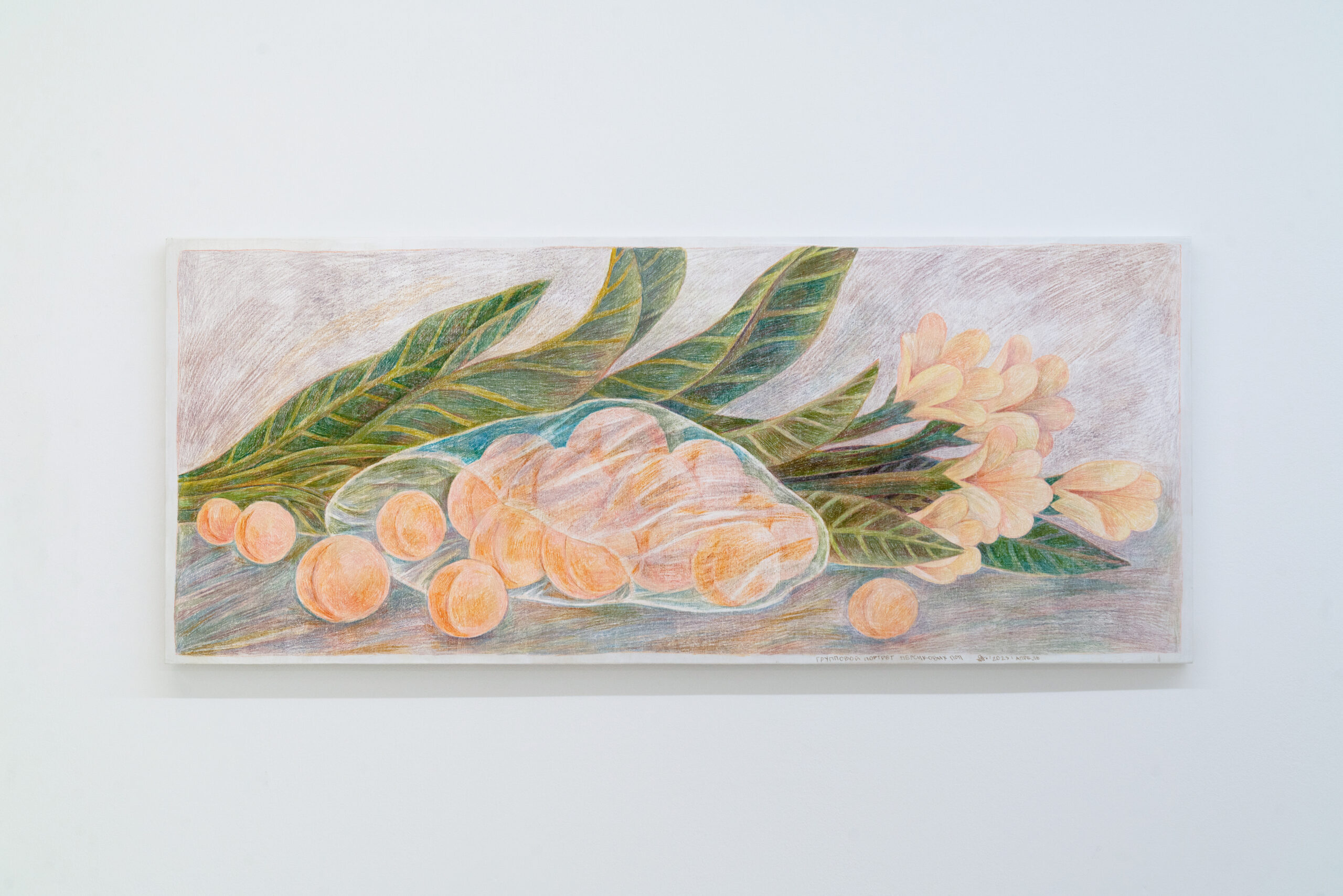
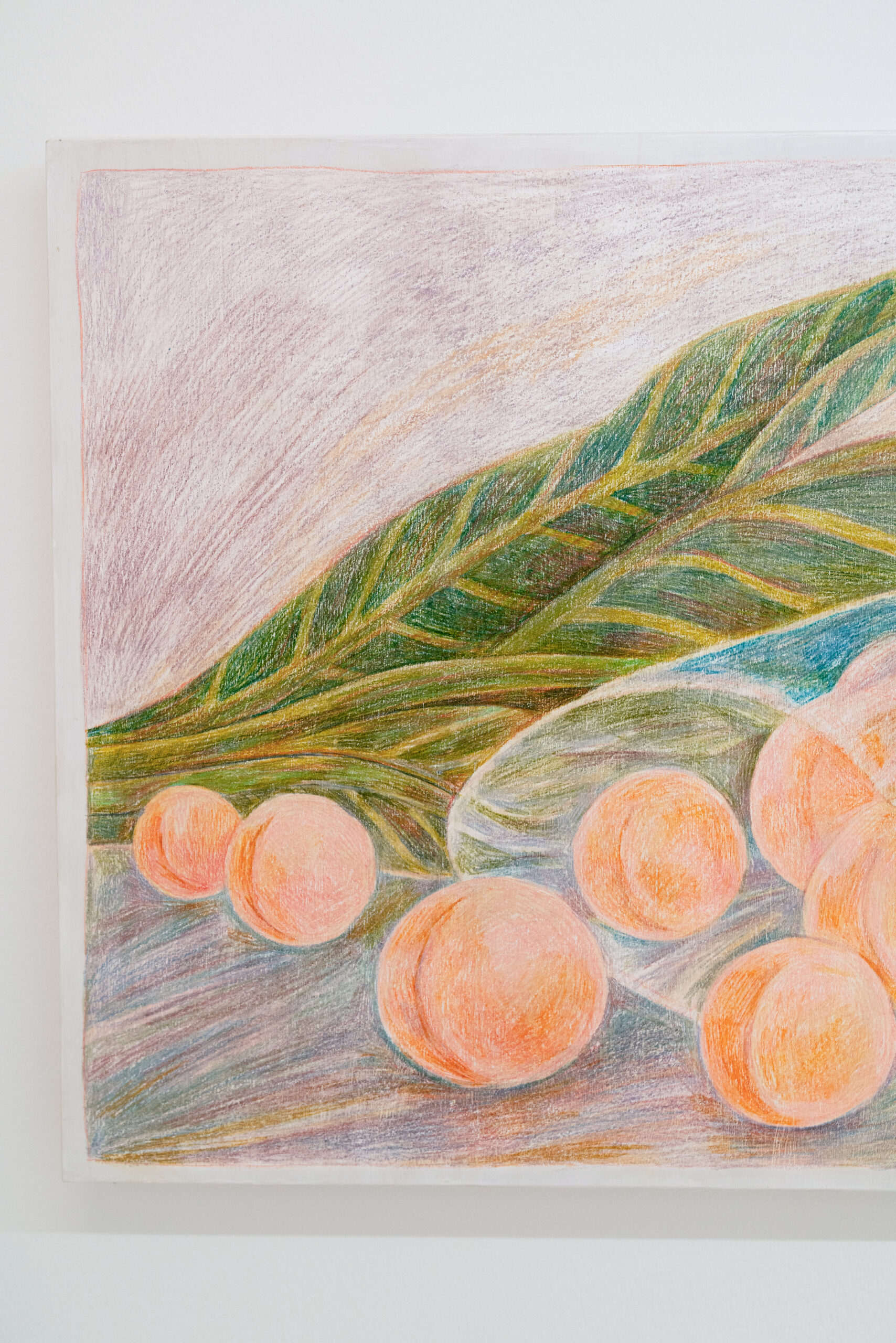
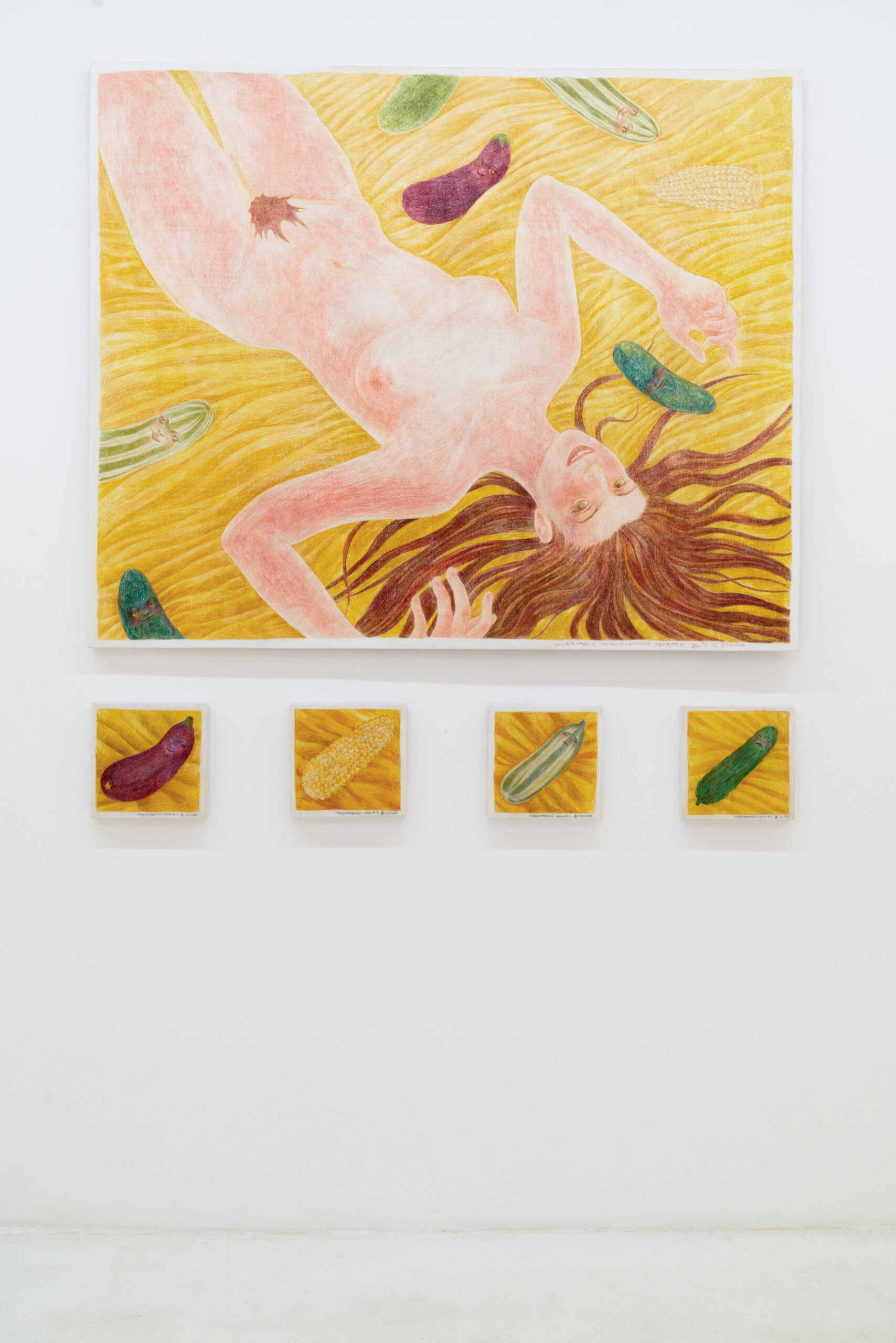
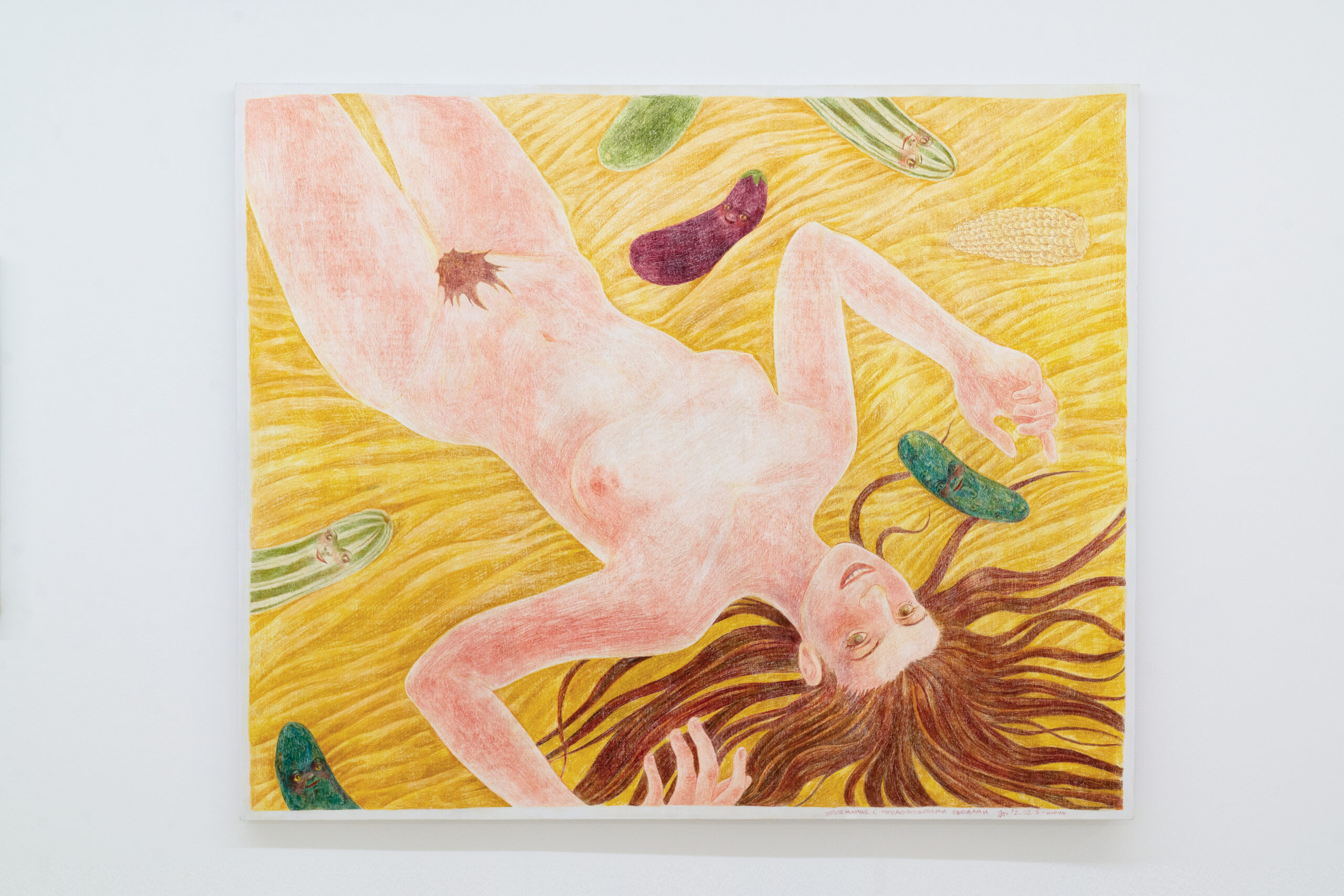
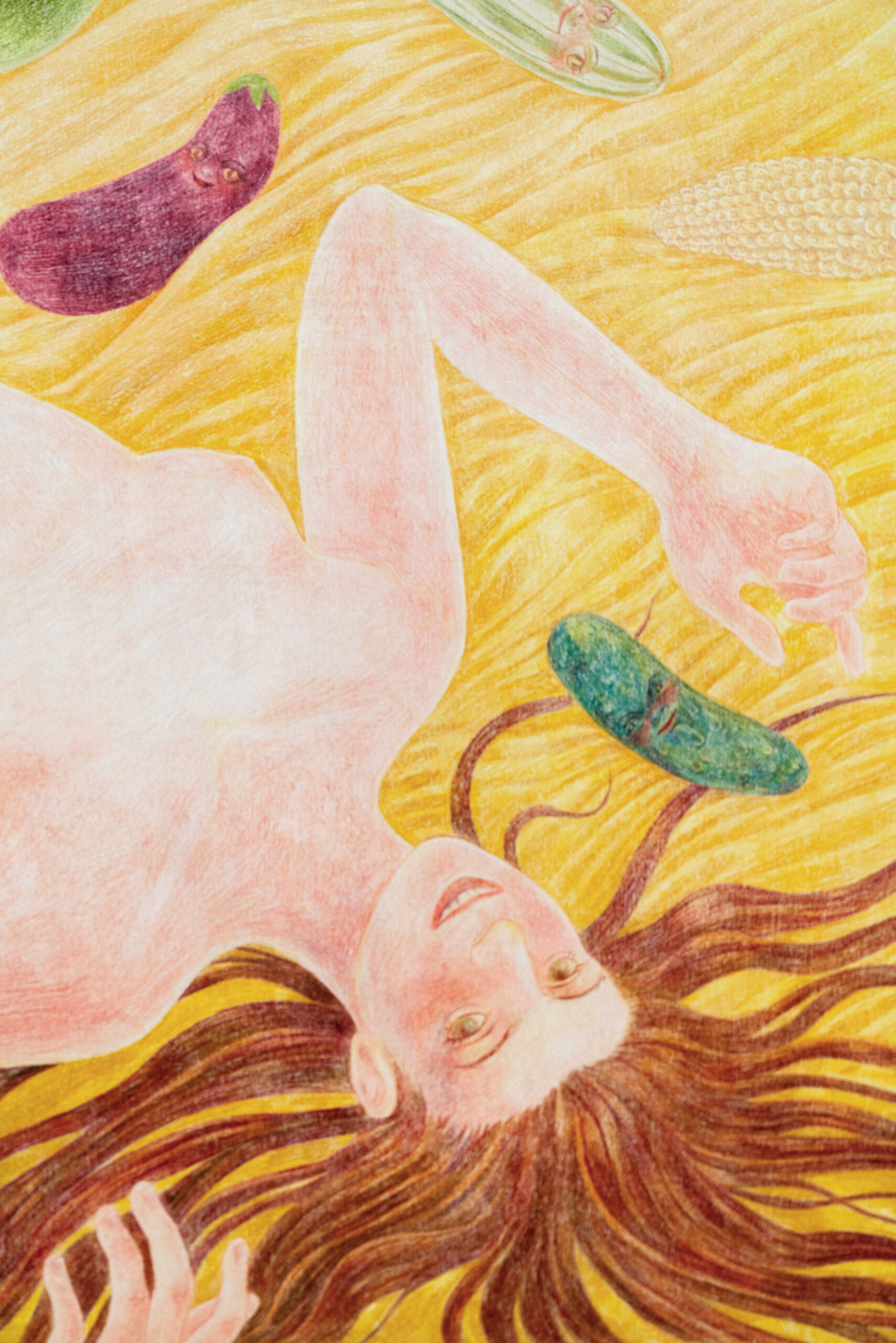
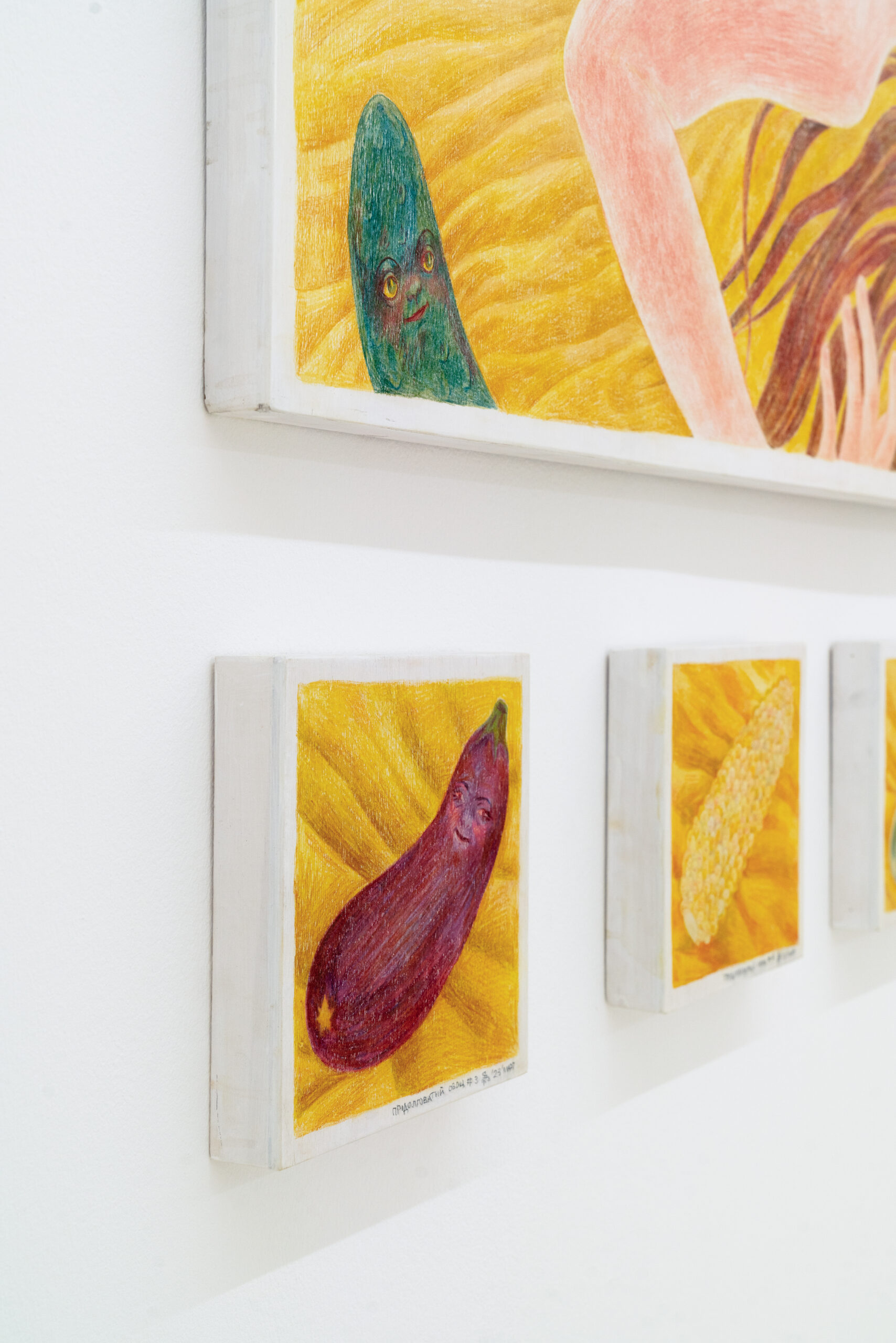
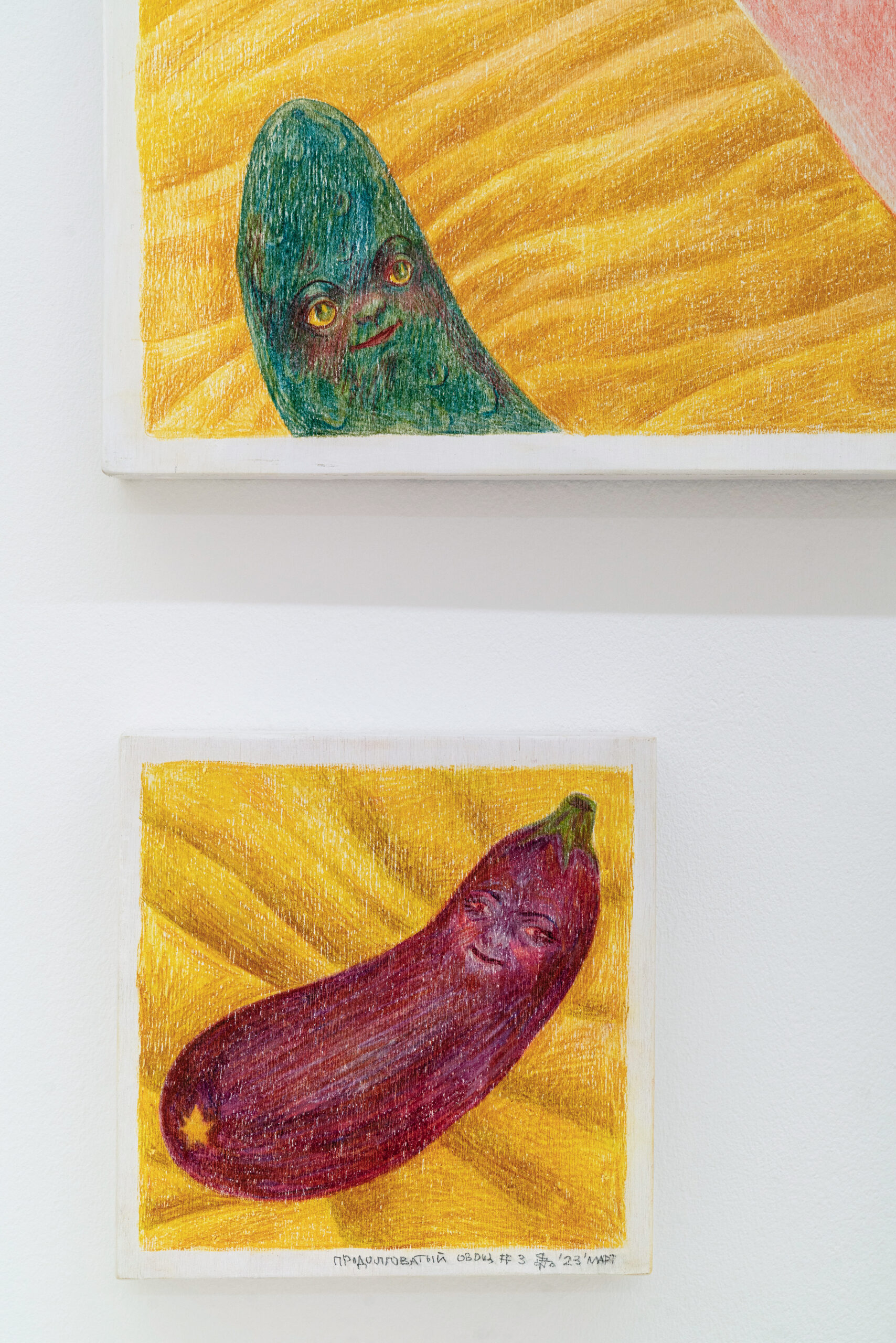
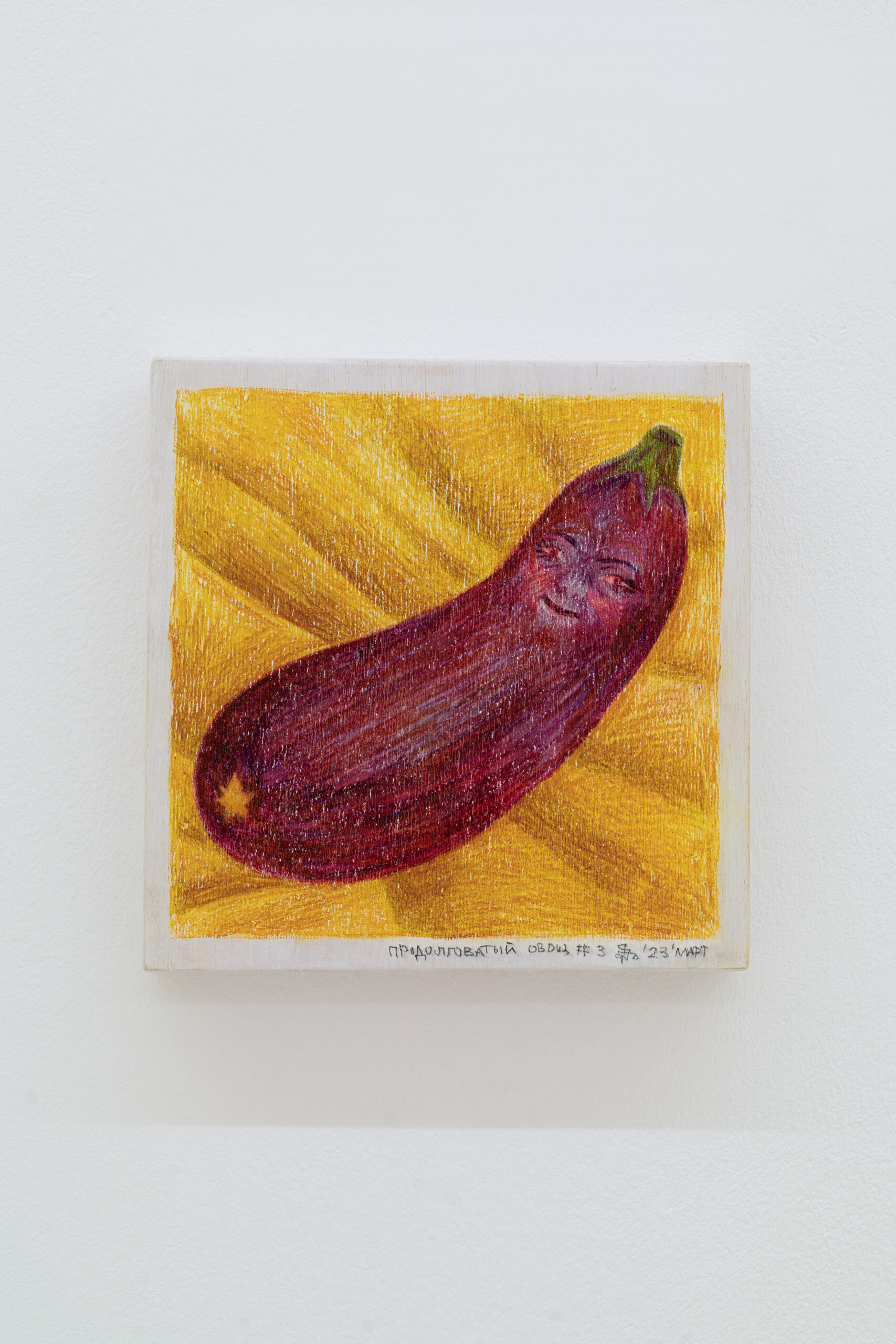
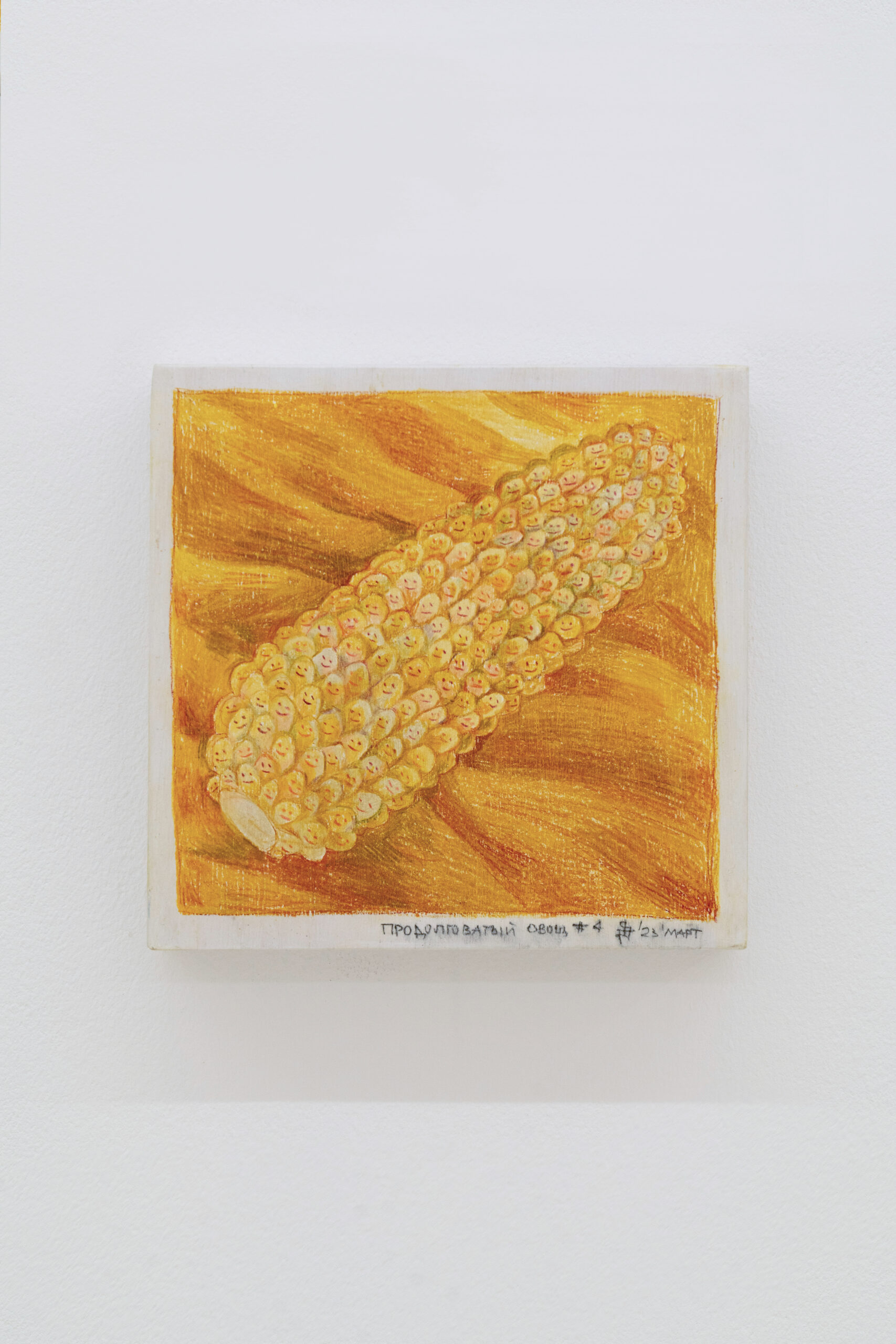
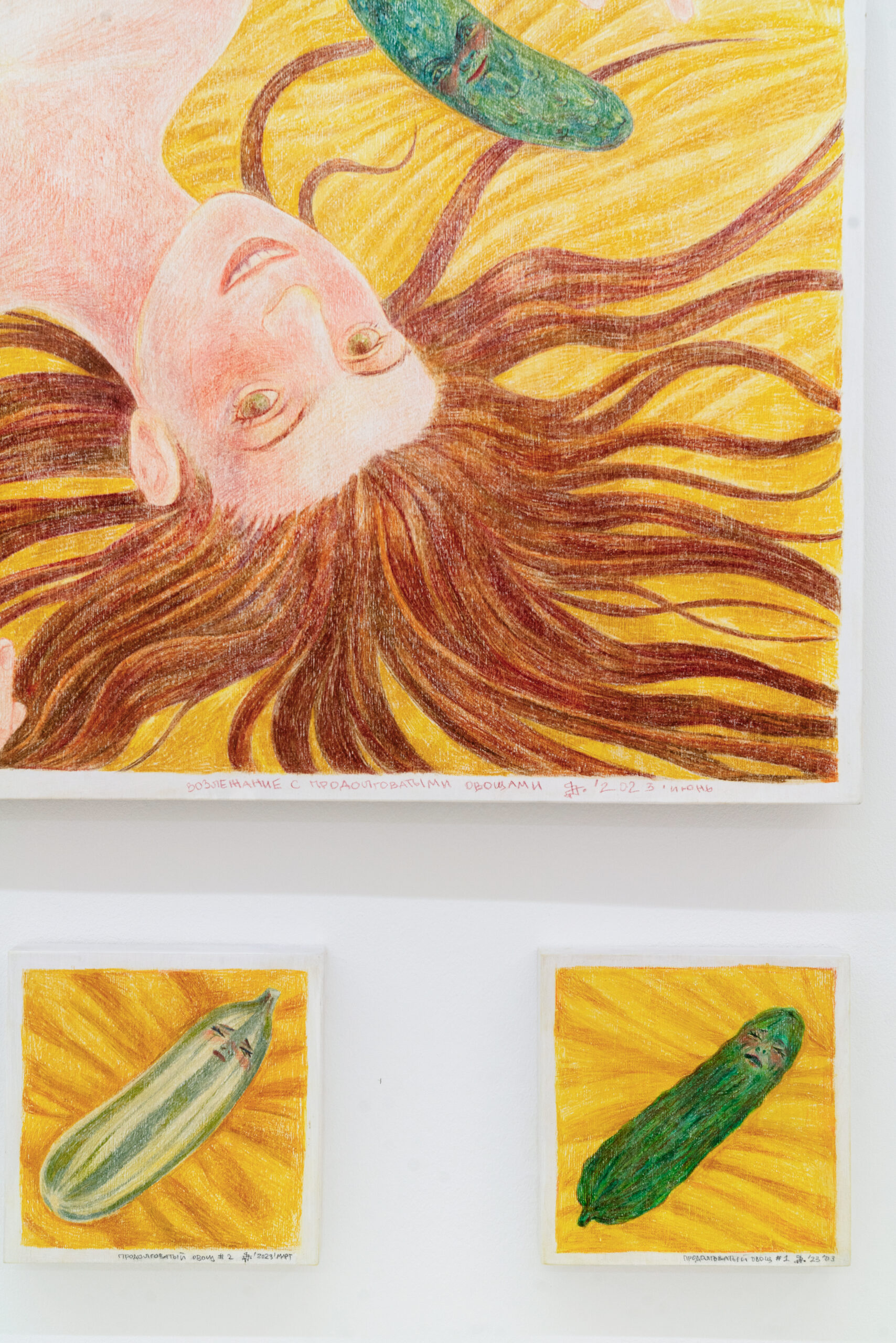
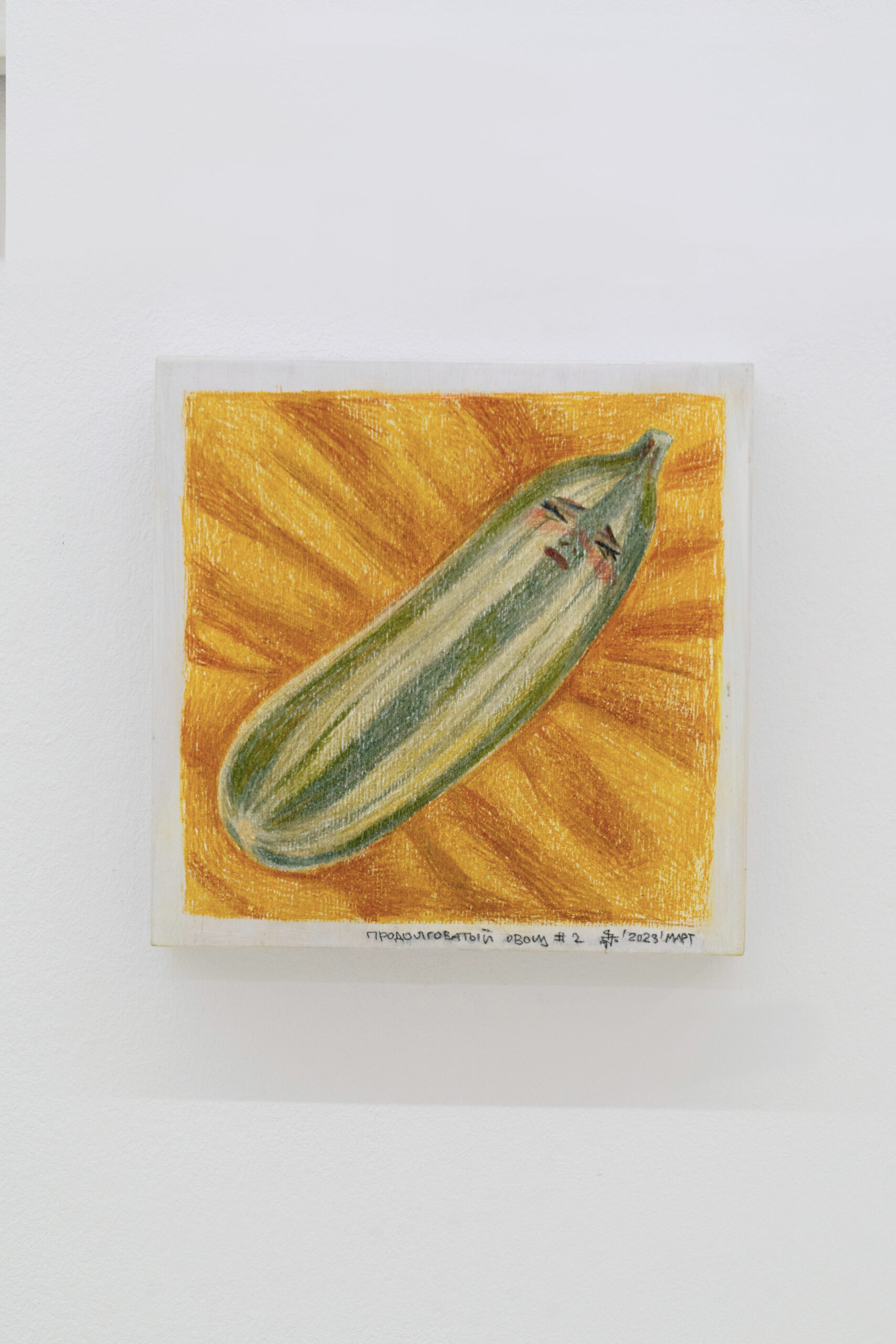
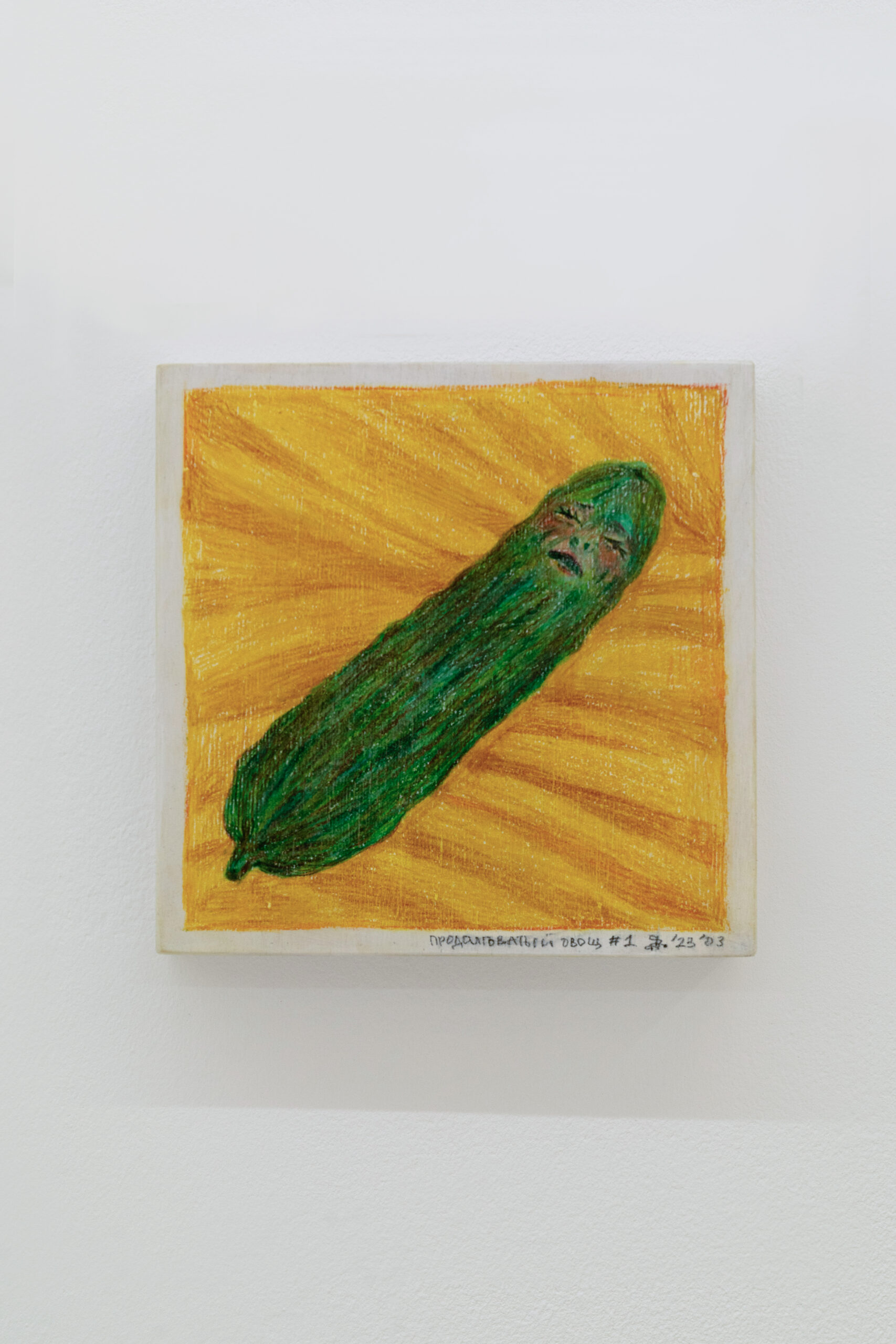
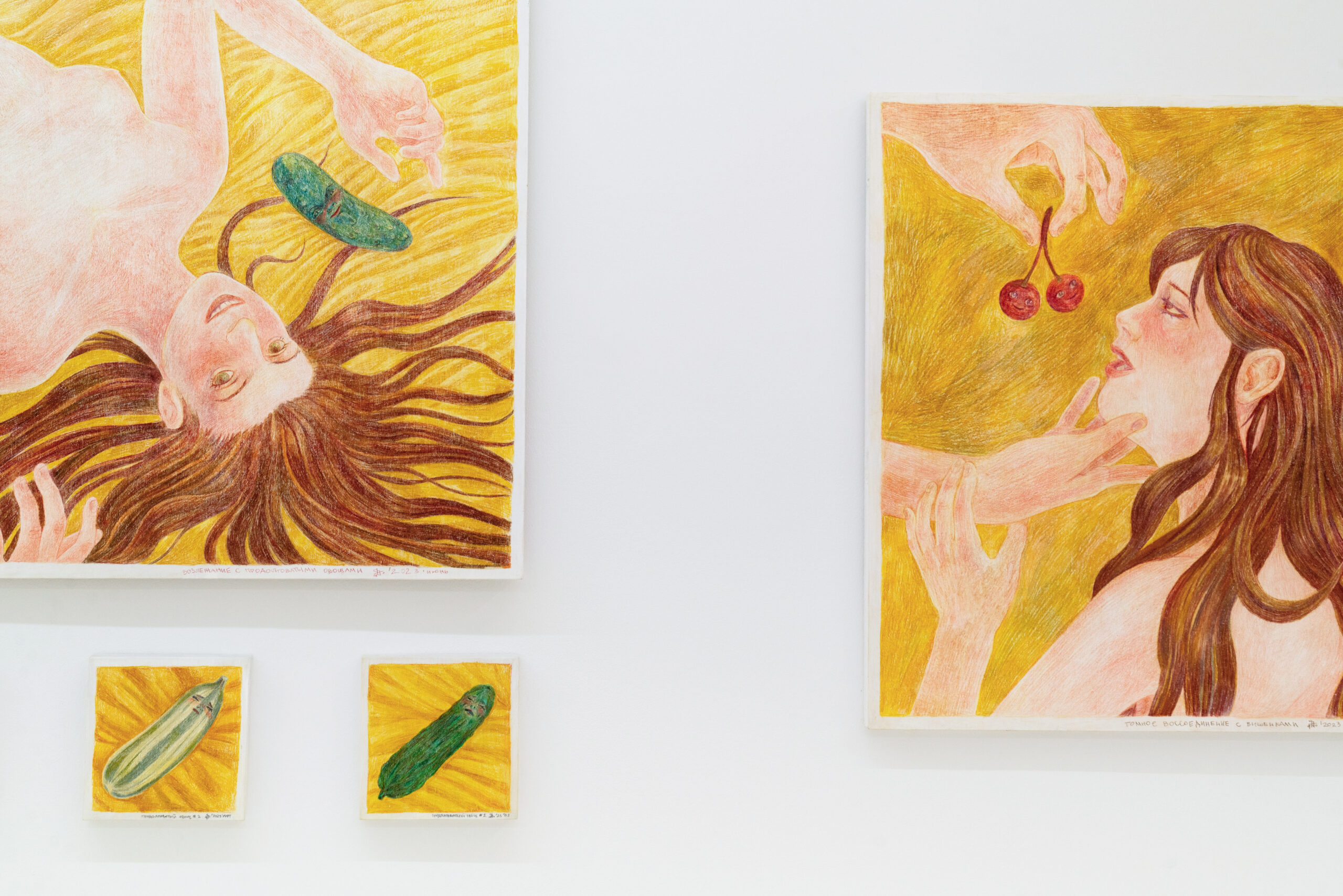
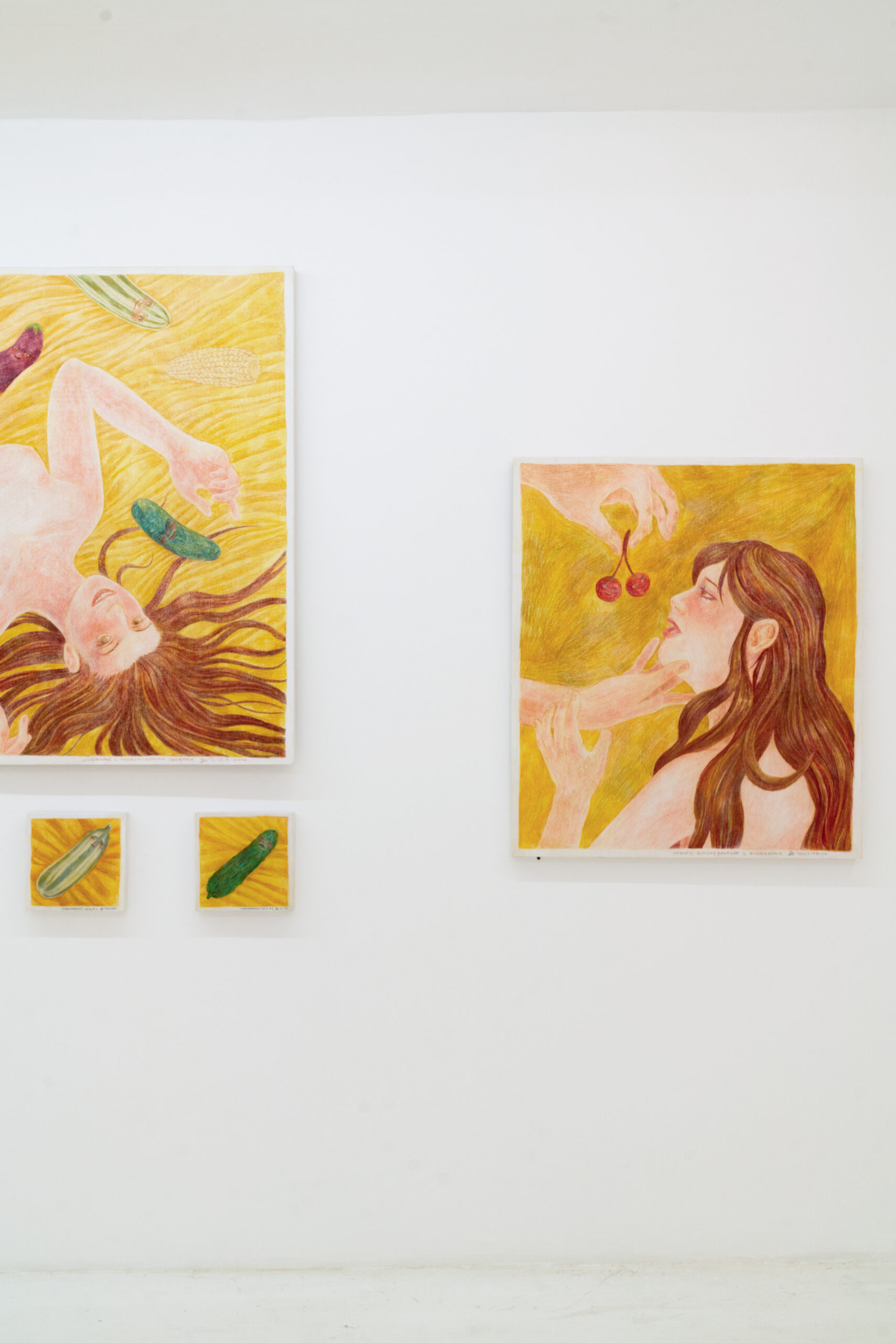
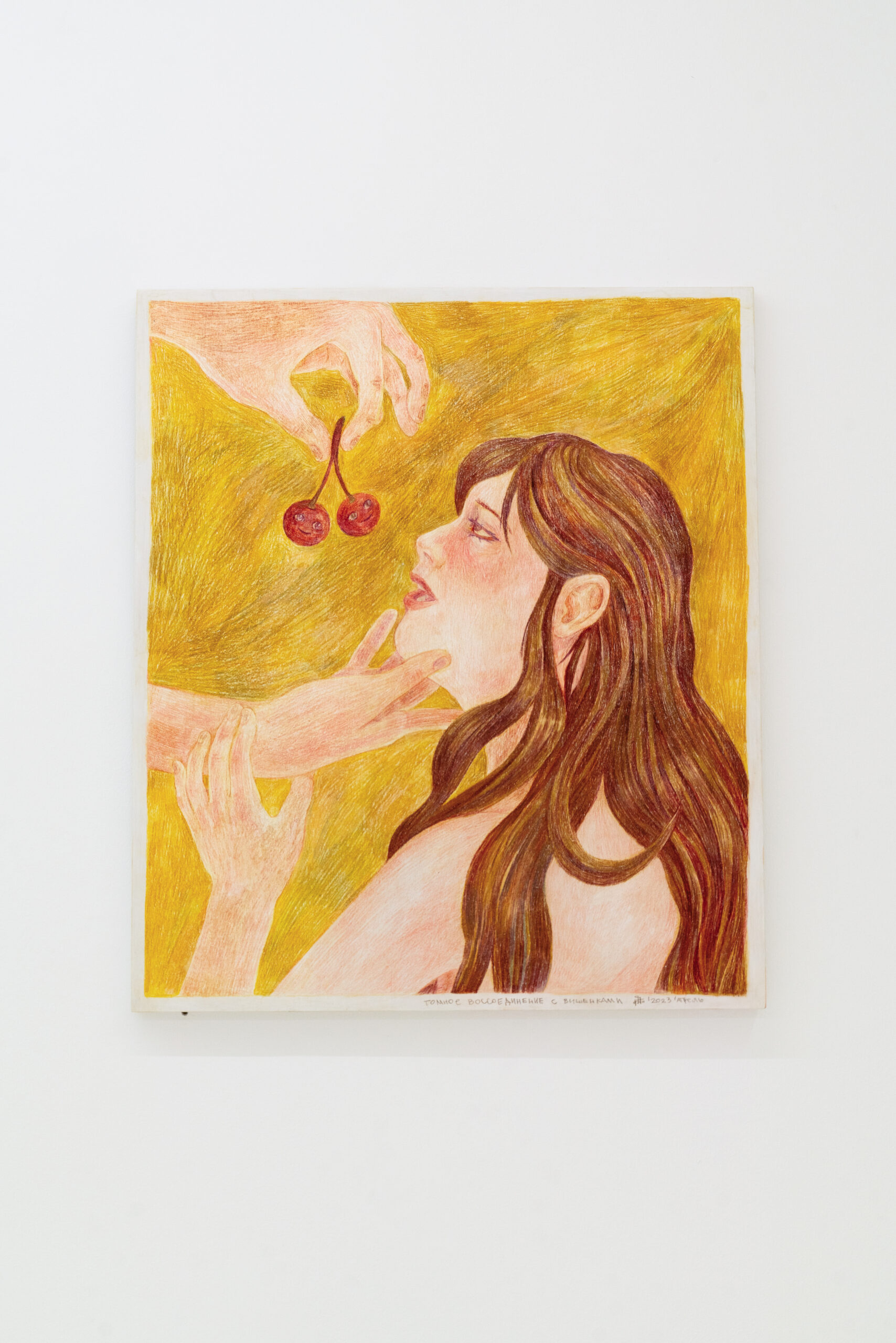
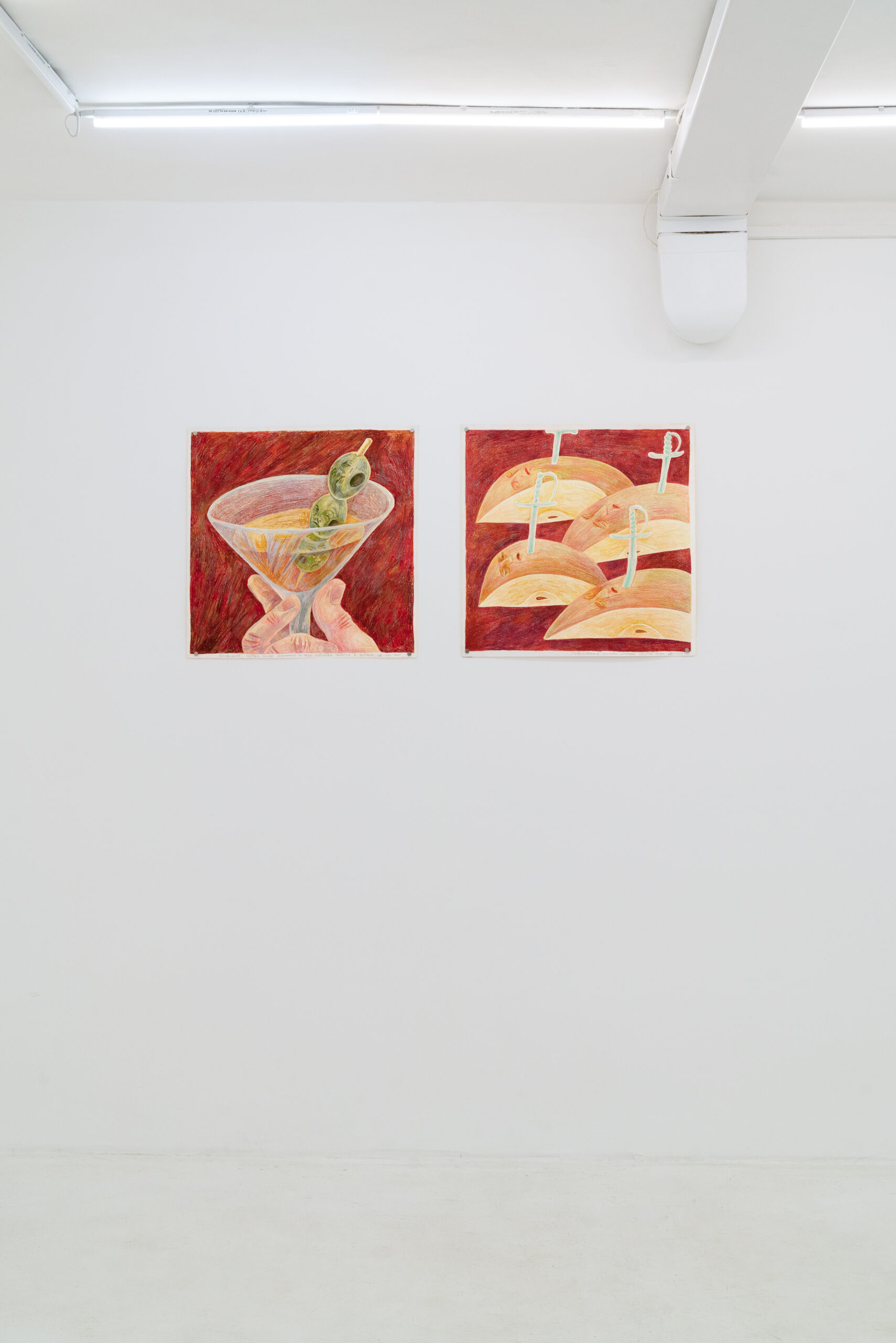
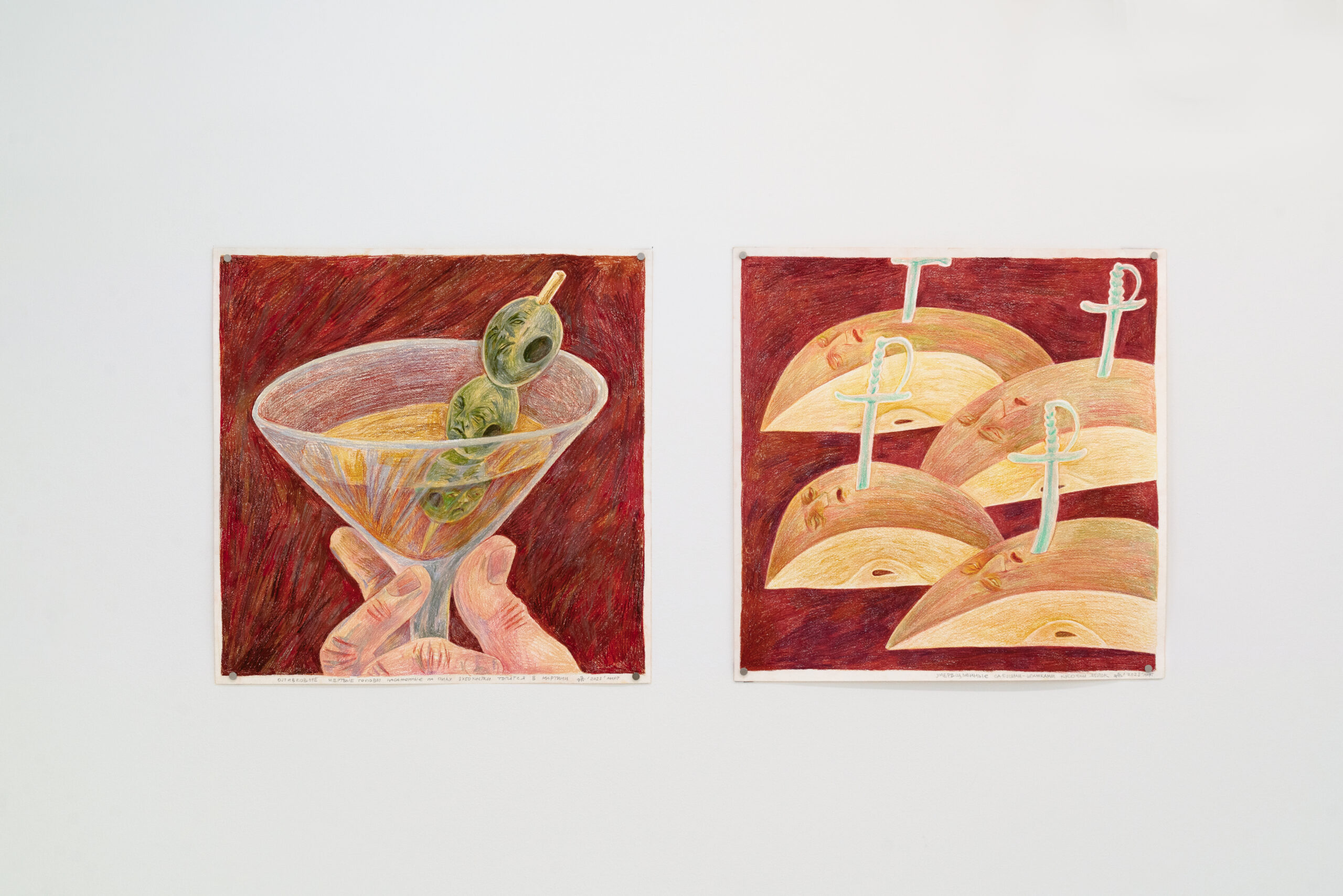
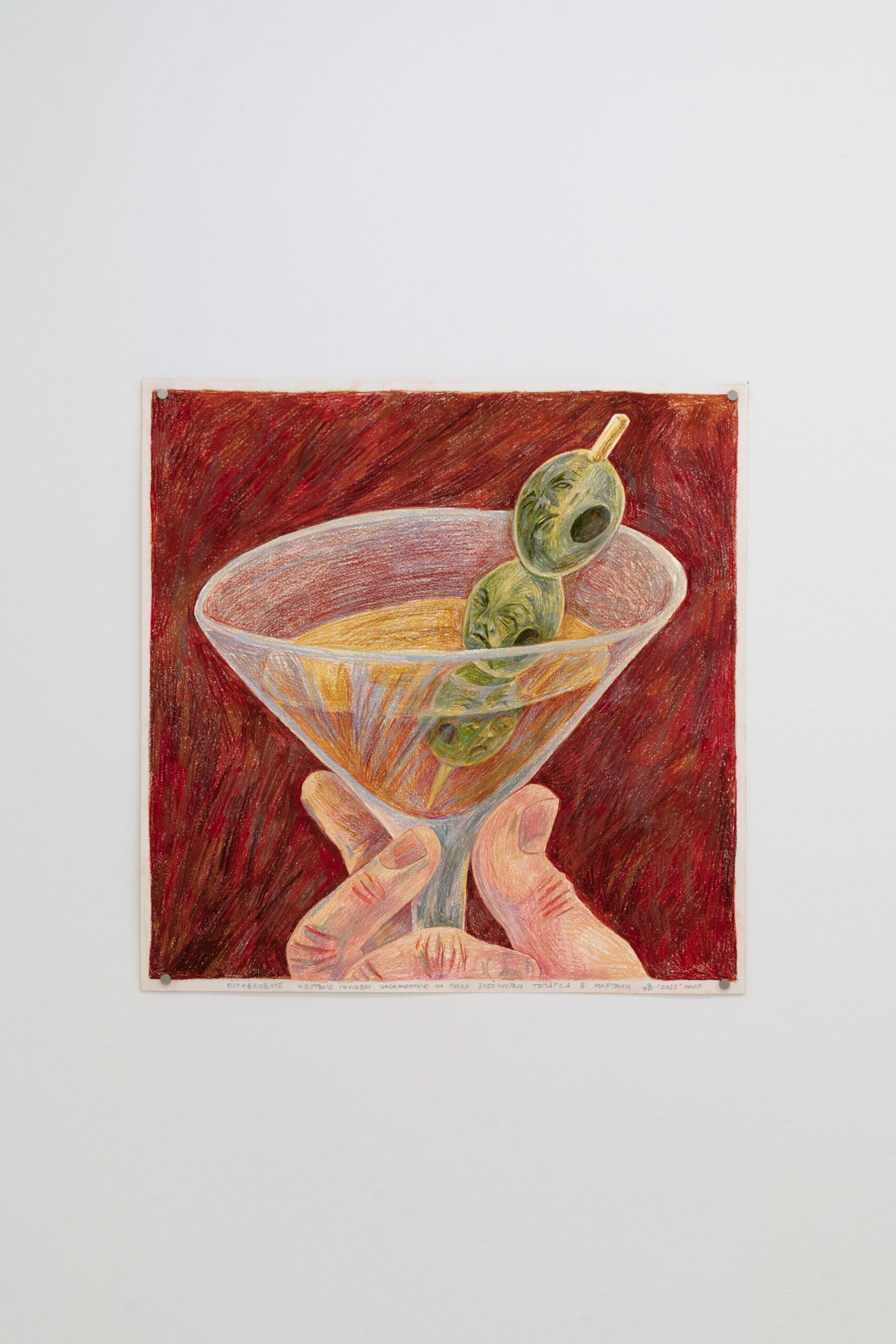
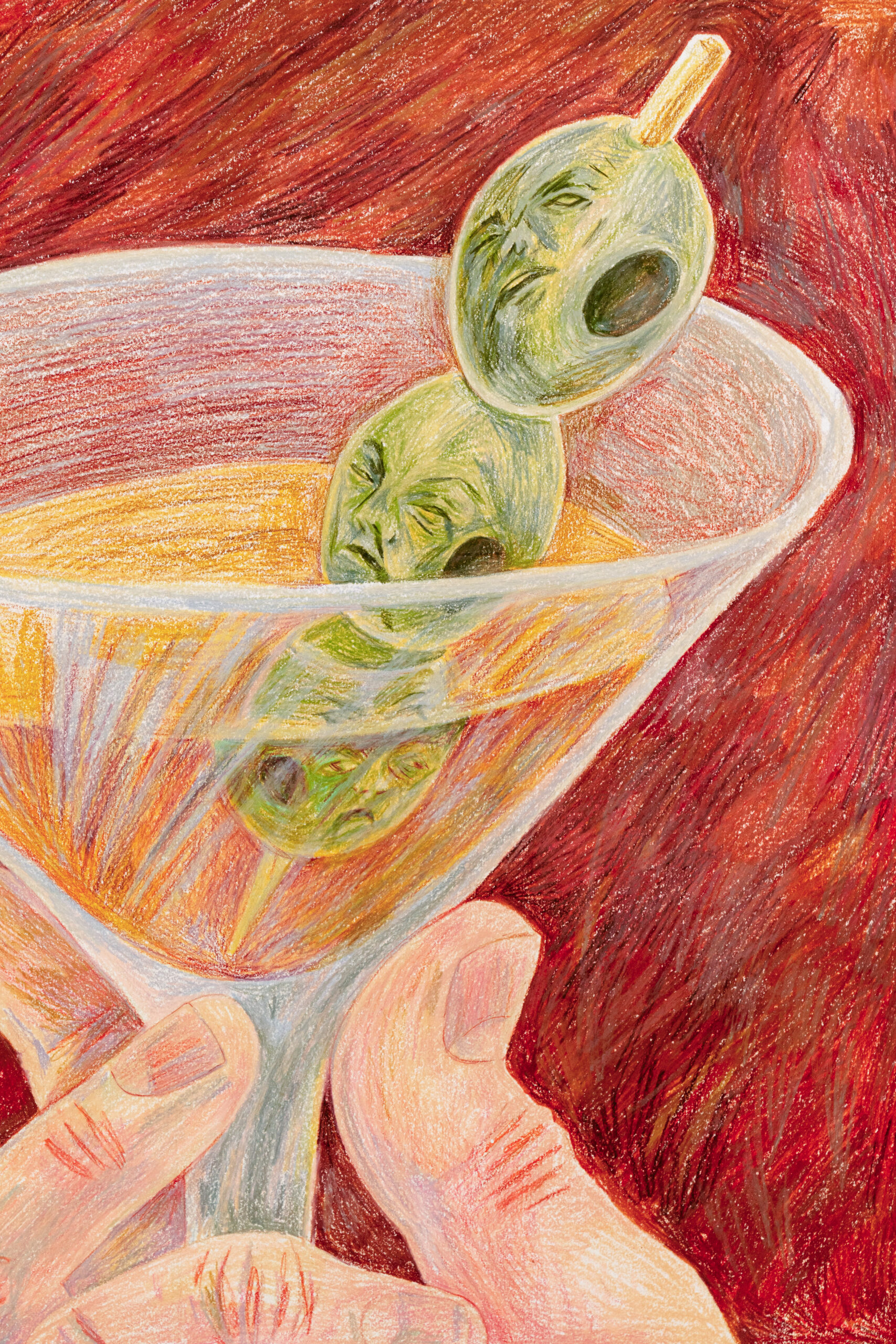
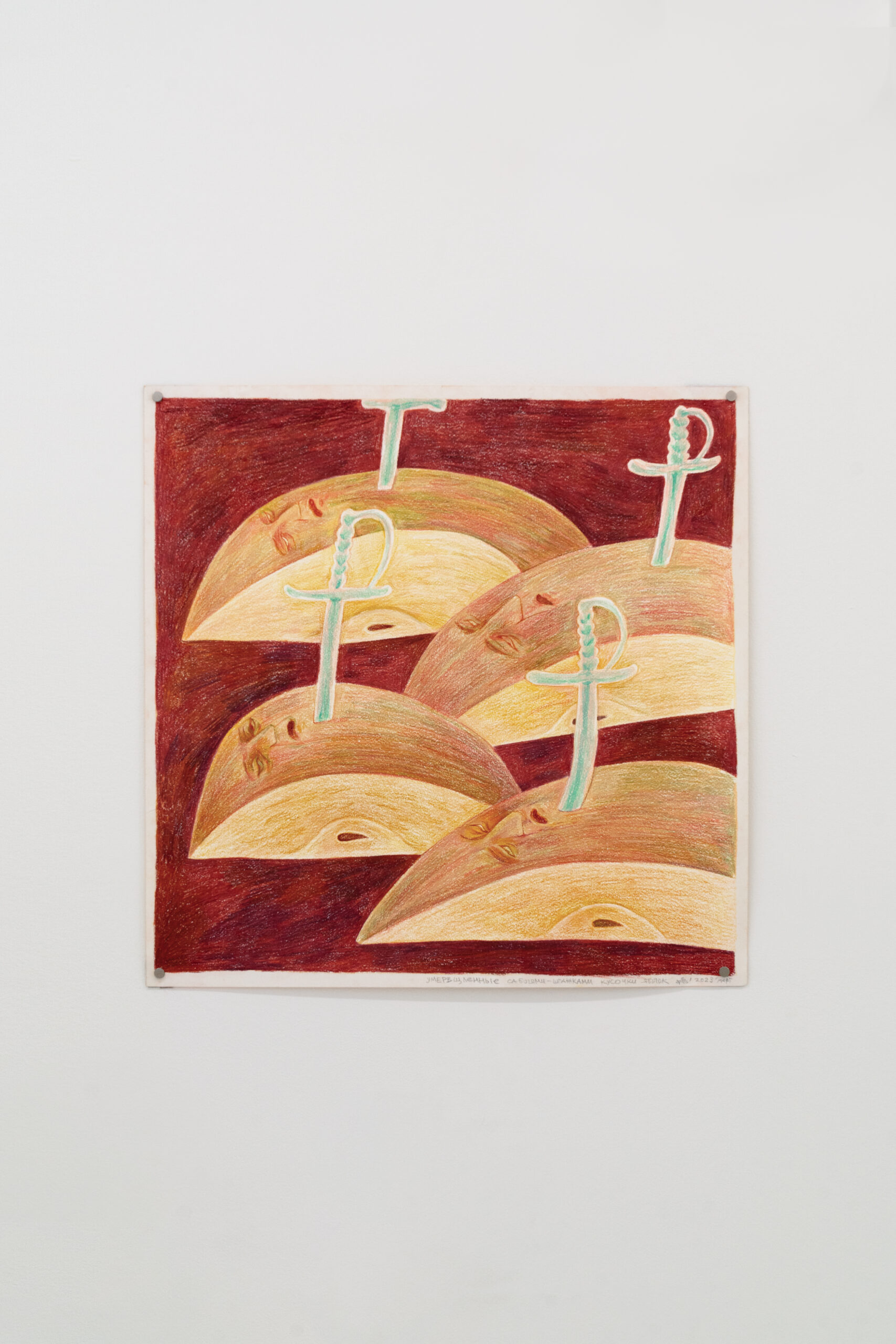
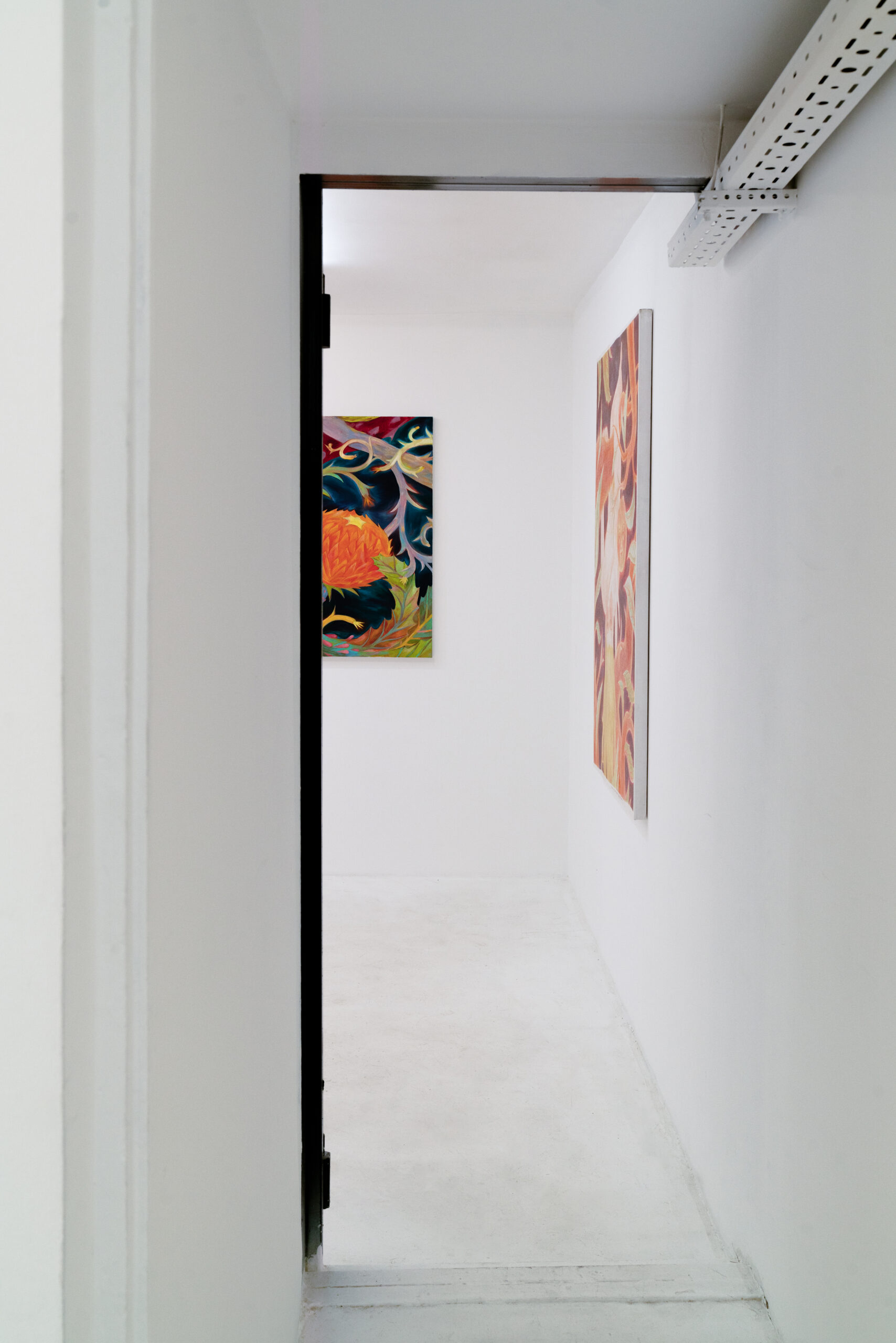
The Moscow version primarily includes painted graphics — the key medium of Anastasia Rybakova. This self-designated term, on the one hand, emphasizes the forced nature of the material available to a young artist: pencils are less messy than paints and do not require a spacious studio, and on the other hand, it describes her method. Rybakova handles the pencil stroke with ease, blending colors in abundant intersections to create a surface vibrating with hundreds of shades. Starting with postcards in 2020, over several years the artist has mastered large formats, and her graphics can now function both as large easel pieces and as large-scale installations of monumental panels.
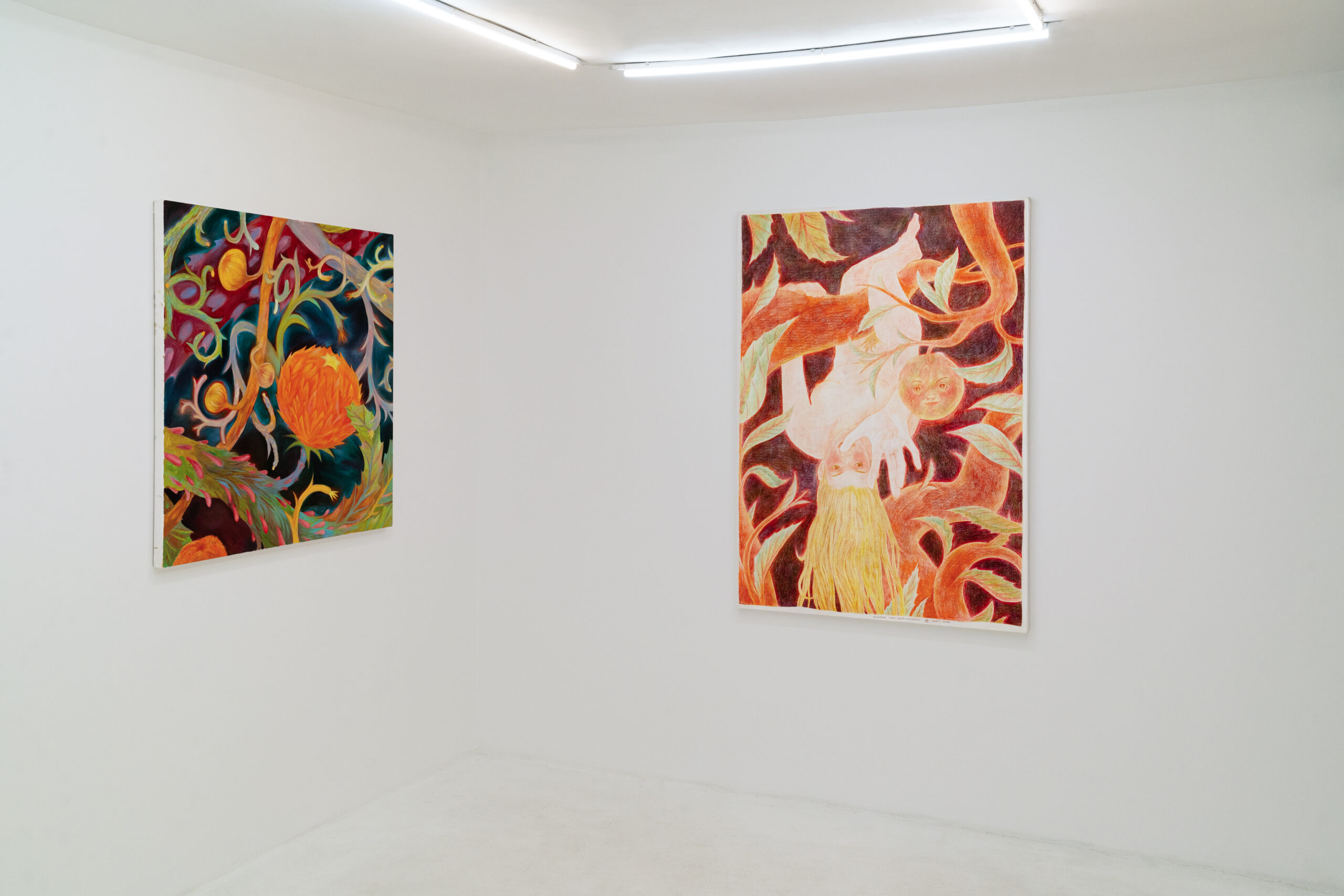
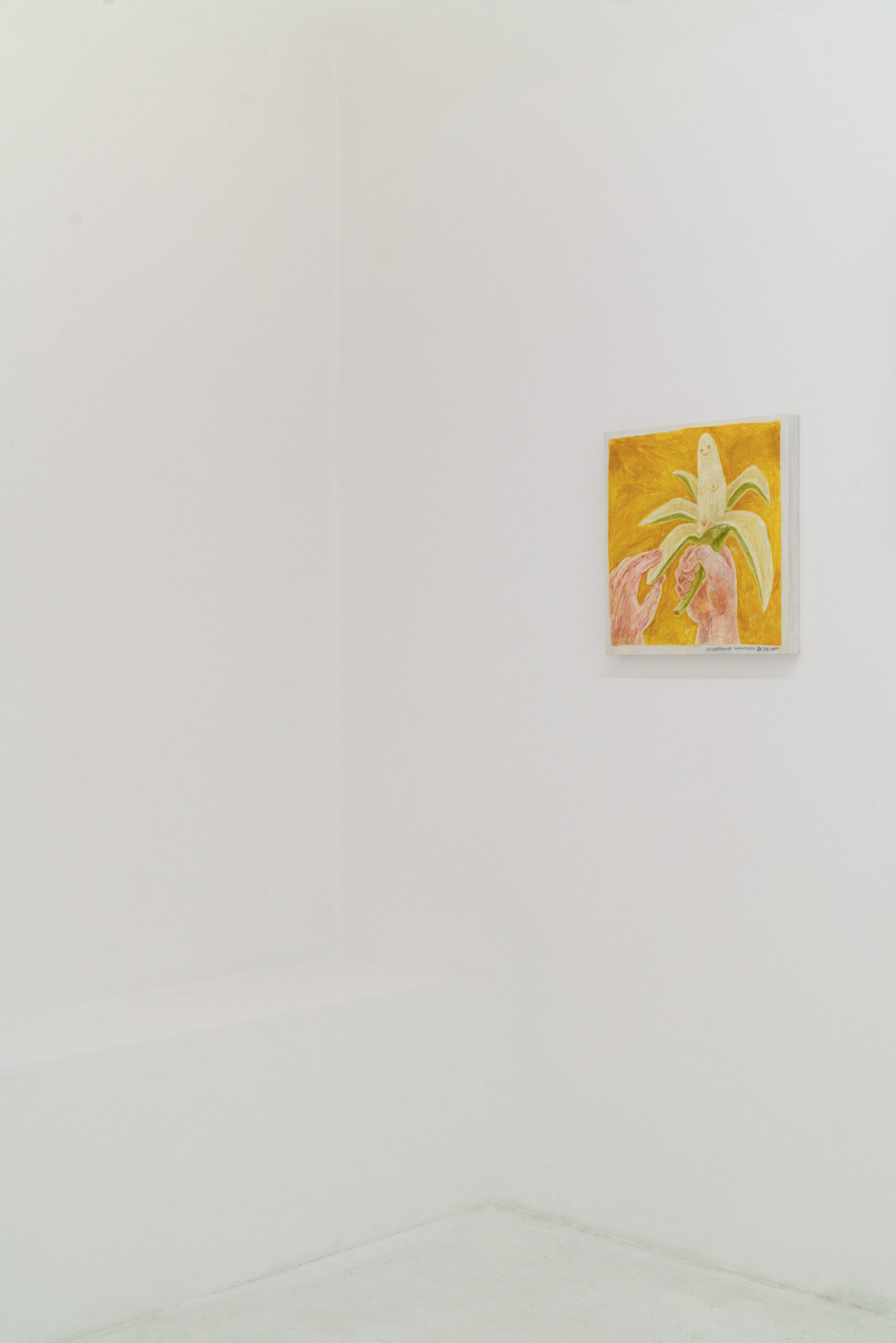
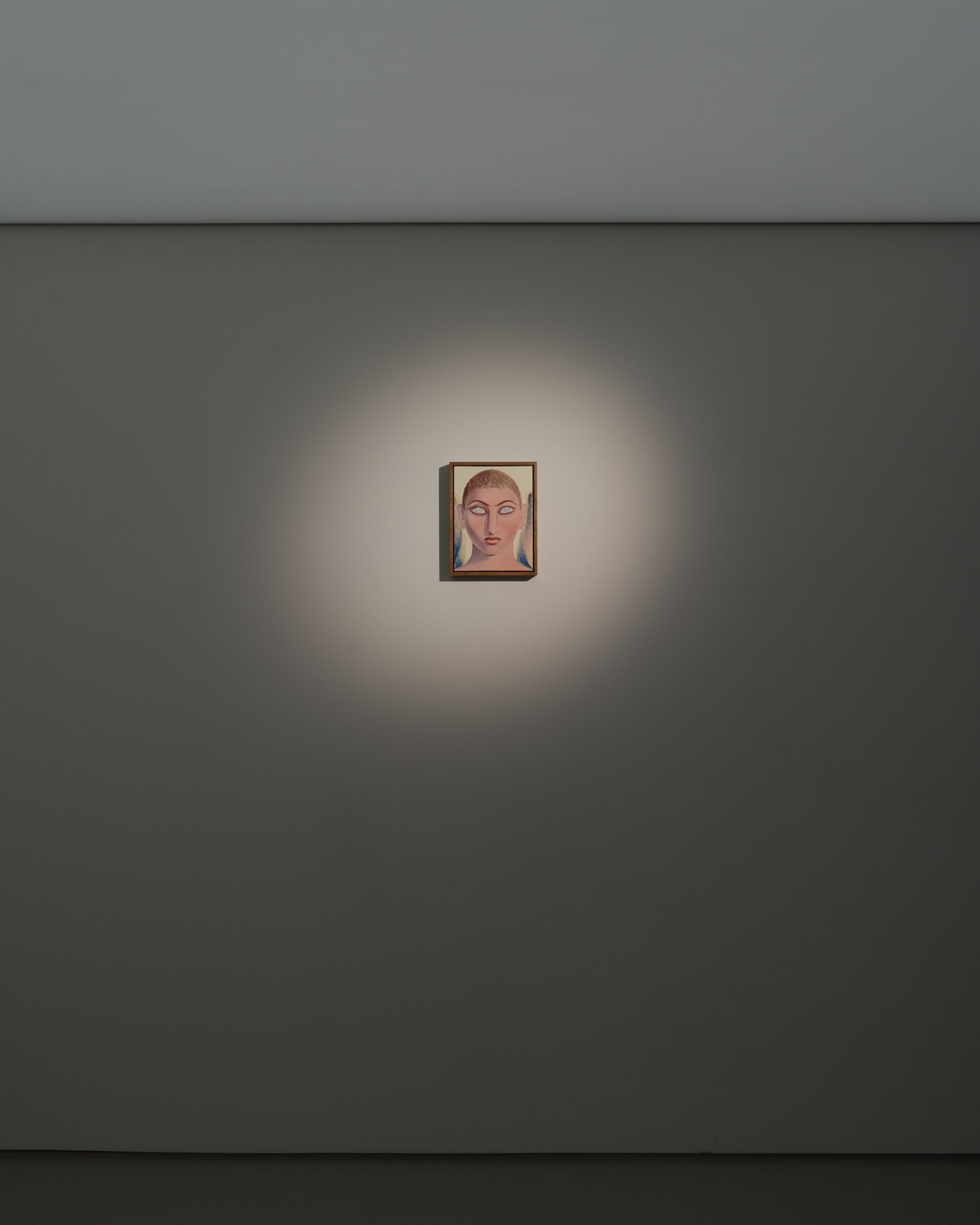
The choice of pencil highlights another quality of her method: looking at the world like a child. The child is inquisitive, greedily grabbing fragments and shifting perspectives, and at times predatory and ruthless in their curiosity. Hence her unconditional attention to detail and the descriptive titles written directly on the sheets. At the same time, these works convey a teenage sense of loss: the aesthetics of manga horror prevail over the cuteness of children’s animation. Animated vegetables and fruits are given faces, but their expressions are ominous and piercing. Nor are the subjects themselves childish — such as love, promising but ultimately treacherous.
This child-teenage perspective allows the artist to engage indirectly with life and art. In this playful world, she can work through her own feelings or invite the viewer toward awareness in a less painful way. Indignation, horror, or disagreement with various ethical or hierarchical systems are experienced in her works almost casually, hidden behind stories of vegetables and fruits.
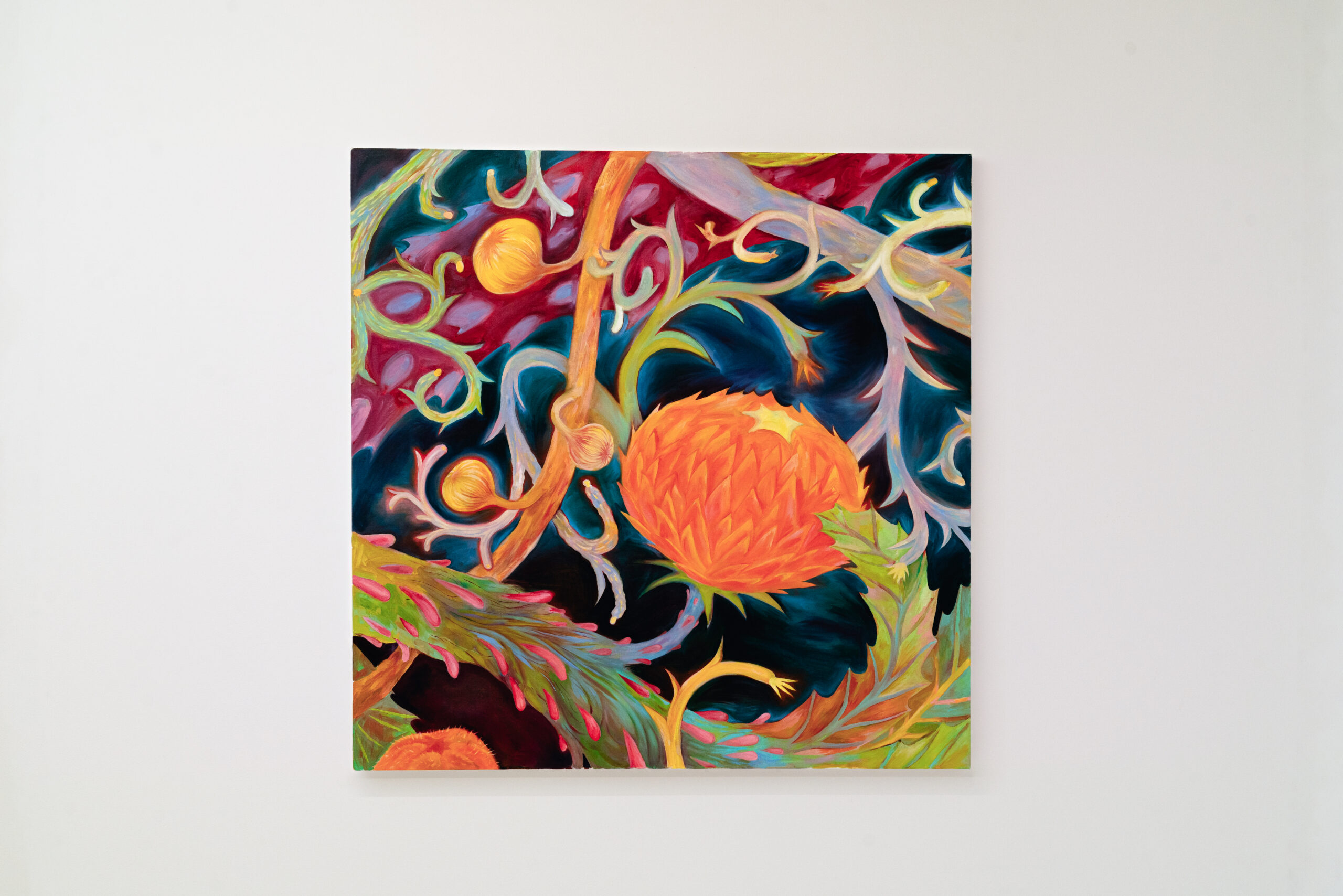
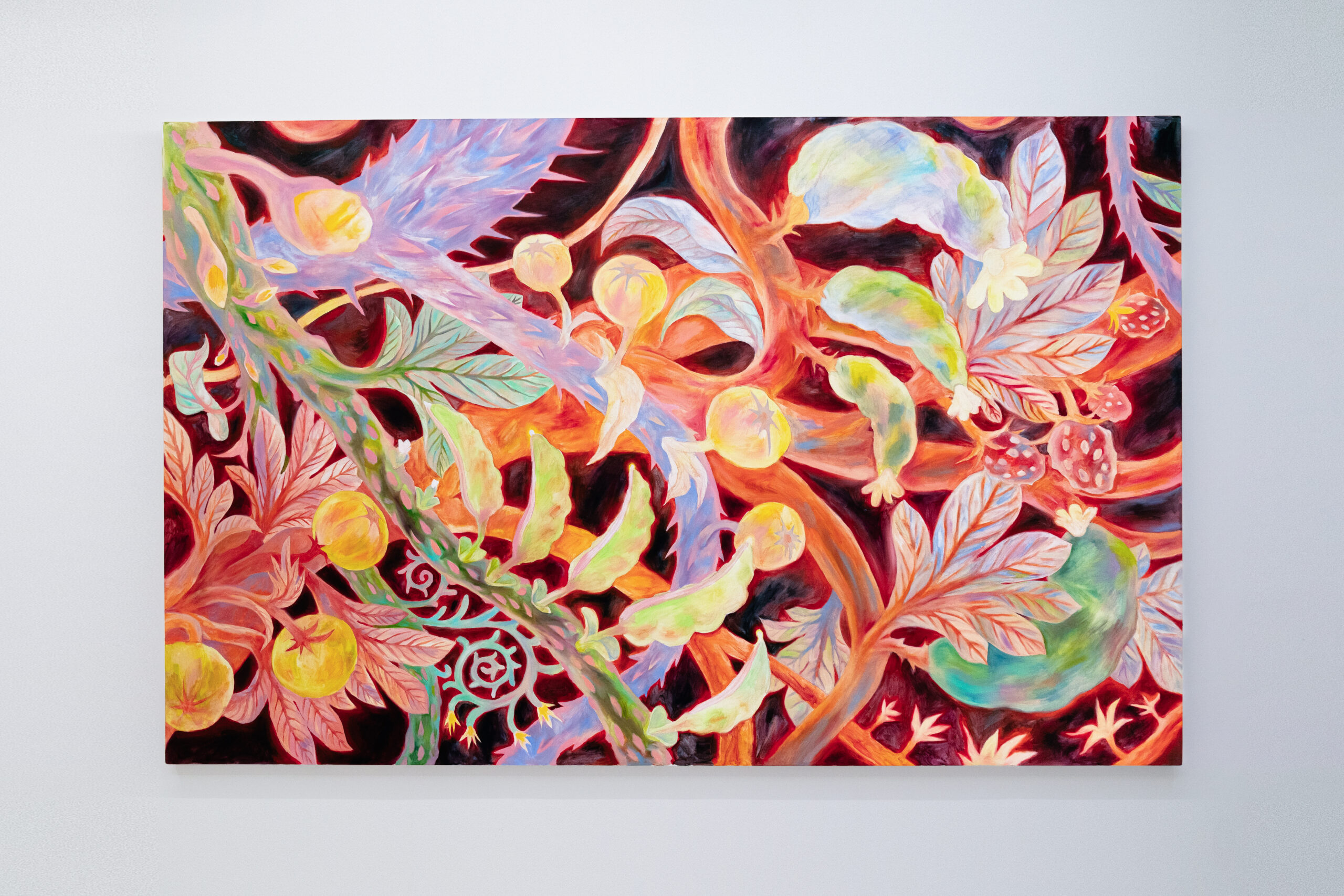
This exhibition can also be seen as a new stage in the artist’s life: she is growing up and growing stronger. The key image for the exhibition at Szena becomes that of paradise, where the spicy hues of the jungle reference the frescoes of Benozzo Gozzoli or colorful Turkish textiles. In Moscow, amid blooming thickets, Eve becomes more prominent; instead of shyness or confusion, she displays considerable skill and eagerness in satisfying her curiosity. Likewise, Anastasia Rybakova, diligently opening one project after another in Moscow and other cities, is moving toward finding her own new language and putting it to the test.
 Back to Exhibitions